A Food Safety Rule Has Been Stalled for Years. This Outbreak Just Reopened the Fight

Food_and_Drug_Administration

Food safety fights over produce tracing have been simmering in Washington for years, even as regulators and retailers have said faster recordkeeping could shorten outbreak investigations. That debate sharpened again this summer after a multistate Cyclospora outbreak tied to recalled iceberg lettuce from Taylor Farms de Mexico grew into one of the country’s biggest produce-linked illness investigations. The renewed push is focused on an FDA traceability rule that was finalized in 2022, scheduled for compliance in 2026, and then stalled until 2028.

Consumer groups want Congress to reverse the delay

A coalition of consumer and food safety groups is now urging Congress to rescind the federal funding restriction that prevents the FDA from enforcing its food traceability rule before July 20, 2028, according to a letter reported by Food Safety News. The groups said the current Cyclospora outbreak shows why the rule matters, because investigators and the public still do not have full visibility into where implicated produce moved through the supply chain.

The FDA’s own timeline shows how long the rule has been in limbo. The agency finalized the Food Traceability Rule in November 2022 and originally set a compliance date of January 20, 2026, according to FDA materials. FDA now says it proposed extending that deadline by 30 months and that Congress later directed the agency not to enforce the rule before July 20, 2028.

The rule would require additional recordkeeping for foods on the FDA’s traceability list, including many fresh produce items. Supporters say those records are designed to help regulators identify where contaminated food came from and where it was shipped more quickly than the current one-step-forward, one-step-back system allows. Food Safety News reported that the Safe Food Coalition told congressional leaders the outbreak has reopened the policy fight because delayed traceability can slow both recalls and public communication.

The outbreak’s footprint stretches well beyond the first five states

The current outbreak has continued to expand as more cases are linked through interviews and public health follow-up. In its August 13, 2026 update, the FDA said 9,481 illnesses in 17 states were associated with the multistate Cyclospora outbreak tied to iceberg lettuce sourced from central Mexico and recalled by Taylor Farms de Mexico. FDA said most illnesses began before the July 17, 2026 recall.

That recall began on July 17, 2026, when Taylor Fresh Foods announced the removal of all iceberg lettuce sourced from central Mexico from the U.S. market because of possible Cyclospora contamination, according to the company notice posted by the FDA. The recall covered Marketside Iceberg Salad in 12-ounce and 24-ounce sizes and Marketside Shredded Lettuce in 8-ounce and 16-ounce sizes with best-if-used-by dates from July 18 through August 3, 2026, along with a long list of foodservice products. The company said consumers should discard the recalled lettuce immediately, not consume it, and seek a full refund at the place of purchase.

Taylor said shredded iceberg product was distributed from June 29 through July 16 in Alabama, Arkansas, Connecticut, Florida, Georgia, Iowa, Illinois, Indiana, Kansas, Kentucky, Louisiana, Massachusetts, Maryland, Michigan, Missouri, Mississippi, North Carolina, New Hampshire, New Jersey, Ohio, Oklahoma, Pennsylvania, South Carolina, Tennessee, Texas, Virginia, and Wisconsin. FDA has also said the outbreak initially centered on Taco Bell exposures in Indiana, Kentucky, Michigan, Ohio, and West Virginia, but the agency has not released a comprehensive public list tying every illness to a specific restaurant or retailer location.

Why the tracing debate has returned now

Part of the challenge is the pathogen itself. Reuters reported in July that Cyclospora has a long incubation period and cannot be cultured in laboratories, which means investigators often have to rely heavily on patient interviews, purchase histories, and traceback work instead of straightforward lab confirmation. That makes speed and precision in supply-chain records especially important when public health officials are trying to connect widely dispersed illnesses to a common source.

Supporters of the stalled rule argue that this is exactly the kind of outbreak the regulation was meant to address. According to the FDA, the rule is built around critical tracking events, key data elements, and traceability plans that can follow foods more clearly through growing, packing, processing, and distribution. The coalition cited by Food Safety News said the lack of lot-level, end-to-end records can contribute to broader recalls, slower answers, and prolonged consumer uncertainty.

For shoppers and food businesses, the immediate reality is that the lettuce recall remains a concrete example of how broad a produce alert can become before the public has complete answers. FDA has said it remains confident the recalled iceberg lettuce associated with this specific outbreak is off the market, while the broader congressional fight is now centered on whether the agency should be allowed to put its delayed traceability standards in place before July 20, 2028.

One State Is Quietly Bracing for a Outbreak Everyone Thought Was Someone Else’s Problem

Cyclospora

As federal health officials track a widening Cyclospora outbreak linked to recalled iceberg lettuce, the case count has grown far beyond the states where the investigation began. In South Dakota, where officials say cases have been recorded and food-safety inspections remain a key line of defense, the outbreak is no longer a distant issue tied only to other parts of the country.

The outbreak has already moved well beyond its original footprint

The current national response centers on a Cyclospora outbreak tied to iceberg lettuce sourced from central Mexico and recalled by Taylor Farms de Mexico. According to the FDA, the company announced the market removal on July 17, 2026, after federal traceback work linked shredded iceberg lettuce used at Taco Bell locations to illness reports. The FDA said the outbreak advisory was first posted July 16 and later expanded as the investigation developed.

By August 5, the FDA said the outbreak included illnesses in nine states: Illinois, Indiana, Kansas, Kentucky, Michigan, Ohio, Oklahoma, Pennsylvania, and West Virginia. In the agency’s earlier July 16 update, the CDC had identified 1,644 people infected with Cyclospora who reported Taco Bell exposure across five states, with illnesses beginning between May 13 and July 13, 2026. The FDA also said 94 hospitalizations had been reported and no deaths had been confirmed.

The recall itself reached much farther than those nine outbreak states. Taylor Fresh Foods said shredded iceberg products were distributed from June 29 through July 16 in Alabama, Arkansas, Connecticut, Florida, Georgia, Iowa, Illinois, Indiana, Kansas, Kentucky, Louisiana, Massachusetts, Maryland, Michigan, Missouri, Mississippi, North Carolina, New Hampshire, New Jersey, Ohio, Oklahoma, Pennsylvania, South Carolina, Tennessee, Texas, Virginia, and Wisconsin. The recall notice listed retail Marketside 12-ounce and 24-ounce Iceberg Salad and 8-ounce and 16-ounce Shredded Lettuce, along with numerous food-service products sold under brands including CV, JB, Mark, PK, SY, TF, and SUB, with best-by dates spanning July 16 through August 3, 2026.

South Dakota is watching closely, even without a confirmed recall footprint

South Dakota is not on the FDA’s published list of distribution states for the recalled shredded iceberg lettuce, and it is not among the nine states named in the FDA’s August 5 outbreak update. Even so, reporting from South Dakota Public Broadcasting on August 14 said South Dakota, like nearly every other state and territory, has seen Cyclospora cases during the broader national surge. That distinction matters because the FDA has said the Taco Bell-linked illnesses are only a subset of Cyclospora infections identified nationwide.

State health officials have been careful about what they can confirm publicly. In the SDPB report, Tori O’Brien, an administrator with the South Dakota Department of Health’s Office of Health Protection, said the department was aware of the issue but did not provide a state case count during the interview. She said the department works with federal partners on larger foodborne-illness events and described inspections as a way to identify hazards before they result in illness or injury.

What is not yet known is whether any South Dakota illnesses are directly tied to the recalled lettuce or to another exposure source. The state has not released a comprehensive list of South Dakota locations, distributors, or food establishments potentially connected to the outbreak response. That leaves South Dakota in a monitoring posture rather than at the center of the federal traceback.

The response reflects how national produce outbreaks now reach states far from the main cluster

Federal records show why South Dakota officials are treating this as more than an isolated regional problem. The FDA said its traceback investigation converged on a single supplier, Taylor Farms de Mexico, and the company said it stopped receiving product from the implicated lot, suspended distribution of iceberg lettuce from central Mexico, and notified customers. The FDA also said it increased border screening for implicated products and initiated additional inspection and sampling work as the investigation continued.

The broader context is seasonal as well as structural. The FDA’s Cyclospora overview says U.S. cases are more common between May and August, when fresh-produce exposures are often under closer scrutiny. The agency’s outbreak pages also show multiple active Cyclospora investigations in 2026 involving both identified and not-yet-identified products, underscoring that the lettuce-linked cluster is part of a larger national pattern rather than a stand-alone event.

For South Dakota residents, the practical takeaway is limited but clear. Consumers who purchased recalled Taylor Fresh Foods iceberg lettuce products were told by the company to discard them immediately, not consume them, and seek a refund at the place of purchase; people experiencing health issues were told to contact their physician. South Dakota officials, meanwhile, have indicated that routine inspections and coordination with federal agencies remain part of the state’s response as the national investigation continues.

America Just Crowned Its Favorite Sandwich. The Winner Might Surprise You

National food rankings increasingly rely on large consumer panels rather than one-off novelty polls. The latest U.S. data points to a familiar comfort food as the country’s favorite sandwich category: grilled cheese.

YouGov’s latest ranking put grilled cheese at No. 1

YouGov’s first-quarter 2026 U.S. Ratings data ranked grilled cheese as the country’s second-most popular American dish overall and the highest-ranked sandwich-style item on that list, with a 99% awareness score and an 85% popularity rating, according to the market research firm’s public rankings. On the same list, turkey sandwich placed No. 16 with a 73% popularity rating, while Philly cheesesteak placed No. 14 at 74%.

That makes grilled cheese the highest-ranked sandwich in YouGov’s broad 2026 snapshot of American dishes, which is based on responses collected daily and averaged over the first quarter of the year, the company stated. While YouGov’s category includes many foods that are not sandwiches, the result is notable because it places a simple, low-cost staple ahead of more regionally identified sandwiches such as cheesesteaks and deli-style builds.

The result also lines up with YouGov’s earlier standalone sandwich polling. In an August 1, 2019 article summarizing a representative survey of 1,223 U.S. adults, the company said grilled cheese was America’s top sandwich with a 79% likeability rating, ahead of turkey sandwich and grilled chicken. The newer 2026 data does not appear to be a dedicated sandwich ballot, but it shows the same item retaining broad appeal.

The national result has broad relevance, but no state-by-state winner was released

For readers looking for a state-specific winner, that information has not been publicly released in YouGov’s first-quarter 2026 ratings page. The company published national popularity scores for American dishes, but it did not provide a 50-state breakdown showing whether grilled cheese led in California, Texas, New York, Florida, or any other individual state.

What is confirmed is that grilled cheese posted an 85% popularity rating nationally, placing it ahead of every other sandwich-style item visible near the top of the 2026 American dishes ranking. Turkey sandwich, at 73%, trailed by 12 percentage points, and Philly cheesesteak followed at 74%. Those figures suggest grilled cheese has unusually broad cross-regional acceptance, even without a new state map.

That broad appeal matters because sandwich preferences often split by region, chain access, and local specialty. YouGov’s older sandwich reporting said Food & Wine reviewed regional breakout data from the 2019 survey and found grilled cheese was widely liked nationwide. The company has not released an updated regional sandwich table alongside the 2026 ratings page, so a more precise 2026 geographic comparison is not yet available.

The result reflects comfort, familiarity, and the way polling categories are built

The outcome is partly about methodology. YouGov Ratings measures “popularity” as the share of respondents with a positive opinion and updates those rankings quarterly using accumulated survey responses, according to the company. In practice, that tends to reward foods with extremely high familiarity and relatively low polarization, two conditions that favor grilled cheese.

It also helps that grilled cheese sits at the intersection of affordability, nostalgia, and ease of preparation. Unlike sandwiches tied to a specific meat, chain, or regional identity, grilled cheese is widely available in restaurants, school cafeterias, and home kitchens. That ubiquity can translate into stronger mass-market favorability even if it is not always the most talked-about sandwich.

For consumers, the practical takeaway is straightforward: the country’s most broadly liked sandwich is not a specialty sub or a limited-time restaurant item, but a standard grilled cheese. Based on the public data YouGov has released, that remains the clearest national reading of sandwich preference in 2026, even as more detailed regional results have not been published.

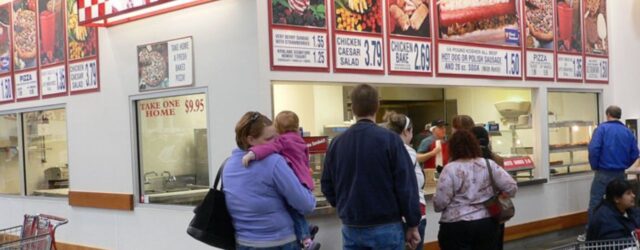
Costco’s CEO Just Dropped a Hint About Fall’s New Products. Here’s What Shoppers Should Know

Costco shoppers know the seasons often arrive early in the warehouse. That is especially true when executive comments start hinting at what buyers are planning next. This time, the signal is subtle, but it matters.

The CEO’s hint points to a smoother, more predictable fall rollout

The clearest clue came during Costco’s fiscal Q2 2026 earnings call, when CEO Ron Vachris said the company felt “back on track” on timing, selection, and SKU counts after supply chain conditions improved. He added that Costco felt good about production and shipments for spring and summer, and that as the company forecast into fall, it believed it was “in a good place,” according to the earnings transcript published by The Motley Fool and listed through Costco’s investor calendar.

That may sound cautious, but for Costco, it is meaningful. Seasonal products depend on narrow selling windows, and even small delays can hurt sell-through. A more stable flow means members are more likely to see autumn merchandise arrive in the intended sequence, from pantry staples and bakery items to home, gifting, and cold-weather essentials.

Costco has also made clear in prior calls that it does not simply pile on more inventory for seasonal moments. In its Q1 2026 commentary, executives said holiday assortments would carry fewer SKUs than in prior years, while buyers sourced alternative value items in categories such as seasonal food, health and beauty, and live goods when some products were affected by tariffs. That suggests fall 2026 may follow the same discipline: fewer weak sellers, more targeted bets.

Expect seasonal food to be one of the strongest areas to watch

If there is one part of Costco’s business that already offers a preview of fall, it is fresh food and bakery. In the Q3 2026 transcript, the company highlighted high-single-digit comparable sales growth in fresh categories, led by meat and bakery, with seasonal bakery items standing out. Earlier in Q2, Costco also pointed to strong results from new bakery launches such as chocolate hazelnut mini beignets, along with a rotating mix of pastries and cookies.

For shoppers, that is a useful tell. When Costco sees strength in seasonal bakery and fresh foods, it often leans into products with quick turns and broad appeal rather than niche novelty. In practice, that can mean more limited-time desserts, entertaining-friendly prepared foods, warming breakfast items, and value-oriented proteins that fit back-to-school and holiday cooking patterns. This is an inference based on Costco’s sales commentary, not a confirmed product list.

The company’s merchandising model also rewards fast decisions. Costco’s own customer service materials describe its “treasure hunt” atmosphere as part of the value proposition, especially for one-time-buy and exclusive merchandise. So when fall food starts appearing, members who wait for a second visit may miss the best items entirely.

What shoppers should do now to get the best from the fall assortment

The practical takeaway is not to expect a giant public reveal of every autumn item. Costco typically telegraphs strategy more than specific product drops, and those strategy comments suggest fall should be timely, curated, and value-focused rather than overloaded with endless choice. That aligns with the company’s broader habit of keeping assortments efficient while moving seasonal goods quickly.

Members who want the strongest selection should start checking warehouses earlier than the calendar might suggest. Costco’s seasonal cadence often moves ahead of the weather, and the company itself has long acknowledged that limited-time merchandise rewards frequent visits. In other words, when pumpkin-adjacent bakery, entertaining foods, or fall household staples first appear, that may be the best moment to buy.

It is also worth watching Kirkland Signature and prepared-food areas for clues. Costco’s recent calls repeatedly emphasized value, sourcing flexibility, and digital product discovery, including personalized recommendation tools that are driving ecommerce sales and better conversion. That combination raises the odds that fall winners will be products that feel both convenient and sharply priced, especially in pantry, bakery, and meal-solution categories.

Canada Gives Shoppers Huge Grocery Benefits. Here’s How the U.S. Really Compares

Grocery bills have become a political issue on both sides of the border. But Canada and the United States are responding in very different ways. Canada is moving toward broader cash support tied directly to affordability, while the U.S. still leans on a patchwork of nutrition programs and market competition.

Canada’s biggest shopper benefit is simple: cash in hand

Canada’s headline grocery advantage is not a coupon, loyalty perk, or temporary retailer discount. It is direct federal support paid to households through the tax system. In 2026, Ottawa began transitioning from the GST/HST credit to the new Canada Groceries and Essentials Benefit, a program the federal government says will help more than 12 million low- and modest-income individuals and families. According to Canada’s Finance Department, the benefit includes a one-time top-up equal to 50% of the annual 2025-26 GST credit and then a 25% increase in quarterly payments for five years starting in July 2026.

The structure matters because it is automatic for eligible households that file taxes. Canada Revenue Agency said the one-time top-up was paid on June 5, 2026, and that the renamed benefit began higher quarterly payments on July 3, 2026. A family of four with $40,000 in net income could receive up to $1,890 in 2026, while a single person with $25,000 in net income could receive up to $950. That is unusually direct support for grocery affordability, especially compared with programs that restrict what can be purchased.

Canada has used this model before. The government previously paired a Grocery Rebate with the GST/HST credit, and official CRA statistics show the GST/HST credit already reaches a very large national recipient base. The newer benefit essentially builds on an existing delivery system rather than creating a new bureaucracy. For shoppers, that means the benefit behaves more like a broad affordability buffer than a traditional food-assistance program.

The U.S. offers more food aid overall, but it is narrower and more conditional

The U.S. comparison is not that America does nothing. In fact, it spends heavily on food assistance, but mostly through targeted programs with tighter eligibility rules and defined food-use limits. SNAP remains the core program. USDA’s 2026 explanatory notes say SNAP participation averaged 41.7 million people per month in 2024, making it vastly larger than any single Canadian grocery support mechanism in raw scale.

But SNAP is not a broad grocery rebate for moderate-income households facing higher prices. It is a means-tested nutrition program, and benefits can be used only for eligible food purchases. The U.S. also relies on WIC for pregnant women, infants, and young children. USDA’s Economic Research Service says WIC served about 6.9 million participants each month in fiscal year 2025, including roughly 41% of all infants in the United States, showing how concentrated American support is around specific vulnerable groups.

That design creates a very different shopper experience. Canada’s newer benefit functions like flexible cash support that can help with groceries and other essentials. The U.S. system is more powerful for the poorest households, but less visible to the broader middle and lower-middle tiers squeezed by inflation. Even where food prices cool, pressure remains real: Bureau of Labor Statistics data show U.S. food-at-home prices rose 2.4% in 2025, while food away from home climbed 4.1%, keeping overall meal costs elevated.

Why Canadian shoppers do not automatically have the better grocery market

Direct benefits do not mean Canada has solved grocery affordability. Canada’s Competition Bureau has repeatedly warned that the grocery sector is concentrated, with most shoppers buying from five giants: Loblaws, Sobeys, Metro, Costco, and Walmart. The bureau’s grocery market work found that more competition would likely mean lower prices, greater choice, and more innovation, and it has continued pushing against property controls that can block new grocers from entering local markets.

Canada also maintains supply management in dairy, eggs, and poultry. The federal government says the system helps create stable supply and predictable markets for consumers, while USDA notes it relies on production controls, price supports, and border measures. That stability can protect against extreme volatility, but critics have long argued it can also keep some staple categories structurally more expensive than in the U.S. In other words, Canada may compensate shoppers more directly even as parts of its food system remain less aggressively price-competitive.

That is the real comparison. Canada is currently more willing to send shoppers broad, automatic cash relief when grocery bills bite. The U.S. offers deeper targeted nutrition support, but not the same kind of universal-feeling grocery offset for modest-income households. For many families, the better model depends on where they sit on the income ladder: America often does more at the bottom, while Canada is doing more to soften the squeeze in the middle.

One Advocacy Group Says the Government Is Tracking Outbreaks All Wrong. Here’s Their Fix

Cyclospora

Foodborne illness surveillance has become a renewed national issue as federal agencies continue investigating a major 2026 Cyclospora outbreak linked to iceberg lettuce. Consumer Reports’ advocacy arm used its August 2026 Food Policy Insider to argue that the government is tracking outbreaks too slowly and too narrowly, and it laid out a two-part fix centered on CDC surveillance and FDA traceability rules. The debate has national implications for grocers, restaurants, and consumers because produce outbreaks can spread across state lines before investigators identify the source.

Consumer Reports says the current system is missing too much

Consumer Reports said in its August 2026 Food Policy Insider that the Taylor Farms Cyclospora outbreak exposed weaknesses in how the federal government tracks foodborne illness. The group said CDC funding should be restored so FoodNet can again track Cyclospora and seven other pathogens that had been dropped, and it also said FDA should move faster on the food traceability rule now set for July 20, 2028, according to the agency. Consumer Reports published that position as outbreak case growth appeared to be slowing, using the outbreak as an example of why better monitoring matters.

The CDC describes FoodNet as a long-running active surveillance system for foodborne infections. CDC’s current FoodNet materials state that reporting for data collected on or after July 1, 2025, is optional for all pathogens except Salmonella and Shiga toxin-producing E. coli, meaning Cyclospora is no longer part of the required surveillance list. Associated Press reporting in August 2025 likewise said the program had cut required monitoring to two pathogens.

Consumer Reports’ proposed fix is straightforward: restore full federal support for broader pathogen tracking and speed up recordkeeping rules that would let investigators trace contaminated foods more quickly through the supply chain. The advocacy group also said restaurants and retailers should scrutinize suppliers more closely and be prepared to change suppliers when contamination risks emerge.

The outbreak’s impact reached far beyond one supplier

The Consumer Reports summary focused on the economic and reputational fallout that can land on businesses downstream from an outbreak. It said grocery stores and restaurants often bear the damage when an ingredient supplier is tied to illnesses, noting that social media initially mislabeled the 2026 Cyclospora event the “Taco Bell virus” and that packaged produce sales fell sharply during the recall. That framing reflects how traceback delays can leave consumers and businesses with incomplete information for days or weeks.

Federal investigators have tied the 2026 outbreak to iceberg lettuce, and Associated Press reported on August 5, 2026, that 15 states had been linked to the outbreak and that officials were focused on Taylor Farms as the source of the lettuce. Consumer Reports said produce from one Taylor Farms international supplier was a repeat offender connected to the outbreak and argued that the supplier met FDA’s own threshold for placement on the Import Alert Red List, though the agency had not added it and had not publicly explained why.

Because the outbreak involved widely distributed fresh produce, the effects were not confined to one city or state. Consumer Reports did not release a state-by-state business impact breakdown, and federal agencies have not publicly provided a complete accounting of all restaurant or retail losses tied to the episode.

Why the group says faster traceability matters now

Consumer Reports tied its criticism to broader policy delays and resource limits inside the federal food safety system. FDA states that the food traceability final rule’s compliance date has been extended to July 20, 2028, and agency materials say Congress also directed FDA not to enforce the rule before that date. Consumer Reports said that timeline is too slow, describing the rule as already delayed 17 years past its original deadline.

The group also connected the problem to surveillance capacity. CDC says FoodNet historically tracked Campylobacter, Cyclospora, Listeria, Salmonella, STEC, Shigella, Vibrio, and Yersinia, but current CDC guidance makes only Salmonella and STEC mandatory in the program. Consumer Reports argues that without stronger surveillance and faster lot-level recordkeeping, investigators have a harder time spotting trends early and tracing contaminated produce before reputational and financial harm spreads.

For consumers, the immediate takeaway is not a new recall notice from Consumer Reports but a policy warning about how future outbreaks may be detected and traced. As of August 2026, the group is calling for more CDC and FDA funding, faster implementation of traceability requirements, and tighter supplier oversight by retailers and restaurants as the federal investigation continues.

After 17 Years, This Beloved California Diner Just Served Its Last Meal

Restaurant closures continue to reshape the family-dining business as operators weigh traffic patterns, occupancy costs, and expansion priorities across regional portfolios. In Northern California, that trend reached downtown Davis when Black Bear Diner permanently closed its longtime restaurant after nearly two decades in the city. The closure removes a familiar full-service breakfast-and-dinner stop from a market where independent and chain operators have both faced shifting post-pandemic demand.

Black Bear Diner’s Davis restaurant served its final meal on March 29

Black Bear Diner’s Davis location served its last customers on March 29, according to the restaurant’s public closure notice cited by NewsBreak, ending a 17-year run in the city. The restaurant was located in downtown Davis, and the brand’s official locations page now lists the site as “Davis – Closed.” That makes the closure a confirmed permanent shutdown rather than a temporary service pause.

NewsBreak reported that the Davis diner first opened in 2009 and had operated for nearly two decades before the final service date. The article also said the restaurant thanked customers on social media for their support over the years, indicating the closure was communicated directly to guests before the final day. Black Bear Diner has not posted a broader statewide closure announcement tied to Davis on its public news page.

The closure is notable because it affects a long-operating unit within a chain that still has a substantial California presence. Black Bear Diner’s official online directory continues to show dozens of California restaurants, with Davis specifically marked closed. The company’s public materials also show that the brand remains active nationally and is still adding restaurants in other markets.

Davis loses a downtown diner as the Sacramento region count narrows

For Davis, the confirmed impact is straightforward: the city has lost its Black Bear Diner location in the downtown area. NewsBreak reported that seven Black Bear Diner restaurants remain in the greater Sacramento region after the Davis closure. That provides a regional benchmark, but the company has not released a new city-by-city Northern California impact statement beyond what appears in its public store directory.

At the state level, California remains Black Bear Diner’s largest market, according to company and trade publication reporting. The official locations page still lists a long roster of California restaurants, even with Davis marked closed. The company has not released a comprehensive public explanation breaking down how many California closures, if any, are planned beyond locations already removed from the directory.

The Davis closure also follows another California departure noted by NewsBreak: the chain’s Oakland restaurant shut down in late 2023. In that case, the outlet reported the Oakland location cited crime concerns in the surrounding area. No equivalent public reason was confirmed in the source material for Davis, and the company has not publicly released a detailed explanation for that specific closure.

The closure comes as Black Bear Diner keeps expanding elsewhere

The broader context is that Black Bear Diner appears to be closing select California restaurants while still pursuing national growth. Nation’s Restaurant News reported in January 2024 that the company planned about 14 new restaurants for 2024 and was studying additional markets as part of a longer-term coast-to-coast strategy. CEO Anita Adams said the chain had returned to its pre-pandemic development pace, according to that report.

That same Nation’s Restaurant News report tied the company’s growth planning to easing inflation pressures, a stronger off-premises business, and efforts to lower development costs for franchisees. Adams said average unit volumes had risen while off-premises sales remained a meaningful part of the business mix. The company also said it had redesigned prototypes to address construction costs that were materially higher than they had been before the pandemic.

For customers in Davis, the practical takeaway is that this location is permanently closed and no reopening at that site under Black Bear Diner has been announced. Guests seeking the brand will need to use nearby remaining Sacramento-area locations listed by the company. For California more broadly, the closure reflects a portfolio adjustment inside a growing chain, not a companywide retreat, based on the brand’s public location directory and its stated expansion plans.

Dietitians Say Taking These Vitamins in the Morning Could Be a Mistake

For millions of Americans, morning vitamin routines have become as common as coffee, with multivitamins, magnesium, probiotics, and single-nutrient supplements now widely used before breakfast. Dietitians say that routine can be a mistake when supplements are taken on an empty stomach or paired with the wrong foods or medicines. Federal health guidance and hospital dietitians say the issue is less about a universal “bad” time and more about which vitamin is being taken, what it is taken with, and whether it interacts with medications.

Dietitians say timing errors often involve multivitamins, magnesium, iron, and fat-soluble vitamins

Dietitians and federal supplement guidance point to a short list of products that can be problematic first thing in the morning, especially when taken without food. Cleveland Clinic dietitian Julia Zumpano said multivitamins commonly cause nausea when people take them before eating, and the hospital advises taking vitamins with food to reduce stomach upset. The National Institutes of Health Office of Dietary Supplements similarly states that multivitamins are intended to help fill nutrient gaps, but they do not replace a balanced diet.

Fat-soluble vitamins are another category dietitians flag for timing mistakes. A National Academies reference text cited by NIH states that absorption of fat-soluble vitamins depends on fat in the diet, which means vitamins such as A, D, E, and K may be better absorbed when taken with a meal that contains some dietary fat rather than alone early in the day. That does not make morning use automatically wrong, but it does make a no-breakfast routine less ideal.

Magnesium can also be an issue in the morning for some users. NIH says high intakes of magnesium from supplements can cause diarrhea, nausea, and abdominal cramping, and it notes that magnesium can interfere with the absorption of certain medicines, including some antibiotics and osteoporosis drugs. For people who already have sensitive stomachs, that combination can make a rushed morning routine a poor fit.

What is confirmed for consumers in the U.S., and what is still individualized

What is confirmed nationally is that there is no single best time that applies to every supplement user. NIH’s consumer guidance says recommended nutrient amounts vary by age and sex, and its broader supplement advice says some people may need products such as vitamin D, B12, calcium, or iron based on diet, age, pregnancy status, or medical conditions. The National Center for Complementary and Integrative Health also says there are no official recommendations covering probiotic use by healthy people.

What is not confirmed is a one-size-fits-all rule that every vitamin should be moved from morning to night. Instead, dietitians typically separate advice by product type and by side effects. Iron, for example, may upset the stomach for some people, while magnesium may interact with medicines if taken too close together, according to NIH guidance.

There is also no universal federal directive telling healthy adults to take routine supplements at breakfast. NIH News in Health says many people can get needed nutrients from food, while supplements may be useful for filling dietary gaps in specific situations. That means the morning itself is not the problem; the mismatch between the supplement, the meal, and the person often is.

The larger context is absorption, side effects, and drug interactions

The reason dietitians keep raising this issue is straightforward: absorption and tolerability can change depending on when and how a supplement is taken. Cleveland Clinic’s guidance says taking vitamins with food can reduce nausea, while NIH materials emphasize that some nutrients and medications can interfere with one another. Vitamin K, for example, can interact with warfarin, according to NIH supplement guidance.

Broader federal advice also shows why blanket supplement habits can be misleading. NIH says multivitamins can help people reach recommended nutrient intakes, but the agency also says they cannot substitute for a varied diet. NCCIH adds that probiotics do not carry FDA-approved health claims, underscoring that consumers often take products with expectations that are not backed by universal recommendations.

For customers, the practical takeaway is narrow and factual. Morning use may be a mistake when a supplement causes nausea on an empty stomach, requires food for better absorption, or conflicts with a medication schedule. Federal guidance continues to frame supplement timing as an individual decision based on the product label, medical history, and advice from a doctor, pharmacist, or registered dietitian rather than a universal morning rule.

One Viral Trend Is Quietly Reshaping What’s Sitting in Your Kitchen Cabinets

Social media has become a major force in how Americans discover recipes, shop for ingredients, and decide which kitchen tools are worth buying. That shift is especially visible on TikTok, where viral cooking videos are now influencing what people keep in their cabinets, from specialty cookware to matching storage containers. A sponsored analysis distributed by WSOC-TV on August 7 said the platform’s rapid recipe cycle is reshaping both home cooking habits and retail demand.

Viral videos are driving real kitchen purchases

The clearest development is not just that food videos are popular, but that they are producing measurable buying behavior. In the August 7 report reviewed and distributed by Stacker, cookware brand HexClad said a 2026 national consumer study found 71% of consumers had purchased or considered buying a product because it went viral. The same report said 75% of respondents in a 2024 food and beverage trends survey were somewhat or very likely to try a viral food or drink trend after seeing it on social media.

That shift is showing up in the kinds of items consumers bring home. According to the HexClad-backed report, smashburger videos have increased interest in griddles and cast-iron pans, cottagecore baking content has highlighted Dutch ovens and bread-making tools, and potato waffle recipes have pushed waffle makers back into view. The report also said nearly half of Americans have bought kitchen products endorsed by chefs or food creators.

TikTok’s own U.S. business and newsroom materials help explain the scale behind that behavior. TikTok said in 2023 that more than 150 million people in the United States use the platform, and the company said TikTok Shop officially launched in the U.S. in September 2023. That matters because discovery and purchase are now closer together, with product recommendations, creator demonstrations, and shopping features appearing in the same app.

The effect is reaching ordinary home kitchens, not just influencers

What is confirmed is that the trend extends beyond restaurant professionals and dedicated hobbyists. The August 7 report described a broader “everything kitchen” effect, in which meal-prep videos, café-at-home routines, and food presentation trends are pushing consumers to buy more organizers, storage jars, workstation accessories, and small appliances. The shift is not limited to one category of cookware.

The report pointed to examples that are practical as much as aesthetic: matching jars for layered drinks or desserts, specialized baking pans used in one-pan meal videos, and fridge organization products that appear in meal-prep content. It also said consumers increasingly want products that support several parts of daily life, including weekly cooking, hosting, and at-home beverage preparation. In that framing, the cabinet itself becomes a record of internet-driven food habits.

What remains less clear is how long individual trends will last. The same source said research suggests TikTok can influence dietary preferences and cooking behavior, but it is still unclear whether those changes become durable long-term habits. The report did not release city-by-city or state-by-state purchase data, so there is no public breakdown showing which local markets are seeing the biggest cabinet-level changes.

Retailers and brands are responding to a faster trend cycle

The broader reason this is happening is the way TikTok combines demonstration, community, and commerce in one place. The August 7 report said viewers are not only watching recipes; they are also saving them, asking questions in comments, posting their own versions, and watching creators explain exactly how a tool works. That lowers the barrier to trying unfamiliar equipment and makes kitchen purchases look more useful and lower-risk.

TikTok has described a similar discovery model in its own materials. The company said TikTok Shop launched in the U.S. in September 2023 and later said brands and creators hosted more than 8 million hours of LIVE shopping sessions in the U.S. in 2024. TikTok’s 2026 trend materials also identified cooking hacks as a notable content area, reinforcing that kitchen-related discovery remains a live commercial category rather than a short-lived spike.

For customers, the practical takeaway is straightforward. Kitchen cabinets are increasingly being stocked not only through traditional retail browsing or wedding registries, but through short-form video trends that move quickly from screen to store. The long-term winners, according to the August 7 report, are likely to be products that save time, simplify cooking, and fit repeated daily use rather than one-time novelty purchases.

Could Cutting Salt Actually Lower Your Blood Pressure? A Cardiologist Has a Surprising Take

Salt has become one of nutrition’s biggest villains. But the real story is more nuanced than “less salt equals perfect blood pressure.”

Cardiologists do believe sodium matters. The surprising take is that cutting salt often helps quickly, but the size of the benefit depends on who you are, what else you eat, and whether your blood pressure problem is being driven by more than sodium alone.

Why sodium still matters more than many people think

When people eat too much sodium, the body tends to hold onto more fluid. That raises blood volume, which can make the heart work harder and increase pressure inside the arteries. The CDC and the World Health Organization both continue to warn that high sodium intake is linked to higher blood pressure and greater cardiovascular risk, which is why sodium reduction remains a core recommendation in hypertension care.

The strongest recent reminder came from a 2023 crossover trial published in JAMA. Adults ages 50 to 75 followed one week of a high-sodium diet and one week of a low-sodium diet, and the low-sodium week lowered systolic blood pressure by about 7 to 8 mm Hg on average. Researchers said the effect was comparable to that of a commonly used first-line blood pressure medicine, which is striking for a dietary change that worked in just days.

This is not a fringe idea. The American Heart Association’s 2025 blood pressure guideline still strongly recommends reducing sodium intake as part of prevention and treatment, alongside weight control, exercise, and a DASH-style eating pattern. That matters because high blood pressure remains enormously common and, according to the CDC, was a primary or contributing cause of 680,179 U.S. deaths in 2024.

The surprising part: not everyone responds the same way

Here is where the cardiologist’s “surprising take” comes in: salt reduction works for many people, but not identically for all. In the JAMA trial, about 46% of participants met a common definition of “salt sensitive,” meaning their blood pressure changed substantially between high- and low-sodium diets. That helps explain why one person may see a meaningful drop after skipping processed foods, while another gets only a modest change.

Even so, variable response does not mean sodium is irrelevant. The same trial found that the blood pressure benefit appeared across people with normal blood pressure, controlled hypertension, untreated hypertension, and even those already taking blood pressure medication. In other words, sodium reduction is not just for a narrow group of patients; it is broadly useful, even if the degree of improvement differs.

Older landmark evidence points the same way. The DASH-Sodium trial in The New England Journal of Medicine showed that lower sodium reduced blood pressure further, and that combining sodium reduction with a DASH-style diet produced the largest drop of all. That is the real clinical takeaway: cardiologists are often less interested in demonizing the salt shaker than in improving the entire dietary pattern.

What cardiologists actually want patients to do

In practice, many cardiologists focus less on table salt and more on packaged food. Most sodium in modern diets comes from breads, soups, sauces, deli meats, snacks, and restaurant meals, not from a few shakes added at home. The Mayo Clinic notes that potassium can blunt some of sodium’s blood pressure effects, which is one reason diets rich in fruits, vegetables, beans, and dairy often outperform narrow “don’t eat salt” advice.

That also explains why some experts increasingly talk about substitution, not just restriction. Research highlighted by the American Heart Association suggests that lowering sodium by even 1,000 mg per day can help blood pressure, and potassium-based salt substitutes may offer another tool for some adults. Still, they are not right for everyone, especially people with kidney disease or those taking medications that raise potassium, so individualized medical advice matters.

The bottom line is reassuring and practical. Yes, cutting salt can lower blood pressure, sometimes within a week and sometimes by an amount large enough to matter clinically. The surprise is that the best results usually come when sodium reduction is paired with a higher-quality diet, more potassium-rich foods, healthy weight loss, movement, and medication when needed.