
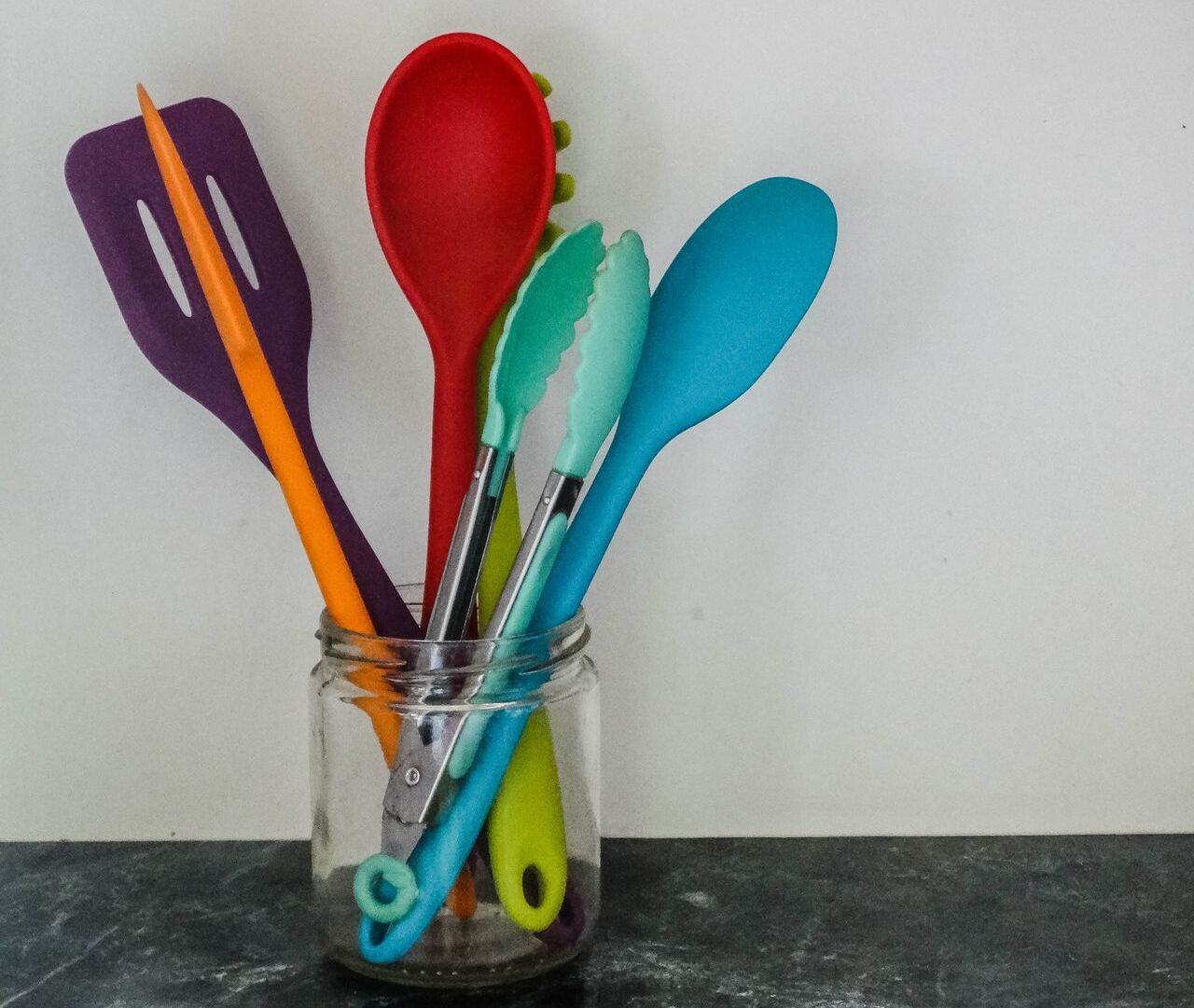
Silicone kitchen tools have become standard in American home kitchens as cooks look for utensils that can handle nonstick cookware and high heat. That has put fresh attention on a basic consumer question: whether silicone spoons used for stirring soups, sauces and skillet meals are actually safe. Available guidance from U.S. regulators, international food-safety agencies and public-health authorities shows that food-grade silicone is generally treated as an acceptable food-contact material when it is properly manufactured and used within its stated temperature limits.
What regulators say about silicone utensils
In the United States, the Food and Drug Administration regulates substances that come into contact with food, including cookware and food-preparation surfaces, through its food-contact framework. FDA states that cookware and other materials that contact food fall under its oversight for food-contact substances, and the agency maintains listings and notifications for those materials. That means silicone is not treated as a kitchen free-for-all; its use is evaluated as part of the broader system that governs indirect food-contact materials.
Federal regulation also specifically identifies silicone basic polymer and several silicone elastomers within 21 CFR 177.2600, the rule for rubber articles intended for repeated use. According to the electronic Code of Federal Regulations, that section includes silicone basic polymer as well as silicone elastomers containing methyl, phenyl, vinyl and fluorine groups. In practical terms, that is the clearest regulatory sign that silicone rubber can be used in repeated-contact food applications when it meets the rule’s composition and extraction limits.
International regulators use the same core standard: the material should not transfer harmful substances into food at unsafe levels. The European Food Safety Authority says chemicals in food-contact materials can migrate into food, and that its evaluations focus on migration and toxicology data. Health Canada similarly describes food-grade silicone bakeware as popular because it tolerates extreme temperatures, while advising consumers to follow manufacturer instructions and intended use.
Where the safety questions come from
The main safety concern is not that every silicone spoon is dangerous by default. The concern is whether low-quality or damaged products can release unwanted chemicals, odors or tastes into food, especially under high heat. FDA’s Food Code says single-use and single-service materials may not allow the migration of deleterious substances or impart colors, odors or tastes to food, a principle that reflects the broader food-contact standard regulators apply to kitchen materials.
That issue has also shown up in research and consumer testing outside the U.S. Health Canada has said its scientists have studied whether polydimethylsiloxanes, or PDMSs, may be released from silicone bakeware during use. EFSA likewise frames food-contact safety around migration testing. Those reviews do not amount to a blanket warning against silicone spoons, but they do explain why quality, manufacturing controls and temperature limits matter.
There is also a practical difference between brief stirring and direct exposure to extreme pan temperatures. Many silicone utensils are marketed as heat-resistant, but the safe limit depends on the product and any internal handle core, seams or mixed materials. A spoon left resting on the rim of a very hot skillet or touching a pan surface above its rating may fail even if food-grade silicone itself is generally considered suitable for repeated food contact.
What it means for home cooks
For most home cooks, the current evidence points to a simple bottom line: a food-grade silicone spoon from a reputable manufacturer is generally considered safe for normal cooking tasks such as stirring sauces, folding batter or scraping nonstick pans. That is especially true when the utensil is used as labeled and not exposed to temperatures beyond the maker’s stated limit. Silicone also has a practical advantage because FDA’s Food Code recommends nonscoring, nonscratching utensils for cookware with nonstick coatings.
What is less certain at the consumer level is how every spoon on the market is formulated and tested. Public regulators set broad standards, but shoppers usually do not see the underlying compliance data for a specific private-label utensil. That makes visible condition an important warning sign: if a silicone spoon becomes sticky, cracked, chalky, badly discolored or develops persistent odors, it may be time to replace it.
The safest takeaway is not that silicone spoons are risk-free under every condition, or that they should be avoided entirely. It is that they are generally accepted as safe food-contact tools when they are truly food-grade, intact and used within their intended temperature range. The unresolved variable for consumers is often product quality, not the basic concept of silicone itself.
La práctica responsable del juego es un conjunto de principios mediante el cual procura mantener el control en el juego así como evitar los problemas vinculados con el juego.
Implica fijar restricciones de dinero previo a participar, así como detectar las señales de una conducta problemática.
https://www.apkfiles.com/apk-622658/descargar-mobcash-apk-oficial-gesti-n-de-caja-m-vi
Además, impulsa decisiones responsables así como pretende que el entretenimiento permanezca el propósito esencial de la actividad.
En definitiva, este enfoque permite a los jugadores a preservar la rienda suelta de sus decisiones y a vivir la experiencia de forma segura.
El juego responsable representa una práctica que pretende preservar el equilibrio respecto a la actividad de apostar así como minimizar los problemas asociados con esta actividad.
Implica establecer topes personales al momento de comenzar, y también reconocer las señales que indican una conducta problemática.
https://www.apkfiles.com/apk-622658/descargar-mobcash-apk-oficial-gesti-n-de-caja-m-vi
Asimismo, impulsa decisiones conscientes y procura que la la diversión permanezca el objetivo principal al la actividad.
En definitiva, este enfoque facilita a los jugadores a mantener el dominio sobre su comportamiento y a gozar el juego de manera segura.
Hello! I jusat wantdd too assk iff yoou eer haqve aany problerms with hackers?
My laqst blog (wordpress) was acked andd I
ended upp losibg mnths of hard wordk ddue tto nno backup.
Do yoou have any solution too syop hackers? xnxx
I’ve been playing here for a few weeks and the experience is top notch. The bonuses are fair and the withdrawals are surprisingly fast. Highly recommend ph7gameasia to my buddies.