
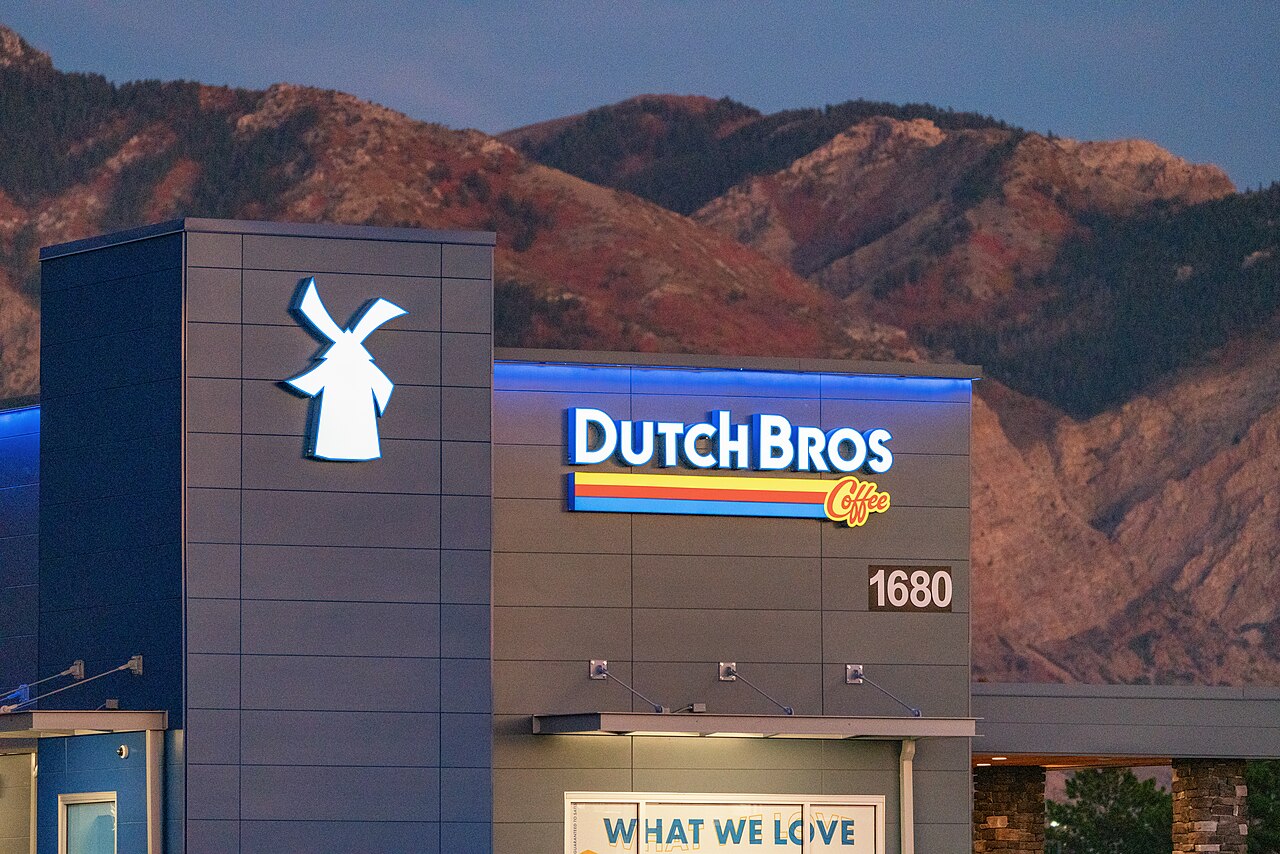
Restaurant bankruptcies have continued to reshape the quick-service business in 2026 as operators look for ready-made sites instead of building from scratch. That dynamic is now playing out around Salad and Go’s abrupt shutdown, with Dutch Bros moving quickly to secure dozens of the chain’s former drive-thru locations. The proposed transaction, filed the same day Salad and Go entered Chapter 11, would turn a failed salad chain’s real estate into a fast expansion play for coffee.
Salad and Go collapsed, and Dutch Bros moved in the same day
Salad and Go filed for Chapter 11 bankruptcy protection in the U.S. Bankruptcy Court for the Southern District of Texas on August 5, 2026, and permanently closed all 70 of its restaurants that day, according to the company’s press release as reported by Restaurant Dive. In the same bankruptcy case, the company asked the court to approve a $105 million cash sale of lease assets to Dutch Bros, KTAR reported from the court filing. The proposed buyer was identified as a Dutch Bros-affiliated entity in the filing, and the agreement covers leases plus furniture, fixtures, and equipment rather than the Salad and Go brand itself.
The scale is unusually large for a post-bankruptcy restaurant real estate deal. KTAR reported the proposed sale includes 51 drive-thru leases in Arizona and Nevada and another 14 in Texas and Oklahoma, for 65 leases total, even though Salad and Go said it closed 70 restaurants on August 5. The public filings cited in coverage do not explain every gap between the closed-store count and the lease-sale count, and not every former site appears to be part of the proposed transaction.
Court records described Dutch Bros as one of a very small number of operators that fit the properties. KTAR reported Salad and Go screened 16 potential buyers and said only three met its requirements, which included a drive-thru model, at least 300 locations, more than $100 million in available funding, and a format compatible with compact buildings that lack full kitchen infrastructure.
The immediate impact is clearest in Arizona and Nevada, with some Texas and Oklahoma sites included
The most clearly confirmed geographic impact is in Arizona and Nevada, where the bankruptcy filing identified 51 leases for the proposed Dutch Bros purchase, according to KTAR. Another 14 leases are in Texas and Oklahoma, but public reporting so far has not provided a complete city-by-city list for all four states. That matters because Salad and Go’s earlier retrenchment had already reduced its footprint outside its core Southwest markets before the final shutdown.
For Texas readers, some former Salad and Go sites expected to be part of the conversion effort have been identified in broader reporting, including stores in the Dallas-Fort Worth area, Frisco, Katy, and San Antonio. Still, the company has not released a comprehensive final list of affected Texas addresses tied to the Dutch Bros purchase agreement. Oklahoma is included in the lease package, but publicly available reports have not broken out a confirmed city list there either.
What is confirmed is that Salad and Go had already been shrinking in Texas and Oklahoma before the bankruptcy filing. Restaurant Dive reported the company closed 32 units in those two states in January, following 41 earlier closures in Texas in 2025. By the time the Chapter 11 filing arrived on August 5, the chain’s remaining business was concentrated in Arizona and Nevada, making those two states the center of both the collapse and the proposed handoff.
Court filings point to expansion missteps, rising costs, and weaker demand
The reasons cited for the collapse were direct and specific. Restaurant Dive said Salad and Go attributed the bankruptcy to sustained pressure on consumer demand, past strategic growth challenges, and rising costs. Bloomberg Law, citing court papers, reported the company said a summer Cyclospora outbreak across the broader salad category accelerated losses and hurt customer traffic, even though Salad and Go was not linked to any illnesses.
The filings also point back to earlier expansion decisions. Bloomberg Law reported the company said a costly push into Texas and Oklahoma had already forced dozens of prior closures, while continuing rent obligations on dark stores and corporate overhead strained cash flow. Restaurant Dive separately reported CEO Michael Tattersfield had previously described the Texas growth strategy as flawed because the chain needed a large central kitchen capable of supporting a much bigger store base.
For customers, the near-term takeaway is practical: Salad and Go is gone, and some of its former drive-thru buildings may reopen under a different brand rather than sit vacant. No reopening timeline for specific converted Dutch Bros stores has been publicly confirmed. What has been confirmed is that Dutch Bros remains in active expansion mode, with 1,177 locations in 25 states as of March 31, 2026, according to the company’s investor relations materials, making the former Salad and Go portfolio a fast way to add more sites if the bankruptcy court approves the deal.
The interface is so smooth and I had no trouble accessing my account. Definitely the best way to play! Check it out at jilibossloginapp
Quick access and no glitches. It is refreshing to find a site that actually prioritizes speed and stability for the players. nog88login