
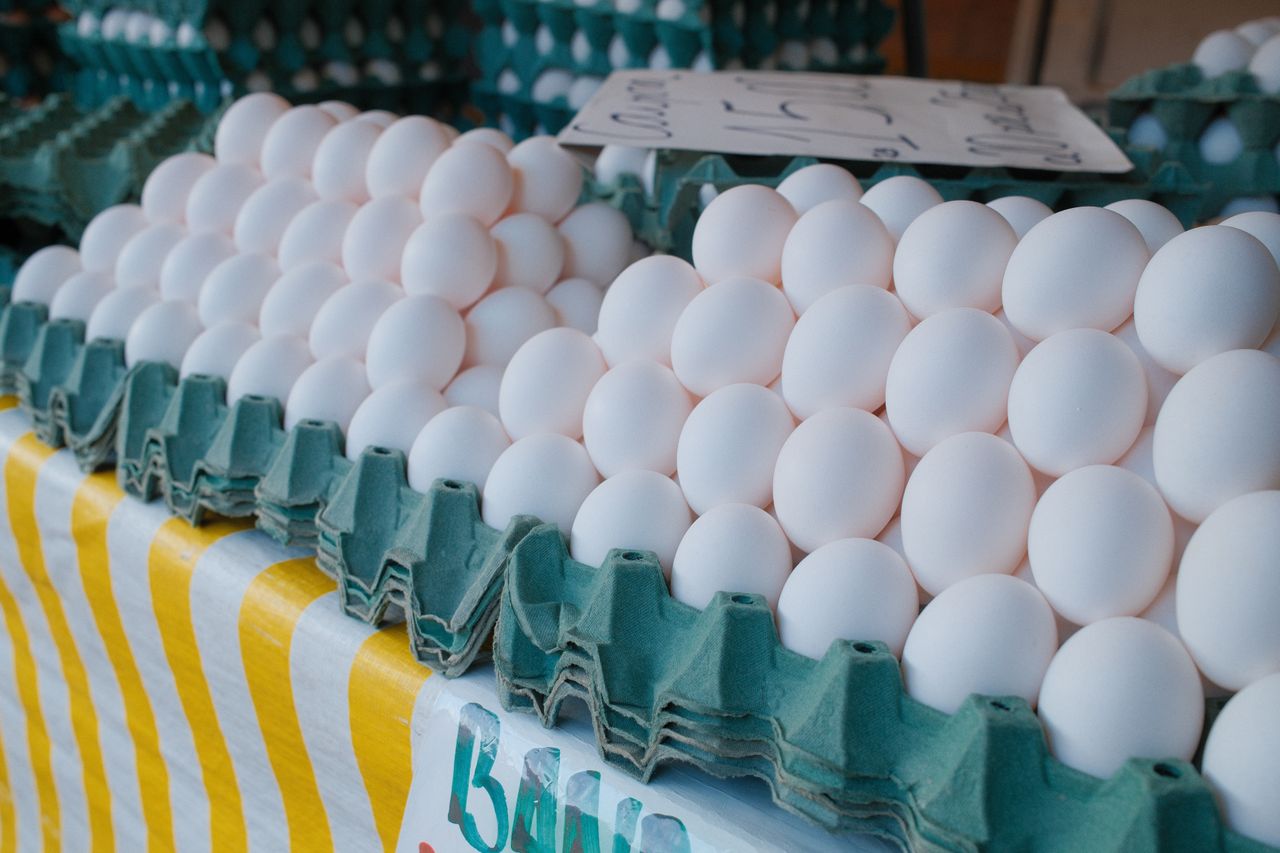
Egg recalls have taken on added urgency this summer as federal health officials track several multistate foodborne illness investigations. In this case, the focus is a Texas-linked shell egg recall that the U.S. Food and Drug Administration has now placed in its most serious hazard category. The affected products were sold under grocery and store brands across parts of the South and Southwest.
FDA assigns its highest-risk label to a Texas egg recall
Midwest Poultry Services, L.P. initiated the recall on July 22, 2026, covering 1,589,577 dozen white shell eggs and brown cage-free shell eggs produced in Texas, according to the company announcement posted by the FDA. The agency later classified the action as a Class I recall, the FDA category reserved for cases in which there is a reasonable probability that exposure could cause serious adverse health consequences or death.
The recalled eggs were produced between June 6, 2026, and July 3, 2026, and carry sell-by or best-by dates from July 20, 2026, through August 17, 2026, according to the FDA outbreak advisory. Federal officials said the products were sold in bulk and in retail cartons containing 6, 12, 18, 24, 30, 36, and 60 eggs under Country Morning, Cal-Maine Sunups, Brookshire’s, Simple Truth, and Kroger brand names.
FDA materials identify the recalled cartons by plant codes P-1950 or 0840962 and Julian dates 157 through 184 printed on the carton. Product listings published by the FDA include varieties such as Kroger Large 12 eggs, Kroger Large 18 eggs, Simple Truth Cage Free Large Brown 12 eggs, Brookshire’s Large 12 Eggs, and Country Morning Large 12 Eggs, along with UPCs tied to each item. The FDA said consumers, restaurants, and retailers that purchased or received the eggs should throw them away or return them to the place of purchase for a refund.
Distribution was confirmed in six states, with Texas at the center
The FDA said product distribution has been confirmed in Arkansas, Louisiana, Mississippi, New Mexico, Oklahoma, and Texas. In the company recall notice, Midwest Poultry Services said eggs were shipped to foodservice and retail customers in Texas, Oklahoma, and Louisiana, and were also available through Brookshire Grocery stores in Texas, Oklahoma, Arkansas, Louisiana, New Mexico, and Mississippi, as well as other smaller retail outlets.
Texas is the key geography in the recall because the eggs were produced and distributed from farms in Texas, per the FDA and the company notice. Kroger store sales cited in the recall were confirmed in Texas and Louisiana, while Brookshire’s distribution extended to the six-state footprint listed by the FDA. The company has not released a comprehensive city-by-city list of affected stores or foodservice customers in Texas or the other states.
The public health impact reaches beyond those six distribution states. As of the FDA’s July 24, 2026 update, 98 people infected with the outbreak strain of Salmonella Enteritidis had been reported across 17 states, with 26 hospitalizations and no deaths. The states with confirmed illnesses were Arizona, California, Colorado, Georgia, Illinois, Louisiana, Michigan, Missouri, Mississippi, North Carolina, New Mexico, Nevada, New York, Oklahoma, South Carolina, Texas, and West Virginia.
Testing linked the eggs to part of a wider Salmonella outbreak
The FDA said laboratory, epidemiological, and traceback evidence determined that shell eggs recalled by Midwest Poultry Services are a likely source of illnesses in the outbreak. According to the agency, the company shared third-party testing results with FDA on July 21, 2026, and samples collected at farms in Texas tested positive for Salmonella. Whole genome sequencing performed by the firm’s third-party lab found that some samples matched the outbreak strain.
Federal investigators also drew a narrower conclusion: Midwest Poultry Services appears linked to part, but not all, of the outbreak. The FDA said the producer was identified as a common egg source during traceback work, but it “does not account for all the illnesses” in the multistate investigation. The agency said additional investigation is ongoing to determine whether other sources are contributing to reported illnesses.
For shoppers and food businesses in the affected states, the practical impact is specific rather than open-ended. The FDA said recalled eggs can be identified by the listed plant codes, Julian dates, and date range, and that any purchased or received products should be discarded or returned for a refund, with potentially contaminated areas disinfected afterward. As of the latest FDA outbreak update, the investigation remained active and the advisory was subject to further revision as new information became available.
Useful, specific, and free of hype. Burnout ends more preparations than difficulty does. Most preparation plans fail because they are built for an ideal week. Appreciated.