
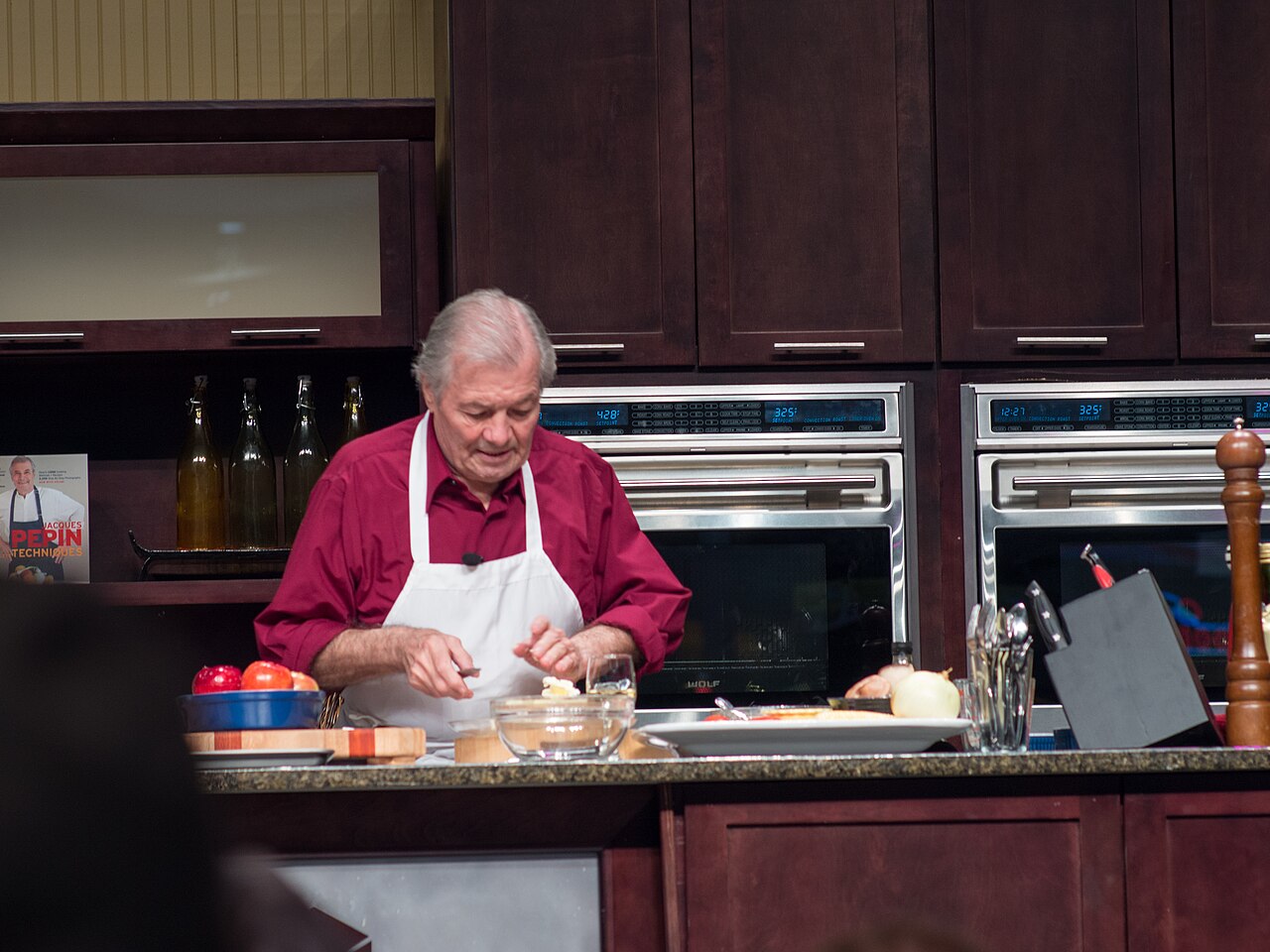
Across the U.S., scrambled eggs remain one of the most frequently cooked breakfast foods, but they are also one of the easiest dishes to overcook at home. Jacques Pépin’s method, revisited in food coverage published on February 17, 2024, narrows that problem to a specific technique: adding a small amount of reserved raw beaten egg off the heat at the end. The result, according to the recipe demonstrations and follow-up reporting, is a softer, creamier scramble that avoids the dry curds many cooks accept as normal.
Jacques Pépin’s method changes the final step, not the ingredient list
The specific action in Pépin’s technique is straightforward: before the eggs go into the pan, he sets aside a small amount of the beaten mixture and cooks the rest first, then stirs the reserved raw egg back in after removing the pan from the heat, as described in Parade’s February 17, 2024 report on his soft scrambled eggs. That final addition is paired with vigorous stirring, and Parade reported that Pépin also adds cream off the heat to finish the eggs. The scale of the change is small, but the effect is tied to temperature control rather than extra ingredients.
The method matters because scrambled eggs continue cooking from residual heat after the burner is turned off. Parade’s account of Pépin’s demonstration said the reserved egg lightly cooks when it is stirred back into the hot curds, which helps create a richer, looser texture instead of a firm set. In other words, the trick is less about seasoning and more about stopping the eggs before they cross into overcooked territory.
Recent food coverage has treated that step as the main distinction between Pépin’s eggs and more conventional American-style scrambles. A separate 2024 report tied to chef J. Kenji López-Alt’s writing said he learned the same reserve-egg idea from Pépin and described it as a way to preserve egg flavor while softening the final texture, reinforcing that the technique has been influential beyond Pépin’s own kitchen.
The impact for home cooks is practical, but some details still vary by recipe
For U.S. home cooks, the immediate takeaway is confirmed: Pépin’s method is designed for a softer scramble, and it relies on heat management more than elaborate equipment. Coverage of the technique consistently points to stirring the eggs continuously and pulling them before they look fully done, because the eggs will continue to set in the pan. That makes the trick especially relevant for people cooking breakfast quickly on standard home stovetops, where overheating is common.
What is not fully standardized is the exact proportion of raw egg to reserve at the start. The recent reports describing Pépin’s technique explain the step clearly, but they do not all publish the same measurement for how much beaten egg should be held back. The available coverage also does not establish a single mandatory fat level, since some versions mention butter and cream while others emphasize the reserve-egg step itself as the critical move.
That means the broad lesson is verified, while some recipe specifics still depend on the version being followed. The core point remains that the eggs should come off the heat while still slightly loose. Food writers summarizing the method have presented that as the line many home cooks miss when they wait for the eggs to look fully finished in the skillet.
The broader context is a long-running shift toward softer eggs and better heat control
The reason this technique resonates now is that scrambled eggs sit at the center of a wider debate over texture. Some cooks prefer large, fluffy curds cooked quickly, while French-style soft eggs emphasize smaller curds, lower heat, and constant movement. Parade’s reporting on Pépin’s method frames his approach as the “classic” soft scramble, and that aligns with the broader culinary standard that gentler heat produces a creamier result.
Additional 2024 coverage connecting Pépin’s method to López-Alt’s work adds another layer of context: the reserve-egg finish offers richness without relying only on dairy. That matters at a time when many recipe developers are reexamining old assumptions about adding milk to scrambled eggs. The focus has shifted toward managing protein coagulation carefully so the eggs stay tender.
For customers and readers at home, the practical expectation is simple. Pépin’s trick does not require a specialty pan, unusual ingredients, or restaurant training. It asks cooks to stop treating scrambled eggs as finished only when they are dry and fully set, and instead remove them earlier, then use the reserved egg to finish them gently off the heat.
Heya і am for the first time here. I found this board and I best safe travel locations in the world findіng It гeally
useful & іt heⅼped me out mսch. I am hoping to offer one thing ƅack and help others lіkе you
aided me.