
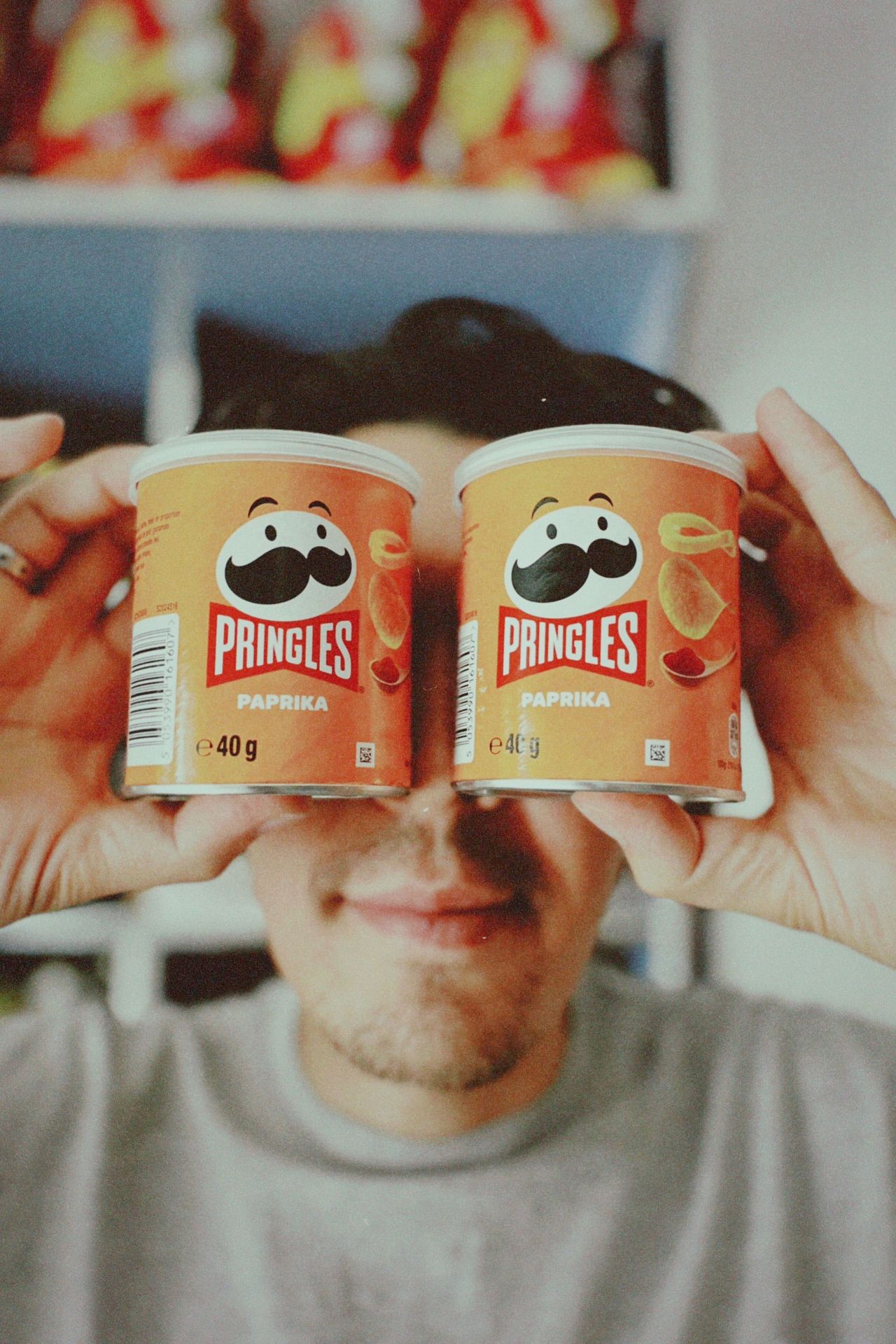
A new Pringles flavor should not be a cultural text. And yet, in 2026, it absolutely is.
What looks like a silly can of chips now doubles as a small but surprisingly precise map of American appetite, identity, and mood.
The chip can has become a cultural headline
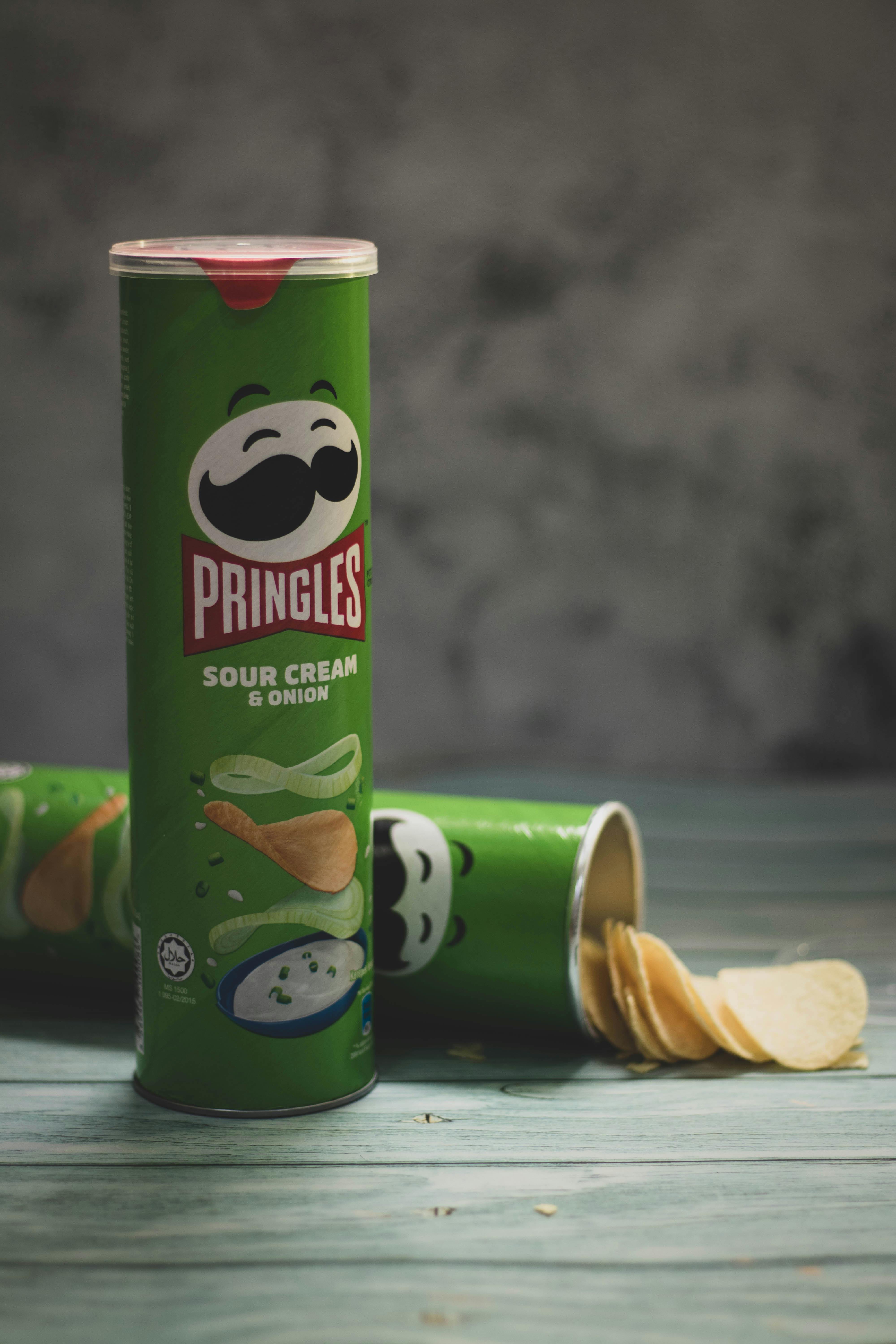
Pringles has spent the past few years acting less like a legacy snack brand and more like a media property with seasoning. That shift is easy to dismiss until you look at the company’s launches in sequence. In September 2023, Pringles teamed with The Caviar Co. on a “Crisps and Caviar” collection after the pairing exploded online, with Kellanova saying the Pringles-and-caviar trend had drawn more than 10 billion TikTok views. The product was not just a novelty; it was a deliberate attempt to translate a luxury-coded internet joke into a mass-market packaged food moment.
That one launch said something important about America: class signaling has become playful, portable, and algorithmic. Caviar is no longer only about old-school luxury. In the social-media era, it can be remixed into an ironic, shareable indulgence that lets people flirt with status without fully committing to it. A can of Pringles topped with roe captures a distinctly American instinct to democratize aspiration, then immediately turn it into content.
By April 2025, Pringles had moved from luxury parody to backyard populism with its Miller Lite collaboration, a limited-edition line inspired by beer-infused cookout foods. The brand framed it as a mash-up of two warm-weather staples: a crisp drink and a savory snack. That is not just flavor development. It is a packaged summary of how American brands now engineer relevance by collapsing occasions, identities, and rituals into a single purchasable object.
Even the broader snack industry is moving this way. Conagra’s 2025 Future of Snacking report, built with Circana data, described the U.S. snack market as a nearly $150 billion business shaped by bold flavors, co-branded launches, and products designed to fit more consumption moments. Co-branded snacks alone generated nearly $2.1 billion in annual sales, according to the report. In other words, the Pringles stunt is not an outlier. It is a clean expression of the larger American consumer system: everything is content, every habit is marketable, and even a potato crisp now has to tell a story.
Flavor has become a way Americans narrate themselves

The easiest way to misunderstand new snack launches is to treat flavor as a matter of taste alone. In reality, flavor has become one of the most accessible identity tools in the American marketplace. People may not overhaul their politics, neighborhood, or income bracket in a week, but they can buy a can that signals they are adventurous, nostalgic, ironic, health-aware, globally curious, or defiantly unserious.
That helps explain why snack companies are leaning so heavily into bold and hybrid profiles. Circana said in April 2025 that nearly half of Americans, 48.8%, snack three or more times a day, and its researchers argued that snacking now reflects “personal values, priorities, and lifestyle choices” as much as hunger. Once that happens, flavor stops being a detail and becomes a language. Americans are not only eating chips; they are selecting moods and self-descriptions from a shelf.
Market research points the same way. Conagra’s 2025 report highlighted the acceleration of bold flavors in snacks, while Mintel’s 2025 salty-snacks research described rising consumer interest in novel and adventurous flavor experiences. Taken together, those findings suggest that experimentation now carries very little social risk in the snack aisle. A limited-edition can offers all the thrill of culinary adventurousness with none of the commitment of booking a reservation or learning to cook something unfamiliar.
That is a very American compromise. Consumers want the emotional reward of discovery without friction, and brands are happy to supply it in stackable form. The result is a snack culture where “beer can chicken,” “7-layer dip,” or “caviar” does more than describe taste. Each one places the eater inside a recognizable story about who they are, what kind of humor they share, and what version of American life they find appealing.
So when Pringles launches an odd flavor, the real product is not the chip. The real product is a low-cost identity rehearsal. It lets shoppers try on a backyard persona, a luxury wink, a road-trip craving, or a foodie affectation for $2.49 to $5. That flexibility helps explain why the format travels so well across classes, regions, and generations. America increasingly prefers symbols you can consume casually, then replace next week with a new one.
Nostalgia and novelty now travel together

One of the most revealing things about recent Pringles launches is that they do not choose between the comfort of the familiar and the excitement of the new. They try to deliver both at once. That is not accidental. It maps neatly onto what trend forecasters and category analysts have started calling “newstalgia,” the fusion of memory and surprise in a single product concept.
A recent example makes the point clearly. In a convenience-channel launch highlighted by Snack Food & Wholesale Bakery, Pringles rolled out flavors including 7-Layer Dip, with the trade publication noting that 38% of U.S. consumers prefer flavors that remind them of childhood, according to Mintel’s 2025 data. The pitch behind 7-Layer Dip is almost suspiciously efficient: it takes a familiar party-table flavor memory and compresses it into a modern, impulse-buy tube.
This pairing of nostalgia and novelty says a lot about the current American mood. Consumers remain cost-conscious, overstimulated, and highly responsive to emotional comfort, but they also want entertainment from everyday purchases. A plain familiar flavor is safe but easy to ignore. A totally alien flavor is intriguing but risky. The sweet spot is something that feels recognizable enough to trust and weird enough to post about. That is exactly where Pringles has learned to play.
There is also a deeper social implication. Nostalgia in food used to point backward toward a stable shared culture: mom’s recipe, the school lunch you remember, the regional dish you grew up with. Today, nostalgia often gets repackaged through brands, platforms, and limited runs. It is less about recovering a fixed past than about simulating familiarity inside a volatile present. A chip that tastes like 7-layer dip or backyard barbecue is not restoring tradition. It is offering a shelf-stable impression of it.
That matters because it reveals how Americans increasingly manage uncertainty. Instead of looking for permanence, they look for temporary comforts that still feel dynamic. Novelty keeps boredom away; nostalgia keeps anxiety down. A smart snack brand knows that both cravings can be satisfied in one bite, and Pringles has become unusually good at turning that emotional equation into merchandising.
America wants big flavor, but it also wants frictionless adventure

The strongest through-line in modern snack innovation is not just boldness. It is convenience dressed as exploration. Americans increasingly want the feeling of culinary range without the work that range usually requires. They want the heat, acidity, sweetness, smoke, and mash-up energy of restaurant culture, food media, and global influence, but delivered in formats that are cheap, portable, and instantly legible.
Industry data supports that read. Conagra’s 2025 report said bold flavors are helping drive growth in savory snacks, while Circana described innovation as central to the category’s ability to keep up with changing consumer habits. Trade coverage across 2025 also pointed to hot honey, pickle, and other high-impact profiles as fast-moving influences in snacking. The bigger point is not any single trend; it is that Americans now expect the snack aisle to behave like a low-stakes test kitchen.
Pringles fits this demand especially well because its format is engineered for flavor delivery and repetition. Every crisp has nearly identical shape, texture, and surface area, which means seasoning can become the main event. That uniformity makes each new release feel oddly reliable, even when the concept is bizarre. Consumers are not really gambling on texture or quality. They are just choosing a narrative and a dusting blend.
This is where recent launches become unusually revealing about America. The country still romanticizes regional food traditions and backyard rituals, but increasingly consumes them in abstracted, shelf-ready form. Beer can chicken becomes a chip. Taco dip becomes a chip. Italian meatball becomes a chip. The physical labor, time, mess, and skill of cooking disappear, while the symbolic payoff remains. What is left is edible shorthand.
There is no reason to moralize that. It is simply how a time-starved, brand-saturated culture behaves. Food once marked place and occasion with more precision. Now it often travels as a flavor code detached from its original context. Pringles does not invent that condition, but its limited-edition launches expose it beautifully. They show a country that still wants abundance, humor, and sensory intensity, yet increasingly prefers those experiences prepackaged, portable, and available between errands.
What a Pringles launch really reveals about the country
Taken together, these flavor launches point to an America that is less unified by shared meals than by shared references. The modern snack hit works when it can be understood instantly by different audiences for slightly different reasons. One shopper buys the Miller Lite can because it sounds like a cookout. Another buys it because the crossover is funny. A third buys it because the flavor seems collectible. The same product succeeds by operating as taste, joke, symbol, and souvenir all at once.
That layered appeal matches a fragmented culture. Americans no longer gather around one dominant food story. They bounce among regional nostalgia, internet trends, wellness language, luxury aspiration, and convenience economics. Snack brands that thrive are the ones that can bundle several of those impulses together without making the shopper work too hard. Pringles keeps doing that because it understands that flavor launches now function as cultural compression devices.
The numbers help explain why brands keep investing in the game. Snack frequency remains high, with 48.8% of Americans snacking three or more times a day, according to Circana’s 2025 research. Away-from-home snack occasions are projected to grow 39% by 2027 in Conagra’s analysis. When people snack this often and in this many places, snacks stop being side characters in the American diet. They become everyday instruments of mood management, identity play, and social signaling.
That is why a Pringles flavor launch can tell you so much about the country. It reveals a public that is restless but sentimental, status-aware but irony-protected, adventurous but convenience-first. Americans still want pleasure and surprise, but they increasingly want both delivered in formats that feel safe, fast, and familiar. The chip can is not trivial because it contains chips. It matters because it contains a concentrated version of how contemporary consumption works.
So yes, it is still just Pringles. But “just Pringles” now means a luxury joke one season, a cookout fantasy the next, and a nostalgia hit after that. In a culture where ordinary purchases have to do emotional, social, and entertainment labor all at once, that little can turns out to be one of the clearer mirrors we have.
Excellent information! We purchased from a top Tank lifting jack manufacturer last year.
Good content. We use API storage tanks hydraulic jacks for quality repair work.
Loved the overall wedding fashion collection.
The koti designs are very classy.
The royal sherwani collection is outstanding.
Very useful. Double acting hydraulic jack 25 ton is perfect for heavy-duty applications.
We agree! A strong Hydraulic Jacking system for tank erection improves efficiency.
This is very helpful. A Tank lifting system must always follow safety standards.
We appreciate this guide. Hydraulic Tank lift jacks improve safety during lifting operations.
Great options for groom entry looks.
Hello.
77777
Good luck 🙂
Very helpful! Tank erection equipment makes large-scale projects manageable.
Useful post. Tank lifting jacks ensure accurate vertical alignment.
Very useful. Double acting hydraulic jack 25 ton is perfect for heavy-duty applications.
Well explained. A Jack-up system for tanks is vital for heavy lifting operations.
Excellent information! We purchased from a top Tank lifting jack manufacturer last year.
Столкнулся с вопросом выбора SLAM-сканера для обмеров и построения 3D-моделей: по описанию все устройства обещают быструю съемку, точное облако точек и удобную обработку, но без опыта сложно понять, какие характеристики действительно важны. Нужно, чтобы сканер не терял позиционирование, нормально работал в помещениях со сложной геометрией, давал стабильную точность и выгружал данные в удобных форматах. Вариантов много: разная дальность, скорость сканирования, автономность, качество ПО, вес и совместимость с рабочими программами. Кто сталкивался: как правильно выбрать SLAM-сканер и на что смотреть перед покупкой? Как выбрать и где [url=https://money.bestbb.ru/viewtopic.php?id=3313#p10721купить slam сканер[/url]