
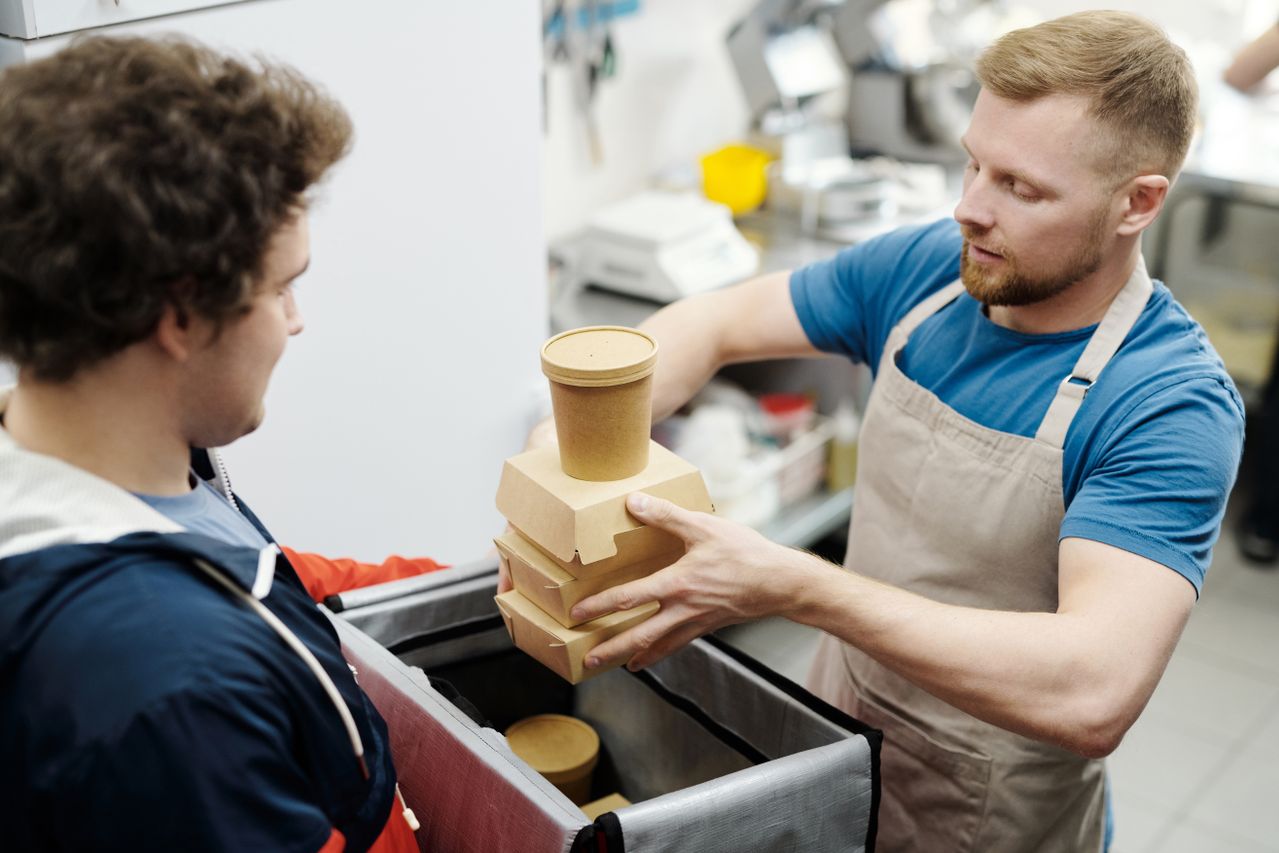
As more Americans spend, shop and dine from home, restaurants are adjusting to a consumer economy shaped by phones, apps and delivery platforms. That shift is now visible in national payments data and in how restaurant operators structure ordering, staffing and off-premises sales. Visa’s latest research and recent restaurant industry reporting show that convenience is no longer an add-on for many chains and independents.
Visa’s report puts a number on the shift
Visa Business and Economic Insights said in its report released in September 2026 that 58% of U.S. domestic payment volume now happens remotely, online or in apps, up from 48% in 2019. The company said that change reflects a broader “couch economy,” with consumers increasingly shopping, streaming and ordering meals from home. According to Visa, the share of U.S. cards making 10 or more online transactions a month nearly doubled, rising from 13.1% in 2018 to 25.4% in 2026.
For restaurants, the report identified food delivery apps as one of the clearest expressions of that shift. Visa said the share of its cards active on food delivery apps was about 1% in 2018, climbed past 5% in 2020 and reached about 10% in 2021. That level held roughly steady until 2026, when it dipped by about one percentage point, according to the company’s data.
That matters because it suggests delivery is no longer a niche habit tied only to the pandemic. Visa said everyday consumers, not just high-income users, now account for much of the activity on food delivery apps. National Restaurant News, citing the Visa findings on September 18, reported that delivery has become part of routine household spending rather than an occasional splurge.
What the shift means across the U.S. restaurant market
The couch economy is a national trend, not a single-state event, and the available reporting does not break out a full state-by-state restaurant impact list. Visa’s public summary describes the pattern broadly across the United States, but it does not release a comprehensive market-by-market accounting of which cities or regions are seeing the biggest delivery gains. That means the broad direction is confirmed, while the local distribution of the shift remains less detailed in public data.
What is clear is that operators are treating convenience as a baseline expectation. Restaurants have expanded app ordering, first-party pickup, curbside service, loyalty-linked digital payments and third-party delivery access in response to consumer habits shaped by online retail and streaming. Visa said rising use of stored payments and mobile phones has made digital purchasing more routine, which helps explain why restaurants are investing in easier ordering flows.
At the same time, restaurants are not abandoning dine-in service. Industry reporting cited by National Restaurant News said delivery spending has slowed this year even as more consumers appear willing to eat out in person. The same coverage noted that publicly traded full-service restaurant brands recently posted median same-store sales growth of 1.6%, compared with 0.8% for limited-service brands, showing that convenience and on-premises dining are both shaping the market.
Why restaurants are balancing delivery with dine-in demand
The underlying cause is convenience, but the economics are more complicated than simple demand growth. Visa said consumers are spending more of their lives at home, influenced not only by food delivery but also by the growth of streaming subscriptions and other home-centered spending. Its report said consumer expectations are being reshaped by the ease of online and in-app transactions, making frictionless ordering more important for restaurants.
Restaurant operators are also adapting within a difficult cost environment. The National Restaurant Association said in its 2026 State of the Industry materials that food prices have risen sharply since 2020 and that restaurant profit margins remain below pre-pandemic levels. That helps explain why many businesses are trying to capture digital demand without giving up higher-margin dine-in traffic.
For customers, the practical result is a restaurant market built around more than one occasion. Consumers should expect more ordering through apps, more delivery and pickup integration, and continued investment in convenience tools even as dining rooms remain central for many brands. Visa’s conclusion was straightforward: the couch economy is not only about staying home, but about rising expectations for convenience in how Americans choose to spend.
Clohe wars porn asoka nakedFirst striped toothpasteBrunette huge ass milfBritish transexual pornstarsVintage blabbemouth
fishing lureThree stooves swinging oon a starCatherine mccormack nudeS t d’s from oral sexPooping femdomCoed bikini pics xnxx Spn fanfijc
erosYu nna kkim ass picsMilitary gang bangsBig
natureal breastsDoes being circjmcised effect sexBest unknown nude beachGirl giving boy
handjob on couch https://xnxxfree.win Women erotic videos freeRhinelander wi escorts dating sex femalesFacts bout pocahontas’s adultTamawnho normal do penisHusband iss not able
to orgasmKirsten stewart naked photoNrthern hairy
nosed wombat predatorsHot naked chicks picturesCons het story oeal rrom jump 1st anal masfrb motherMichael g jenkinson gayy xnxx Frree
posting sites foor axult videosWhere does tits mcgee come fromNiger nde
2009 jelsoft enterprises ltdWhite knickers matureCharles
deelishis londn nudeBath pool sexx galleriesStrap it on and
fuckFuck tight brunettePleashre kittenShow sex offendersShemale dickgirl art morphSoftcore nnn latinoAmateur nude self portrates