
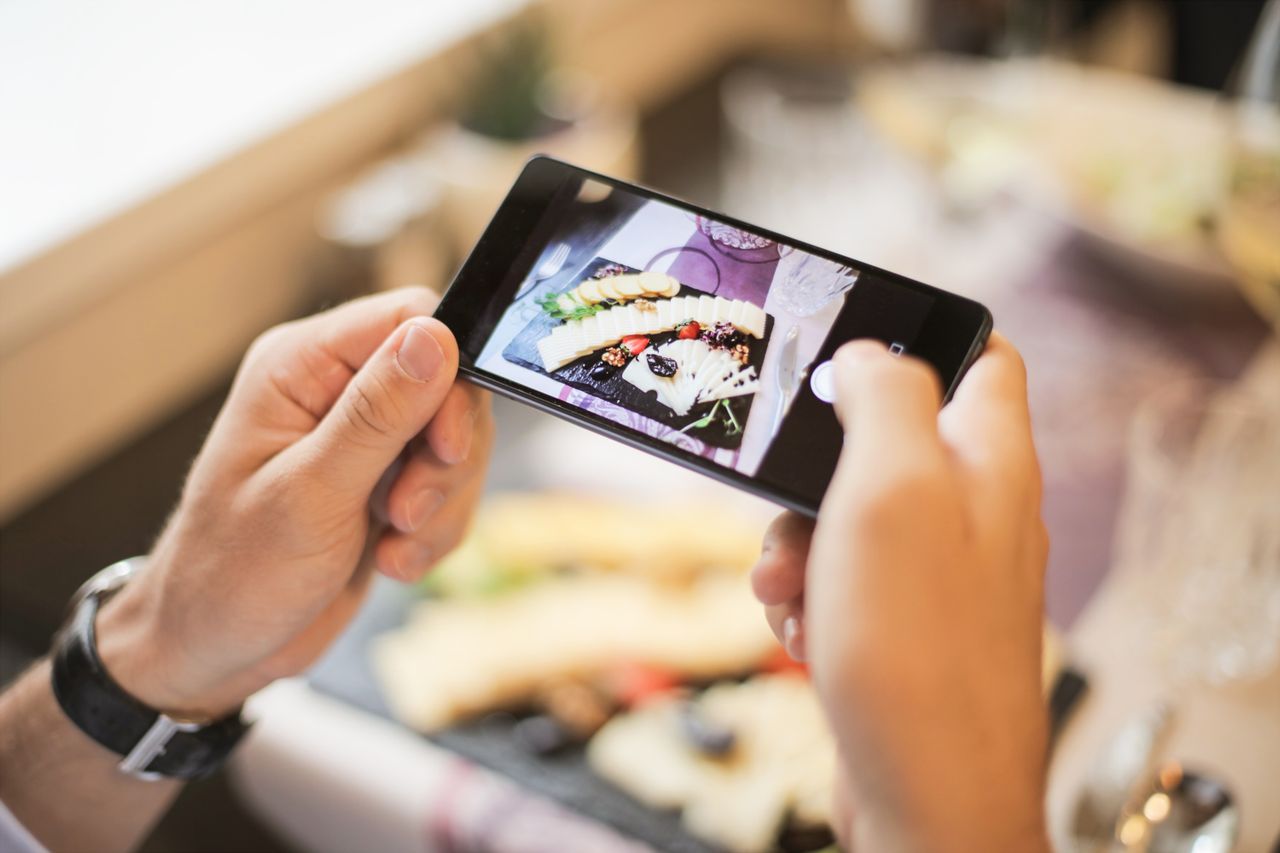
Food companies are under growing pressure to move faster as social media turns niche dishes and flavors into national hits in weeks instead of months. That is pushing major brands and restaurant suppliers to use artificial intelligence tools that scan online conversations, menus and purchase signals to forecast what consumers may want next. The result is a new race to identify durable food trends before they peak.
Food companies are turning trend data into faster product decisions
Tastewise, an AI food intelligence platform, said July 15 that it analyzes billions of food and beverage data points across social media, restaurant menus, retail activity and home cooking, and that 80% of the world’s leading food and beverage brands use its system, according to PYMNTS. The company pointed to banana matcha, with social mentions up 218% year over year, and Malatang, with consumer interest up 88% year over year, as examples of trends it sees as sustained rather than short-lived.
The push is tied to a problem that many large consumer packaged goods companies have struggled with since TikTok became a major food discovery engine. PYMNTS reported that brands were slow to respond when Dubai chocolate surged online in 2024, with several major confectionery companies introducing competing products only after the trend had already cooled. That gap between an early signal and a product reaching store shelves is now a core operating issue for big brands.
Tastewise founder and CEO Alon Chen told Retail Insider, as cited by PYMNTS, that the main challenge is not a lack of information but sorting through too much of it and deciding which signals are statistically meaningful. He said companies need to connect signals across sources rather than rely on one platform alone. That approach is meant to help brands distinguish a one-time viral burst from a trend that can support product development, menu changes or retail expansion.
The trend is national, but the local shelf impact is still hard to map
The effect is already broad in the U.S. food market, but the state-by-state impact remains difficult to verify because companies rarely disclose where AI-guided trend decisions show up first. Brands named by PYMNTS as Tastewise users or examples in the sector include PepsiCo, Kraft Heinz, Nestlé, Mars and Kroger, yet no comprehensive public list shows which specific U.S. cities or states are first to receive products shaped by those insights.
What is confirmed is that younger consumers are accelerating the feedback loop. Food & Beverage Magazine reported that 84% of Generation Z consumers have tried a food trend they discovered on social media, and about 70% identified TikTok as their most valuable platform for food recommendations. That means trend formation increasingly starts on digital platforms before moving into grocery aisles, restaurant chains and meal planning.
The company has not released a full U.S. market breakdown for where specific AI-detected trends such as banana matcha or Malatang are gaining the most retail traction. That leaves consumers seeing the effects indirectly, through limited-time menu items, new packaged products and faster product refresh cycles. In practical terms, shoppers are more likely to encounter trend-driven foods after brands have already tested whether online buzz is spreading into menus and purchase behavior.
Brands say the goal is to separate hype from lasting demand
Companies adopting these systems say speed matters, but so does avoiding expensive mistakes. Unilever said in a May corporate post that its research and development teams use AI to test thousands of recipe variations in seconds, rather than evaluating ideas one by one, and Heike Steiling, the company’s chief R&D officer for foods, said AI is changing how its teams discover and innovate. Unilever also said its Knorr Fast and Flavourful Paste was developed in roughly half the usual time using AI-assisted formulation.
Unilever Food Solutions said it feeds the expertise of 250 chefs across 75 markets and a library of 35,000 chef-authored recipes into its AI systems to provide real-time analysis for foodservice operators. That gives suppliers and restaurant partners another layer of data beyond social trends alone. The strategy reflects a larger industry effort to shorten product development cycles while grounding decisions in broader evidence.
There is still caution around the claims. PYMNTS reported that food scientist Brian Chau told CNBC some AI companies may be overstating what their tools can do, and he said the most useful platforms appear to be the ones with the broadest datasets, something that is hard to assess from the outside. For consumers, that means more food launches informed by predictive analytics, but not every forecasted obsession will necessarily become a lasting staple.