
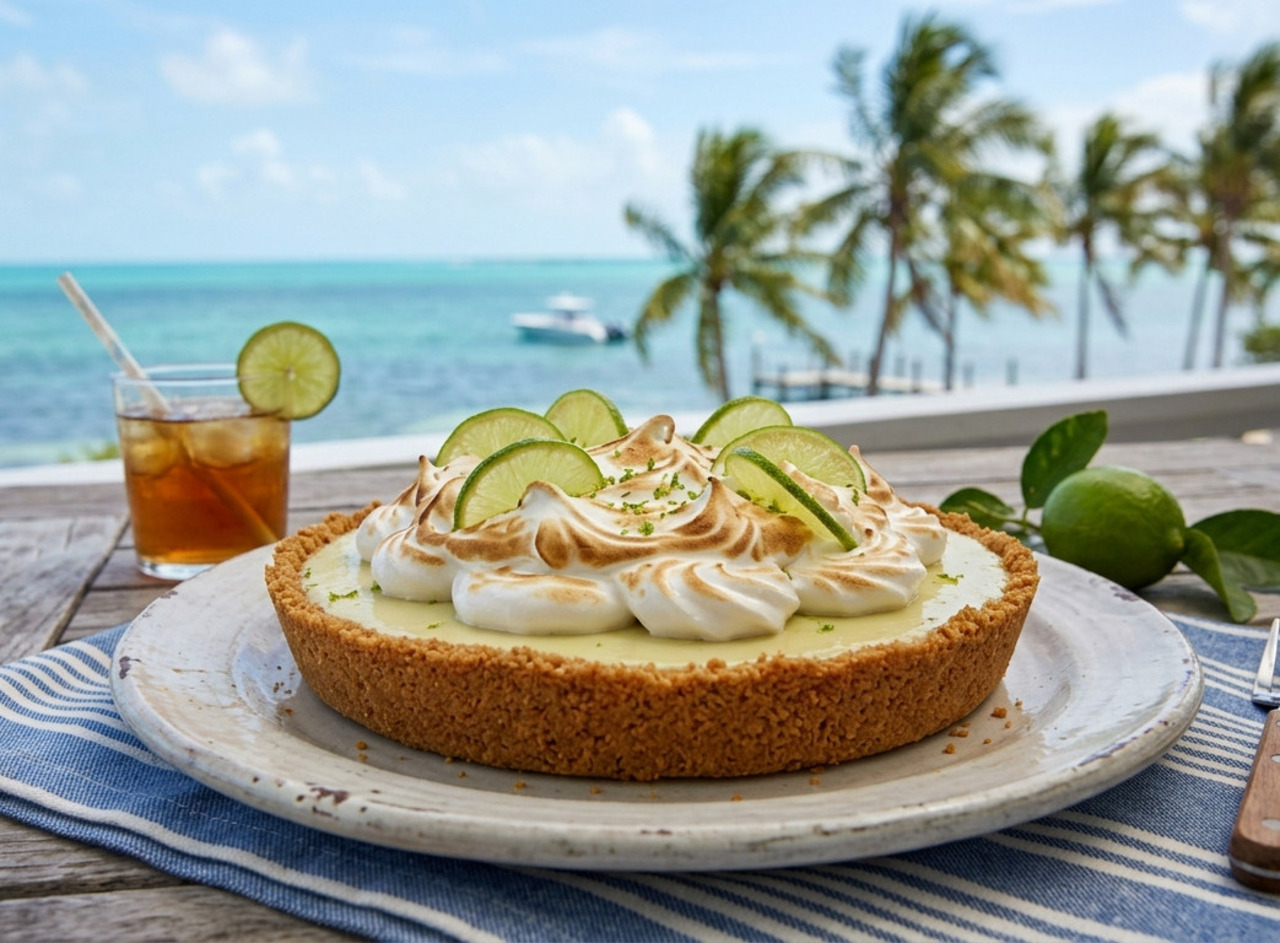
Florida’s most iconic foods are not random favorites. They have lasted because they tell the state’s story in every bite.
The dishes that define Florida come from heat, water, migration, and agriculture. That combination has given the state a food identity that is broader and more durable than any single trend.
They begin with ingredients Florida can claim as its own
The most enduring Florida foods are anchored to local conditions rather than borrowed prestige. Key lime pie remains the clearest example: a dessert so closely tied to the state that Florida law designated it the official state pie in 2006. Its staying power comes from more than nostalgia. It is tart, simple, and built for a subtropical place where bright citrus flavors feel natural year-round.
Citrus, of course, is still central to Florida’s image even as the industry has endured enormous strain. USDA data for the 2024-25 season put Florida orange production at 12.2 million boxes, down 32% from the previous season, while the USDA’s Economic Research Service described that level as the lowest since 1931. Those figures help explain why orange juice remains emotionally bigger than the crop itself: it is not just a beverage but a symbol of the state’s agricultural identity.
Seafood tells the same story from the coast. Stone crab claws are one of Florida’s most distinctive seasonal foods, and the Florida Fish and Wildlife Conservation Commission says the legal harvest season runs from October 15 through May 1. That calendar matters. Enduring foods often depend on ritual, and Florida’s best-known dishes are strengthened by anticipation as much as availability.
They carry the imprint of migration and regional pride
Florida’s durable dishes also survive because they are social history on a plate. The Cuban sandwich, especially, endures because it reflects the movement of workers, families, and businesses between Cuba and Florida, with Tampa and Miami each claiming deep ownership of the form. Visit Florida notes that the debate over the sandwich’s origin still persists, while culinary historians often point to Tampa’s Columbia Restaurant, opened in 1905, as an early landmark in that story.
That argument has actually helped the sandwich last. A food becomes more powerful when communities defend it, adapt it, and insist that their version is the real one. In Tampa, salami is part of the classic build; in Miami, the version is often leaner and more austere. The rivalry keeps the sandwich alive not as a museum piece, but as a living regional identity.
Florida’s strongest dishes are rarely isolated recipes. They belong to neighborhoods such as Ybor City and Little Havana, where food, language, labor history, and family memory overlap. That is one reason these foods outlast trend-driven restaurant culture: they are backed by communities, not just menus.
The foods that last are the ones that feel inseparable from the state
What ties Florida’s enduring eats together is not luxury or even age alone. It is specificity. Key lime pie tastes like the Keys and old Florida hospitality. A Cuban sandwich evokes cigar factories, immigration, lunch counters, and argument. Stone crab claws summon marinas, fish houses, and the opening of the season.
These foods also balance accessibility with distinctiveness. None is so rarefied that it cannot become part of everyday life, yet each is recognizable enough to resist being flattened into generic American fare. That balance is crucial. A dish survives when locals claim it casually and visitors remember it vividly.
Even the pressures facing Florida food culture reinforce this point. Citrus greening, hurricanes, and development have changed the economics of what the state produces, according to UF/IFAS, AP reporting, and USDA researchers. But the foods with the strongest hold on Florida’s identity continue to endure because they are attached to place, season, and memory. In Florida, the eats that last are the ones that could belong nowhere else.
This is my first time pay a quick visit at here and i am really happy to read everthing at one place