
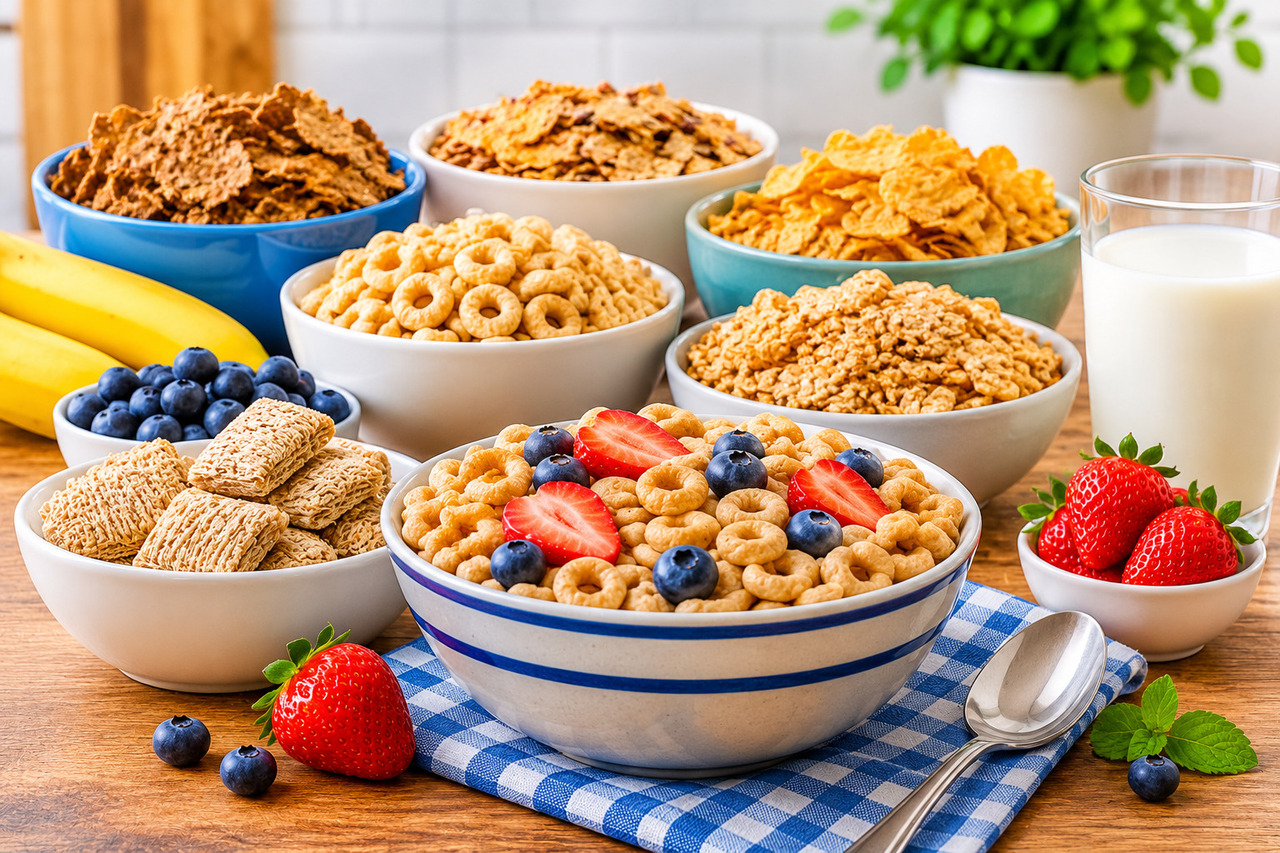
Cereal still has an image problem. Too often, it gets lumped in with candy-like breakfast foods that spike sugar and leave you hungry an hour later.
But dietitians know the aisle is more nuanced than that. When you read labels closely, a handful of boxes deliver the kind of whole grains, fiber, and protein that can make breakfast work harder for you.
What dietitians actually look for in a cereal
Good Housekeeping’s July 27, 2026 roundup makes one thing clear: dietitians are not searching for a “perfect” cereal so much as a practical one. Their experts said they evaluated nearly 100 cereals, prioritizing whole grains, fiber, protein, limited added sugar, and taste. That framework matters because it mirrors how nutrition professionals shop in real life, where convenience still counts.
The Nutrition Facts label is especially useful when cereal boxes make broad health claims on the front. The FDA requires added sugars to be listed in grams and as a percent Daily Value, making it easier to compare options side by side. For a 2,000-calorie diet, the Daily Value for added sugars is 50 grams, and 5% DV or less is considered low while 20% DV or more is high.
That does not mean every shopper needs the exact same cereal. The American Heart Association says most people already consume too much added sugar and recommends keeping it below 6% of daily calories. In practice, that is why many dietitians favor cereals built around oats, wheat, or other whole grains first, with sweetness playing a supporting role instead of dominating the bowl.
The 7 cereals that stand out for smart nutrition
Among the more familiar picks, Original Cheerios remains a staple because it starts with whole grain oats and keeps added sugar low. It is the kind of cereal dietitians often appreciate for its simplicity, especially for shoppers who want an easy base for fruit, nuts, or yogurt. It also works across age groups, which helps explain its staying power.
Post Shredded Wheat Original Spoon Size is another standout because it strips the formula down to the essentials. The appeal here is straightforward: strong fiber, notable protein, and no sugar added to create the illusion of health. For shoppers who want a cereal that behaves more like a whole-grain food than a sweet snack, this is the model.
Other notable picks include Cascadian Farm Organic Purely O’s, Nature’s Path Heritage Flakes, Wheaties, and Ezekiel 4:9 Almond Sprouted Grain Cereal. Nature’s Path is especially compelling because Good Housekeeping highlighted its 23 grams of whole grains, 7 grams of fiber, and 5 grams of protein per serving. Wheaties earns points as a value-minded option, while Ezekiel appeals to shoppers looking for sprouted whole grains and a more substantial protein-and-fiber profile.
The surprising catch hidden in one “healthy” favorite
The cereal on this list that needs the most context is Kashi GO Original. Kashi’s official product information confirms that it delivers 12 grams of protein and 12 grams of fiber per serving, which is unusually high for cold cereal and can be genuinely useful for shoppers trying to build a more filling breakfast. On protein and fiber alone, it is easy to see why it attracts attention.
But sugar changes the conversation. Current product information shows 8 grams of added sugar per serving, which is higher than the 6-gram benchmark Good Housekeeping described as a useful comparison point when shopping the aisle. That does not make Kashi GO a bad cereal, but it does mean it should be framed honestly as a higher-protein, higher-fiber option that comes with a meaningful sugar tradeoff.
That distinction is exactly why dietitians read beyond the front of the box. A cereal can be strong in one or two areas and still ask for compromise elsewhere. For most shoppers, the best strategy is not chasing marketing buzz but choosing a cereal that delivers whole grains first, enough fiber to satisfy, and an added sugar level that fits the rest of the day’s eating.