
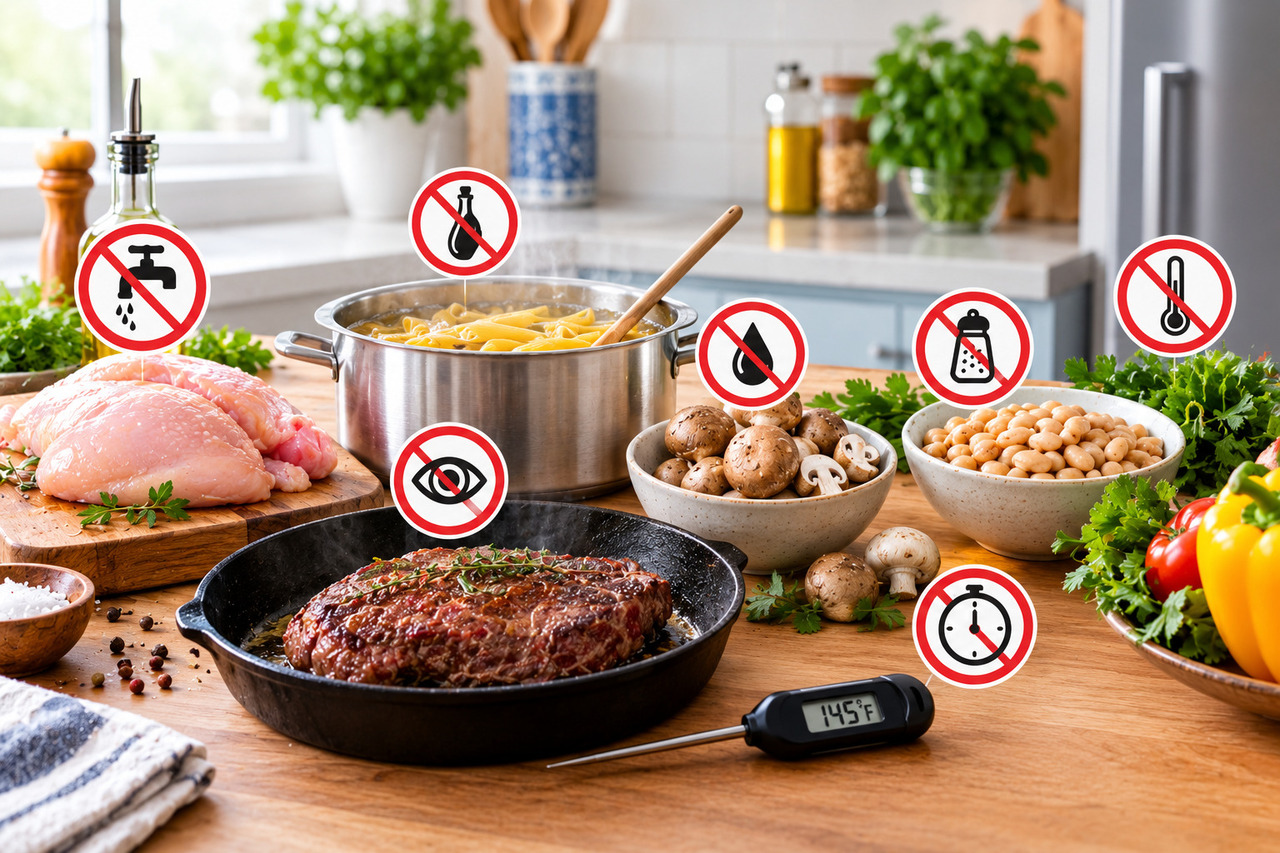
A lot of kitchen wisdom gets passed down as if it were law. But chefs know that some of the most repeated rules are exactly what keep home cooks from getting better results.
The biggest problem is not laziness or lack of talent. It is trusting habits that feel intuitive even when the science, and the food on the plate, say otherwise.
The myths that hurt flavor before dinner even starts
One of the oldest beliefs is that searing meat “seals in” juices. It does not. Food science writers including Harold McGee have long challenged that claim, and chefs now treat searing for what it really is: a way to build browned flavor through the Maillard reaction, not a waterproof barrier. If you want juicier meat, thickness, temperature control, and rest time matter far more than a hard initial crust.
Another stubborn idea is that raw chicken should be washed before cooking. USDA and FDA guidance say the opposite, because rinsing spreads bacteria around the sink, counters, and nearby utensils. CDC has cited USDA research showing that even after cleaning, kitchen sinks can still carry germs after chicken is washed. Safe cooking temperature, not rinsing, is what makes poultry safe to eat.
Home cooks also cling to the belief that doneness can be judged reliably by color, firmness, or grill marks alone. USDA warns that appearance is not a dependable safety measure, and its food thermometer guidance exists for a reason. Chicken can look done before it reaches 165 °F, while burgers can brown before they are safely cooked through. In practice, the instant-read thermometer is less a gadget than a corrective to guesswork.
A fourth belief: if a recipe says “boiling water,” pasta will behave the same no matter what you add. Major pasta makers and many chefs say adding oil to pasta water does not stop sticking. What it can do is leave the pasta slicker, which works against sauce adhesion. Salting the water and stirring early do more for texture and flavor than any oil splash ever will.
The habits that make everyday cooking harder than it needs to be
Many home cooks still believe mushrooms must never touch water. In professional kitchens, that advice is treated more as caution than commandment. A quick rinse right before cooking is usually fine, especially for dirty mushrooms, because the bigger problem is soaking them for too long or crowding them in the pan. What ruins browning is trapped steam, not a brief wash.
Another belief chefs routinely challenge is that you should not salt beans until the end or they will stay tough. Modern recipe testing has pushed back on that. Salted soaking or cooking water can actually help beans season more evenly and maintain better texture, while prolonged underseasoning leaves bland interiors no amount of finishing salt can fix. Industrial bean processing research also shows soaking meaningfully affects hydration and cooking performance.
Then there is the idea that recipes must be followed to the second, especially for meat. In reality, carryover cooking continues after food leaves the heat. USDA guidance on resting meat and standing time in microwave cooking reflects that principle directly. Pulling a roast, steak, or chicken breast at the right moment and letting it rest is often the difference between properly cooked and overcooked.
These myths survive because they simplify cooking into rigid rules. Chefs tend to replace those rules with cues: heat level, evaporation, internal temperature, and timing adjusted to the food in front of them.
What chefs want home cooks to believe instead
The better kitchen mindset is not “old wisdom is useless.” It is that every rule deserves a purpose. If a technique improves browning, tenderness, or safety, keep it. If it only survives because someone’s grandmother said so, test it against better evidence and better results.
That is why chefs consistently return to a few fundamentals. Use a thermometer for meats instead of visual guesswork. Wash produce, but do not wash raw poultry. Salt pasta water, skip the oil, and finish the pasta in sauce with a little starchy water. Brown meat for flavor, then manage temperature for juiciness.
They also urge home cooks to think in systems, not isolated tricks. A crowded pan lowers browning. A too-cool fridge shortens shelf life. A skipped rest time pushes juices onto the cutting board instead of keeping them in the meat. These are not restaurant-only concerns; they are the quiet mechanics behind consistently good food.
The chefs calling out these eight beliefs are really making a larger point. Better cooking usually begins when you stop chasing folklore and start noticing what actually changes taste, texture, and safety. That shift turns the kitchen from a place of superstition into a place of control.