
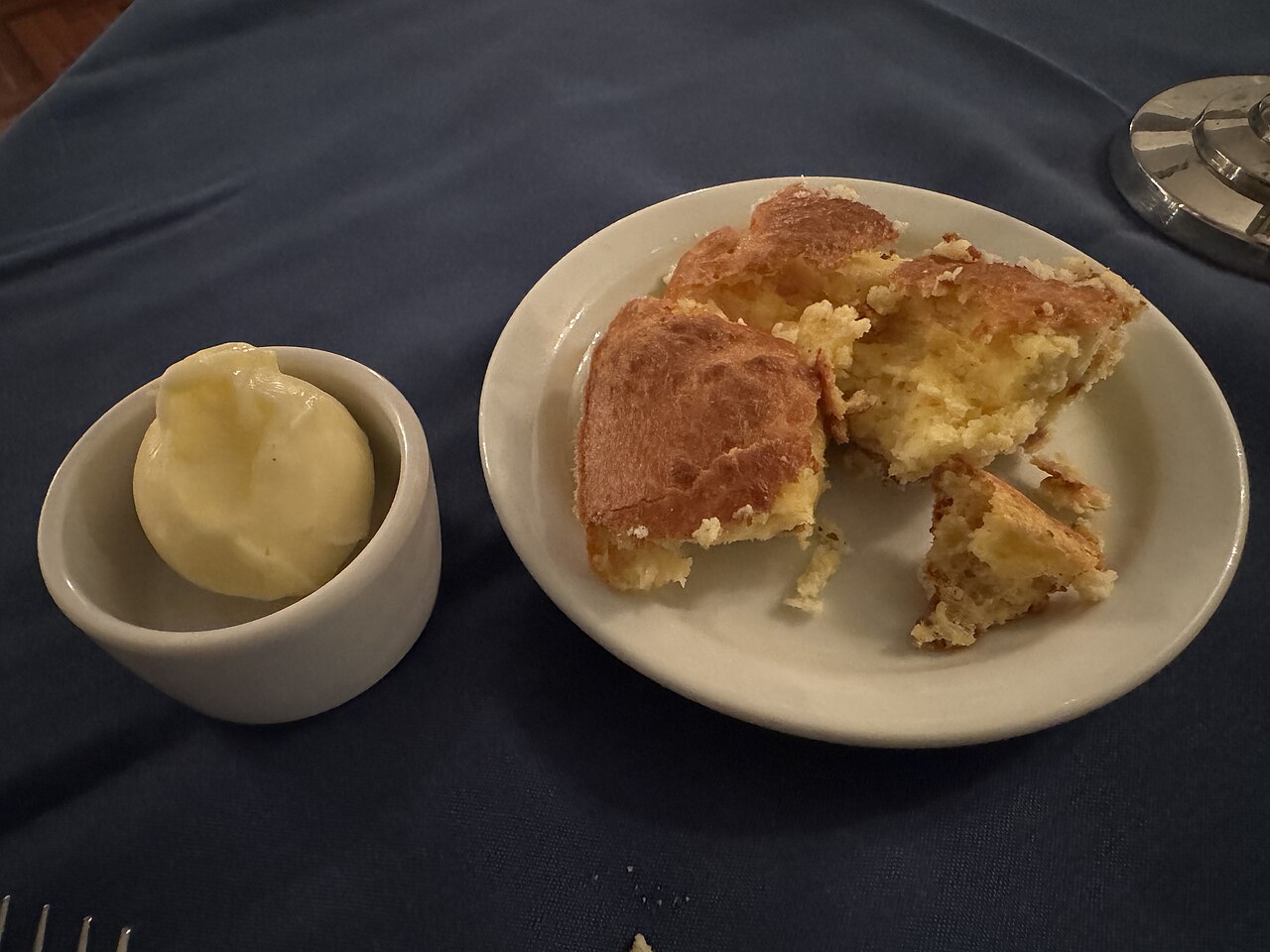
Holiday tables change quietly. One year a dish is expected, and a decade later it survives only as a story, a stained recipe card, or a passing mention from an older relative. In the South, some of the recipes losing visibility are also the ones that carry the deepest cultural memory.
The dishes that faded from the spotlight, not from history
It is important to be precise about what has happened to old Southern holiday food. These dishes have not vanished wholesale, and there is no sweeping survey proving they have disappeared from Southern homes. What is fair to say is that many are less visible on contemporary holiday menus, especially outside families that still cook from inherited traditions.
Spoonbread is one of the clearest examples. The airy corn-based dish remains celebrated in Kentucky, where Berea still hosts an annual Spoonbread Festival, a reminder that the recipe is very much alive even if it no longer appears automatically beside turkey or ham in every household. Its decline is better described as a loss of everyday familiarity than extinction.
The same is true of Lane cake, which Alabama officially recognizes as its state cake. Ambrosia also remains widely identified as a Southern holiday classic, while old-fashioned coconut cake still holds a secure place in many family dessert repertoires. Beaten biscuits survive through heritage bakers and devoted home cooks, even if their labor-intensive method has pushed them out of routine use. According to King Arthur Baking and museum accounts of biscuit-making, beaten biscuits were part of a food tradition shaped not just by skill but by the hard labor of enslaved Black women and later domestic workers, whose work made such refinement possible.
Twelve recipes that once anchored Southern celebrations
If the holiday table feels narrower now, it is because older Southern celebrations often made room for dishes with strong local identity. Among the recipes worth revisiting are spoonbread, Lane cake, ambrosia, beaten biscuits, and old-fashioned coconut cake. To that list, historically grounded additions include oyster stew, Southern fruitcake, chess pie, tomato aspic, corn pudding, Hoppin’ John, and old-fashioned custard traditions.
Oyster stew has deep holiday roots in parts of Appalachia and the broader South, especially on Christmas Eve. Food historians have linked the custom to Catholic meatless observances and older immigrant traditions, while regional memory projects continue to document families for whom Christmas Eve oysters were once nonnegotiable. Hoppin’ John, meanwhile, remains one of the South’s most enduring New Year’s dishes, with History and the South Carolina Encyclopedia tracing its place in the region’s seasonal calendar and its ties to African and African American foodways.
Then there are the dishes that signal an older style of entertaining: tomato aspic molded and chilled for a luncheon spread, chess pie with its pantry-staple filling, and corn pudding baked soft and rich in a casserole dish. Southern fruitcake and old-fashioned egg or boiled custard belong here too, not because every family made them, but because they once marked the season with patience, ceremony, and regional taste rather than novelty.
Why bringing them back would make the table better
The case for revival is not nostalgia for nostalgia’s sake. These foods offer texture, technique, and storytelling that modern holiday menus often flatten. Spoonbread is softer and more delicate than cornbread. Beaten biscuits bring snap and tenderness unlike modern baking-powder biscuits. Lane cake and coconut cake turn dessert into an event instead of an afterthought.
Just as important, these recipes connect the holiday table to the full Southern past, including the people whose labor built its cuisine. Any honest retelling has to include enslaved cooks and Black culinary workers, whose knowledge and physical work shaped dishes such as beaten biscuits and helped define celebratory Southern food. Bringing back the recipes without that history would miss the point.
Reviving these dishes does not require pretending they were universal or that every family has abandoned them. It simply means recognizing that older Southern holiday cooking held a wider range of flavors and rituals than many modern menus now show. Even restoring one or two recipes, whether oyster stew on Christmas Eve or Hoppin’ John at New Year, would make the season feel less generic and far more rooted.