
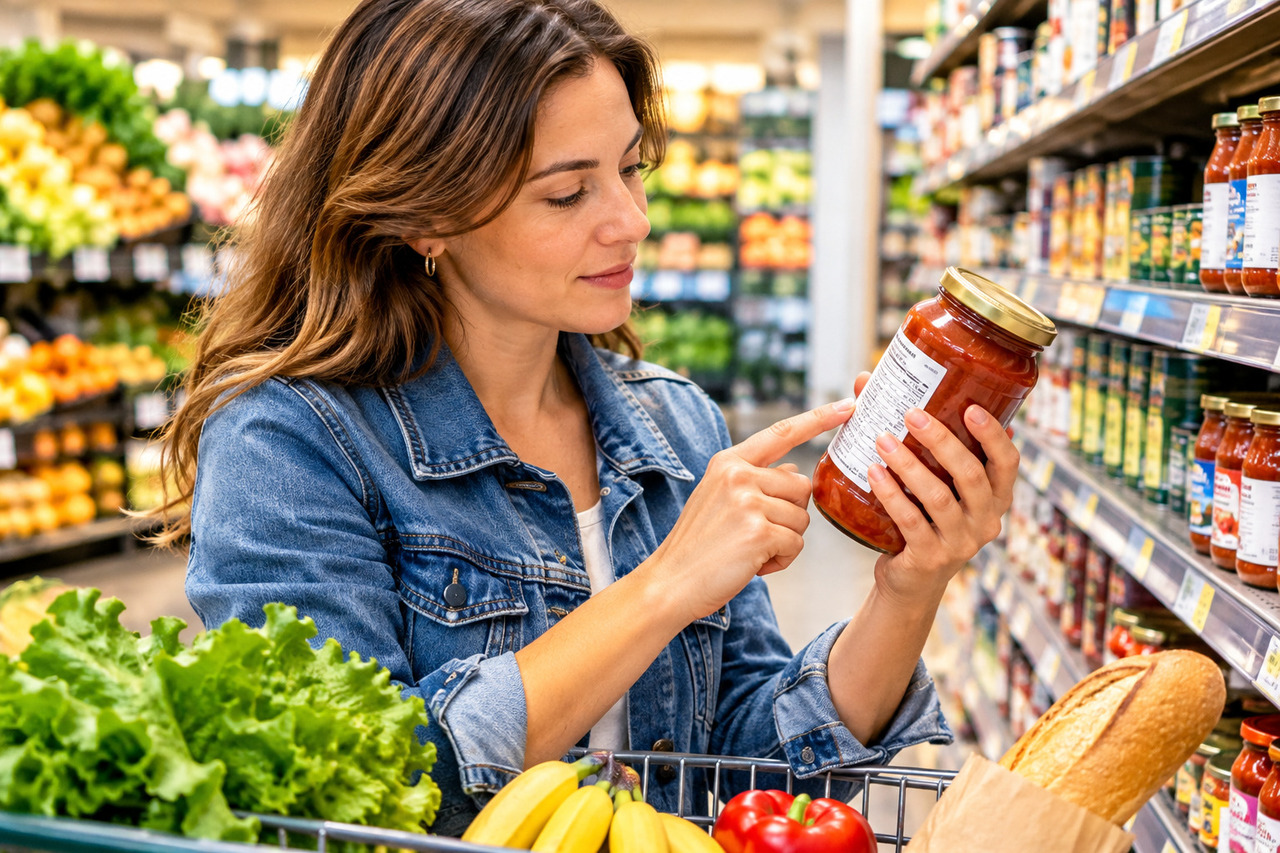
Most grocery trips feel routine. But the aisle is full of tiny signals that can save money, cut waste, and help shoppers make sharper choices without adding much time.
Many of the smartest details are hiding in plain sight, printed right on the shelf edge, package face, or carton lid.
Shelf Tags, Unit Prices, and the Quiet Math of Value
The small shelf tag under a product often tells you more than the big sale sign above it. Unit pricing, typically shown as cost per ounce, pound, or quart, is designed to make true comparisons easier across sizes and brands. The National Institute of Standards and Technology has emphasized that clear, consistent unit pricing helps shoppers compare value directly and can even expose shrinkflation when a package gets smaller but the sticker price stays familiar.
That matters because the “bigger package equals better deal” assumption regularly fails in real stores. A family-size cereal box may carry a higher total price and a worse per-ounce cost than a mid-size box sitting inches away. The same trap shows up in yogurt multipacks, paper goods, coffee, and snack foods, where packaging is engineered to steer attention toward the headline price instead of the comparable one.
Placement is another clue most shoppers overlook. Endcaps and special displays feel promotional, but they are not automatically the lowest-price spots in the store. NIST guidance notes that unit prices should still be visible on shelves, signs, or tags even in special displays, which means the best bargain may be on the regular aisle, not the seasonal tower.
Private-label products also reward close reading. Their packaging is often plainer, but the unit price can be significantly lower than the national brand beside it despite nearly identical ingredients or serving formats. Shoppers who train themselves to scan the bottom edge of the shelf, not just the front of the box, usually make better value decisions in seconds.
Dates, Codes, and Freshness Clues Hiding on Packages
Date labels are one of the most misunderstood details in the grocery store. According to the FDA and USDA, except for infant formula, most package dates are about quality, not safety, and federal law does not require a uniform system for phrases like “best if used by,” “sell by,” or “use by.” The FDA has also said confusion over date labeling contributes to an estimated 20 percent of consumer food waste.
That means a yogurt cup or box of crackers dated for last week is not automatically dangerous. In many cases, the date is the manufacturer’s estimate of peak flavor or texture. Infant formula is the major exception: the FDA requires a “use by” date on every container, and officials say it should not be purchased or used after that date.
Egg cartons hide one of the best freshness clues in the store. USDA guidance says cartons bearing the USDA grade shield must show a pack date, often a three-digit Julian code marking the day of the year the eggs were washed, graded, and packed. A carton marked 032, for example, points to the 32nd day of the year, giving shoppers a more precise freshness signal than the sell-by date alone.
Lot codes and plant markings matter too, especially during recalls. They look cryptic, but they are how stores, regulators, and manufacturers trace products quickly. A shopper who knows where to find those stamped numbers on cans, bags, and lids is better equipped to check whether a recall applies to the exact item in the pantry rather than guessing based on the product name alone.
Labels That Reveal More Than Marketing Ever Will
The ingredient list is one of the most revealing lines on any package, yet many consumers treat it as background text. FDA labeling rules require ingredients to appear in descending order by weight, so the first few entries tell you what a product is mostly made of. If sugar, refined flour, or oil appears near the top, that says more than a “made with whole grains” burst on the front panel.
The Nutrition Facts panel offers another hidden distinction: total sugars and added sugars are not the same thing. The FDA says total sugars include naturally occurring sugars as well as added sugars, while the Daily Value for added sugars is 50 grams on a 2,000-calorie diet. That makes the added sugars line especially useful when comparing flavored yogurt, cereal, pasta sauce, and beverages that seem similarly wholesome from the front of the package.
Produce stickers tell a story too. PLU codes identify the item type and help retailers ring up produce accurately, while country-of-origin labeling rules require many grocery retailers to disclose origin information for certain fresh foods, including covered fruits, vegetables, fish, shellfish, and some meats. That information can matter to shoppers comparing seasonality, supply chains, and perceived freshness.
Then there is the organic seal, one of the few package claims with a tightly defined federal meaning. USDA rules say products labeled “organic” must contain at least 95 percent certified organic ingredients, excluding salt and water. In a grocery environment crowded with soft phrases like “natural,” “farm fresh,” and “simple,” that kind of regulated wording is a detail worth spotting before the cart rolls on.