
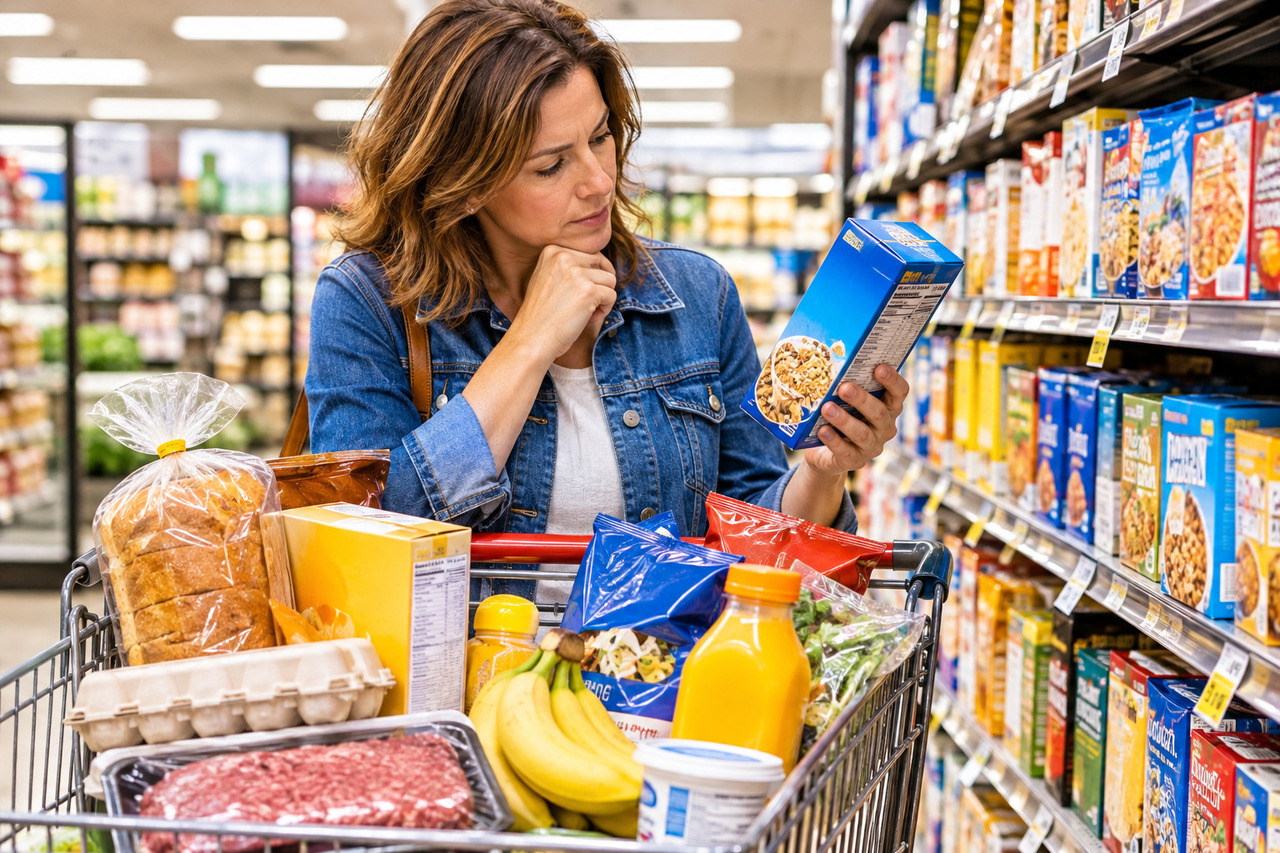
Grocery shoppers are getting squeezed in ways that are easy to miss. The price tag is only part of the story, and some of the most familiar staples now carry stealth premiums that add up fast.
The real issue is not that every basic is overpriced. It is that a handful of everyday cart items repeatedly deliver less value than shoppers assume, especially when shrinkflation, branding, and convenience packaging enter the mix.
The ten staples experts say deserve a harder look
Coffee is near the top of the list because even when month-to-month prices cool, long-run increases remain striking. Recent inflation trackers built from federal data show ground coffee prices are dramatically higher than they were before the pandemic, and USDA says nonalcoholic beverages, including coffee and tea, are still in a category expected to grow faster than its long-term average in 2026. That means branded bagged coffee and pods can quietly drain a weekly budget faster than shoppers expect.
Beef is another major culprit, especially for shoppers reaching automatically for steak, pre-shaped burger patties, or smaller convenience packs. USDA’s latest food price outlook says beef and veal are among the food-at-home categories rising faster than their 20-year historical average, driven in part by lower federally inspected beef production this year. In practice, that leaves households paying a premium for both the protein itself and the packaging format.
Orange juice, eggs, and breakfast cereal also belong on this list, though for different reasons. Juice has been pressured by supply issues for several seasons, while eggs remain vulnerable to volatility tied to avian flu disruptions even when production improves. Cereal is the classic “looks normal, costs more” category: federal watchdogs at the GAO found downsizing contributed 1.6 percentage points to inflation in cereal among the top categories they studied, making smaller boxes one of the easiest overpays to overlook.
Where the quiet overcharge really happens
Chips, crackers, and other snack bags are notorious for weak value because shoppers often focus on sticker price instead of ounces. Independent shrinkflation trackers have found especially sharp unit-price jumps in snacks and cereal after package downsizing, and the GAO says subtle size reductions can be hard for consumers to detect. A bag that looks familiar on the shelf may now deliver far less per serving than it once did.
Frozen meals and pre-cut produce create a different kind of overpayment. The markup is often tied less to raw ingredient inflation and more to labor, branding, and convenience. You are not just buying vegetables or pasta; you are paying for portioning, sauces, trays, freezer logistics, and a format that reduces prep time by only a few minutes in many cases.
Single-serve yogurt and bottled beverages round out the list because convenience packaging reliably raises the per-unit cost. A multipack can look economical while still costing materially more per ounce than a larger tub or family-size bottle. According to Bureau of Labor Statistics data, categories such as juices and drinks remain elevated enough that packaging choice can matter almost as much as the item choice itself.
How smart shoppers can beat the premium without downgrading dinner
The best defense is unit pricing, not guesswork. Many retailers now display cost per ounce, pound, or count, and that number often reveals the real bargain immediately. When a smaller cereal box, coffee pod carton, or snack multipack carries the lowest shelf price but the highest unit cost, the illusion disappears.
It also helps to swap within a category instead of abandoning it. Ground beef can outperform steaks on value, whole carrots beat pre-cut sticks, block cheese beats shredded, and a large yogurt tub usually beats individual cups. These are not dramatic lifestyle changes, but they are the kinds of trade-downs grocery buyers and retail analysts say consistently reduce total cart cost without changing what a household actually eats.
Finally, watch for the hidden trio: shrinkflation, promotion fatigue, and convenience creep. The BLS has shown that some grocery categories are no longer surging uniformly, which means smart selection matters more than ever. In a store where overall food inflation looks moderate, the biggest waste often comes from ten familiar staples shoppers trust too much and compare too little.