
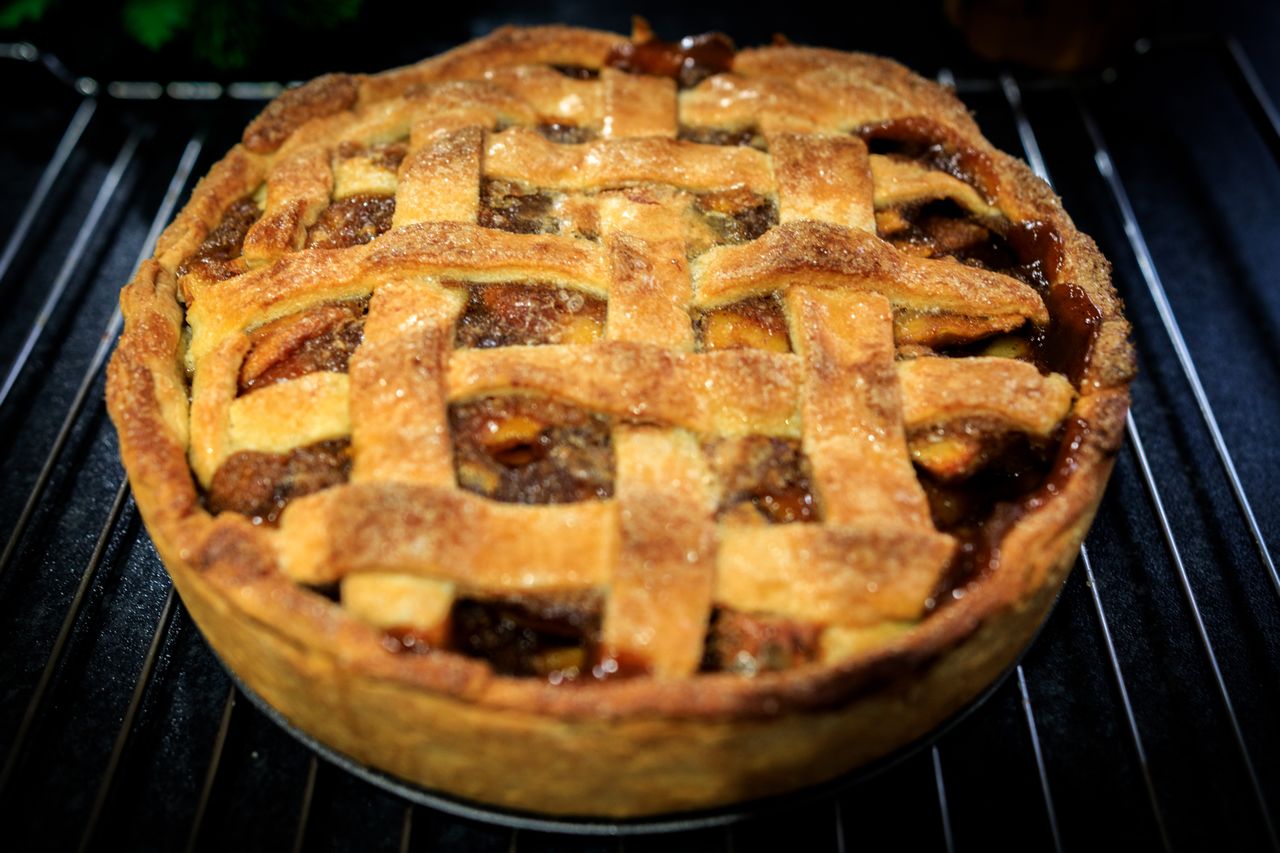
Pie arguments rarely stay small. Once bakers start talking about crisp bottoms, spillover, and blind baking, even the question of what goes underneath can turn into a serious kitchen debate.
Professional bakers, however, are far less divided than social media makes it seem. Their answers change with the job the material is supposed to do.
Under the crust, parchment has the strongest professional case
When bakers talk about putting something “underneath” a pie crust, they often mean inside the shell during blind baking. In that context, parchment paper has a strong edge. America’s Test Kitchen says blind baking helps fully cook crusts for liquid fillings such as pumpkin pie or quiche, and its testing narrowed the safe, practical liners to foil and parchment after ruling out waxed paper for oven exposure.
Recent test-kitchen reporting has sharpened that distinction. In Food & Wine’s six-method trial, both parchment and foil were used with dried beans as weights, but foil produced the most dramatic shrinking and bubbling in one version of the test, even though it also encouraged deeper browning. That result helps explain why many pastry professionals default to parchment when structure matters more than color.
The Washington Post reported that baker and cookbook author Rose Levy Beranbaum favors parchment with dried beans or rice because parchment is more breathable than foil. That breathability matters when bakers want a crust that sets without compacting too harshly under heavy weights. The same report also noted a practical trick many pros use: crumpling parchment first so it molds more easily into the pie plate.
WBUR’s recent roundup of Boston pie experts landed in the same place. One baker described blind baking with parchment and weights as essential to preventing the dreaded soggy bottom, a phrase professionals use with more urgency than humor because texture is often what separates an average pie from a memorable one.
Under the pie plate, a sheet pan is about control, not tradition
A second version of the debate asks what belongs underneath the pie pan itself while it bakes. Here, the professional answer is usually a baking sheet, not a layer of foil spread across the oven rack. King Arthur Baking’s pie guide recommends baking pies on a baking sheet or with parchment underneath to catch drips, especially for juicy fruit fillings that can boil over.
That advice is not only about cleanliness. A baking sheet also makes moving a full pie safer, especially when a soft fruit filling is close to overflowing. In busy bakery kitchens and home ovens alike, fewer spills mean steadier heat and less chance of a scorched sugar mess smoking up the oven during the final stretch of baking.
Manufacturer guidance points in the same direction. A Home Depot baking guide says frozen pies in foil pans benefit from being placed on an aluminum cookie sheet because the shiny foil pan reflects heat away from the crust, while the sheet helps retain it. The same guide warns against covering an oven shelf entirely with foil because it disrupts heat circulation and can hurt baking performance.
That distinction matters. Putting foil directly under a pie may sound convenient, but professionals generally prefer a removable sheet pan or, if necessary, a smaller spill-catching layer on a lower rack rather than a broad foil barrier that interferes with airflow.
The real answer depends on the problem the baker is trying to solve
What belongs underneath, then, depends on whether the baker is protecting shape, improving browning, or managing overflow. Under the crust during blind baking, parchment is increasingly the professional favorite because it is easier to shape, easier to remove, and less likely than foil to contribute to sticking or severe shrinkage. Under the pie plate, a baking sheet wins because it catches drips and adds stability without choking off oven circulation.
Professional bakers also pair those choices with other anti-soggy-bottom strategies. King Arthur recommends chilling an assembled pie for 20 to 30 minutes before baking to reduce shrinking, then baking low in the oven or on a preheated stone for stronger bottom heat. WBUR’s expert bakers emphasized blind baking for custard-style pies, while classic pastry guidance has long favored quick crust-setting heat to keep moisture from soaking in.
That is why the debate sounds bigger than it is. Bakers are not really arguing over one universal object that belongs underneath every pie. They are matching tools to outcomes: parchment for blind baking, a sheet pan for drips, and enough bottom heat to keep the crust crisp.
In other words, professionals are less interested in kitchen dogma than in function. If the goal is a pie with clean slices, deep flavor, and a bottom crust that actually crackles when cut, what goes underneath should serve the crust, not the myth.