
Halloween menus tend to chase spectacle. Mediterranean cooking, by contrast, wins with color, warmth, and ingredients that already peak in late October.
That is exactly why the pairing works. A Mediterranean Halloween table feels seasonal without trying too hard, and it lands somewhere between cozy dinner party and festive spread.
Why Mediterranean food fits Halloween better than people think
The logic starts with the Mediterranean diet itself, which UNESCO recognizes as a cultural tradition built around shared meals, seasonal produce, olive oil, grains, legumes, fruits, vegetables, and herbs. That foundation already overlaps with the best version of Halloween entertaining: communal, colorful, and built for grazing. Harvard Health and Oldways both emphasize that Mediterranean eating is less about a rigid recipe list than about plant-forward dishes, modest proteins, and meals meant to be enjoyed together.
Late October also happens to favor Mediterranean flavors. Pumpkin, squash, walnuts, grapes, figs, dates, and pomegranates all sit comfortably within the broader ingredient world of the Mediterranean table, even if Americans do not always associate them with Halloween first. The result is food that looks dramatic without relying on artificial colors or gimmicks.
There is also a practical hosting advantage. Many Mediterranean dishes are make-ahead friendly, room-temperature tolerant, and easy to scale for a crowd. Dips, roasted vegetables, grain salads, and braises can sit on a buffet and still taste composed, which is more than can be said for many fried party snacks.
So the question is not whether Mediterranean food belongs on Halloween. It is why more hosts have not realized that orange squash, jewel-toned pomegranate, black olives, and deep red sauces already deliver the exact palette the holiday wants.
The seven dishes that deserve a place on the table
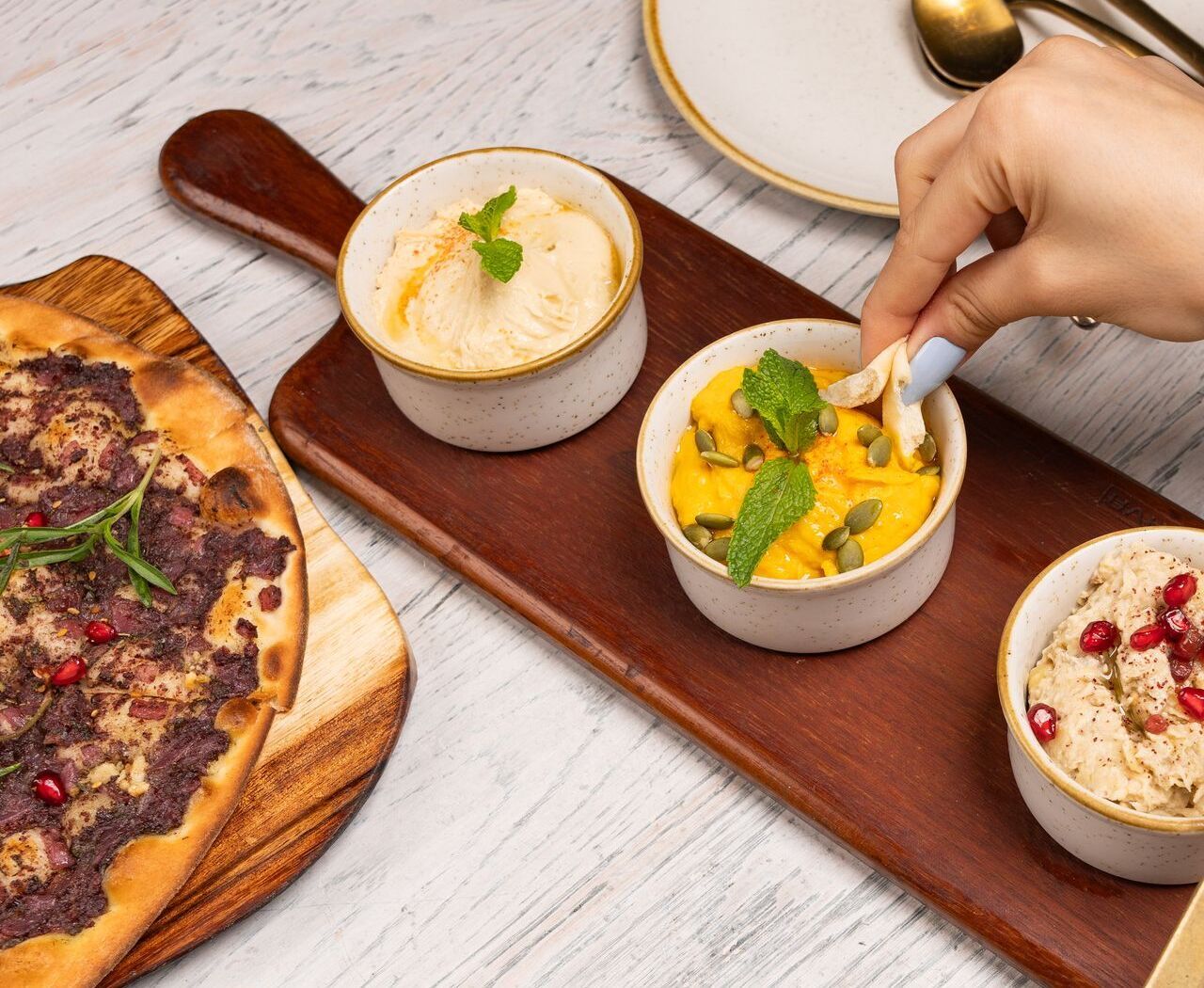
Start with roasted pumpkin hummus, the most natural bridge between Mediterranean pantry cooking and Halloween produce. Versions from cooks like Jamie Oliver and Ottolenghi lean on chickpeas, tahini, lemon, olive oil, and roasted pumpkin for a dip that is earthy, sweet, and unmistakably seasonal. It gives you the familiar comfort of hummus with a darker, autumnal depth.
Next come harissa-roasted pumpkin with tahini, stuffed grape leaves, and a baked feta tray with olives and thyme. The pumpkin dish brings heat, creaminess, and a vivid orange centerpiece. Dolmas add the herbal, rice-filled bite that balances richer foods, while warm feta with oregano or thyme gives the table a salty anchor that guests can spoon onto toast or vegetables.
Round out the spread with muhammara, lentil soup shooters, pan-roasted shrimp with garlic and paprika, and an orange-and-black salad of arugula, roasted beets, black olives, and pomegranate. Muhammara, the Levantine pepper-and-walnut spread, has a naturally crimson color that looks made for Halloween. Lentil soup served in small cups feels cozy and smart, while shrimp adds a faster-cooking protein option for guests who want something substantial.
Together, these seven dishes cover every hosting need: dip, centerpiece vegetable, cheese course, handheld bite, soup, seafood, and salad. More importantly, they look festive without ever losing their culinary identity.
How to build the menu so it feels festive, not forced
The easiest mistake is over-theming. A strong Mediterranean Halloween table works when the holiday stays in the background and the ingredients do the visual work. Think burnt orange pumpkin, ruby pomegranate, ink-dark olives, crimson muhammara, and golden olive oil catching candlelight.
Texture matters as much as color. Pair creamy dishes like pumpkin hummus and baked feta with crisp elements such as seeded crackers, toasted pita, or roasted chickpeas. Then add one brothy or spoonable item, like lentil soup, so the meal feels layered rather than flat.
Balance is the final test. Oldways places vegetables, legumes, whole grains, nuts, seeds, herbs, and olive oil at the base of Mediterranean eating, with seafood and dairy used more selectively. If your table follows that pattern, it will feel abundant rather than heavy, which is especially useful on a night already crowded with sweets.
In other words, Halloween does not need more gimmicks. It needs food with atmosphere, generosity, and a sense of season. Mediterranean cooking offers all three, quietly and convincingly, which is exactly why these dishes belong there.