
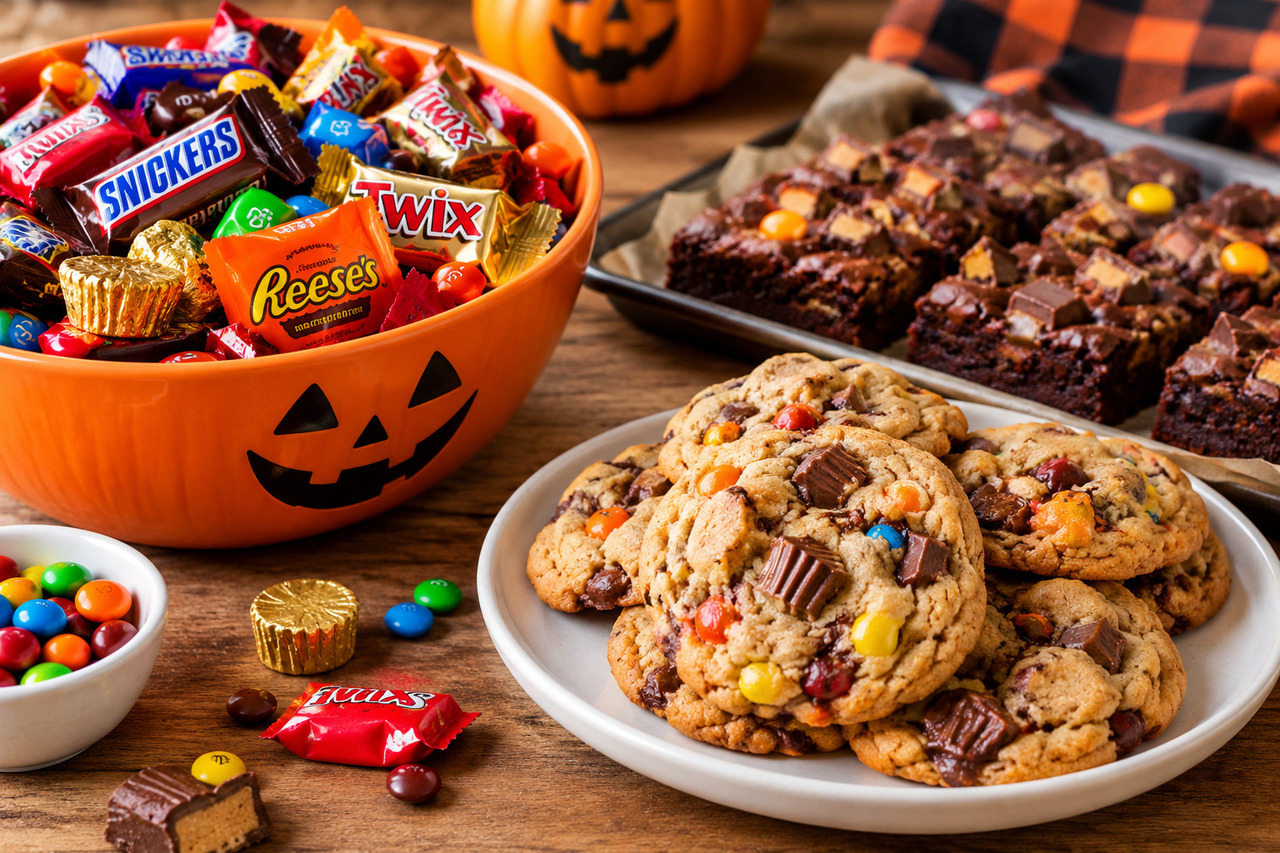
A giant pile of Halloween candy can feel festive for about 24 hours. After that, it starts looking like a storage problem.
The good news is that leftover sweets are more versatile than most people think. With the right approach, they can move from random loot to genuinely useful baking ingredients.
Why leftover candy is worth repurposing
Americans are still spending heavily on Halloween, which helps explain why so many households end up with more candy than they can reasonably eat straight from the bowl. The National Retail Federation says consumers are expected to spend $13.5 billion on Halloween in 2026, up from the record $13.1 billion in 2025, with more than 60% planning to hand out candy. That scale matters in the kitchen: when candy is bought in bulk and opened across multiple events, leftovers are almost inevitable.
Repurposing that surplus is not just about indulgence. The FDA has long noted that date labels on packaged foods are usually about quality rather than safety, and confusion around labeling contributes significantly to household food waste. Shelf-stable candy is one of the easiest foods to reroute into another use, especially if wrappers are intact and the candy has been stored cool and dry.
That practical logic is why recipe developers keep returning to candy-based bakes. Food Network regularly folds chopped miniature bars into cookie dough, brownie trifles, and ice cream bars, while Hershey’s recipe archive leans on candy brownies, cheesecake bars, granola, and sweet rolls. In other words, the industry has already done the test-kitchen work: candy is not just a topping, it can function like chocolate chunks, toffee bits, peanut butter mix-ins, or caramel inclusions.
The recipes that make the most sense
The easiest win is the cookie. Chop chocolate bars, peanut butter cups, caramel-filled minis, or candy-coated chocolates into uneven pieces and use them exactly as you would chocolate chips. This works especially well in a basic drop-cookie dough or a darker cocoa dough, where varied candies create pockets of crunch, melt, and salt. King Arthur Baking’s cookie formulas and similar bakery-style approaches show why this succeeds: strong dough can absorb sweet mix-ins without collapsing.
Brownies are the second smart destination because they disguise inconsistency. Candy bars with nougat, wafer, peanut butter, or toffee soften into the batter or create a rippled top layer when scattered over the pan in the final minutes of baking. Food Network has used this strategy in several Halloween-style brownie builds, including layered and topped versions that turn miscellaneous candy into a deliberate finish rather than an afterthought.
For a no-bake option, think beyond dessert trays. Crushed candy can be folded into popcorn snack mix, stirred into softened vanilla ice cream, or sprinkled over yogurt and oatmeal for a controlled, smaller-format use. Hershey has even pushed leftover candy into breakfast-adjacent recipes such as granola and sweet rolls. The real trick is sorting by function: chocolate for baking, chewy candy for toppings, and hard candy for crushing or decoration.
How to use it well without creating a sugar overload
The best results come from editing aggressively. Separate your stash into chocolate bars, peanut butter candies, caramel pieces, wafers, gummies, and hard candy before you start. That step prevents muddled flavors and avoids textural disasters, like fruit chews melted into cookie dough or sticky caramels sinking unevenly into cake batter.
A good rule is to combine candy with ingredients that add bitterness, fat, or salt. Dark cocoa, pretzels, oats, toasted nuts, cream cheese, and plain popcorn all help rebalance sweetness. That is why candy brownies, bar cookies, and snack mixes usually taste better than simply reheated candy on its own: the base recipe gives the sugar structure and contrast.
Storage also matters. Keep unopened or well-wrapped candy in a cool, dry spot, and use anything that looks bloomed, sticky, or stale in baked applications first, where texture is less critical. The goal is not to make every piece disappear at once. It is to turn a once-a-year sugar rush into a few thoughtful recipes that feel seasonal, efficient, and surprisingly polished.
Школа-студия Юлии Бурдинцевой в Москве готовит парикмахеров с нуля и повышает квалификацию мастеров. Теория занимает три дня, затем студенты работают с клиентами под контролем преподавателей. Программы курсов и цены размещены на сайте https://j-center.ru/ вместе с видео занятий. Выпускники сдают экзамен, получают диплом и предложение работы в салонах школы.