
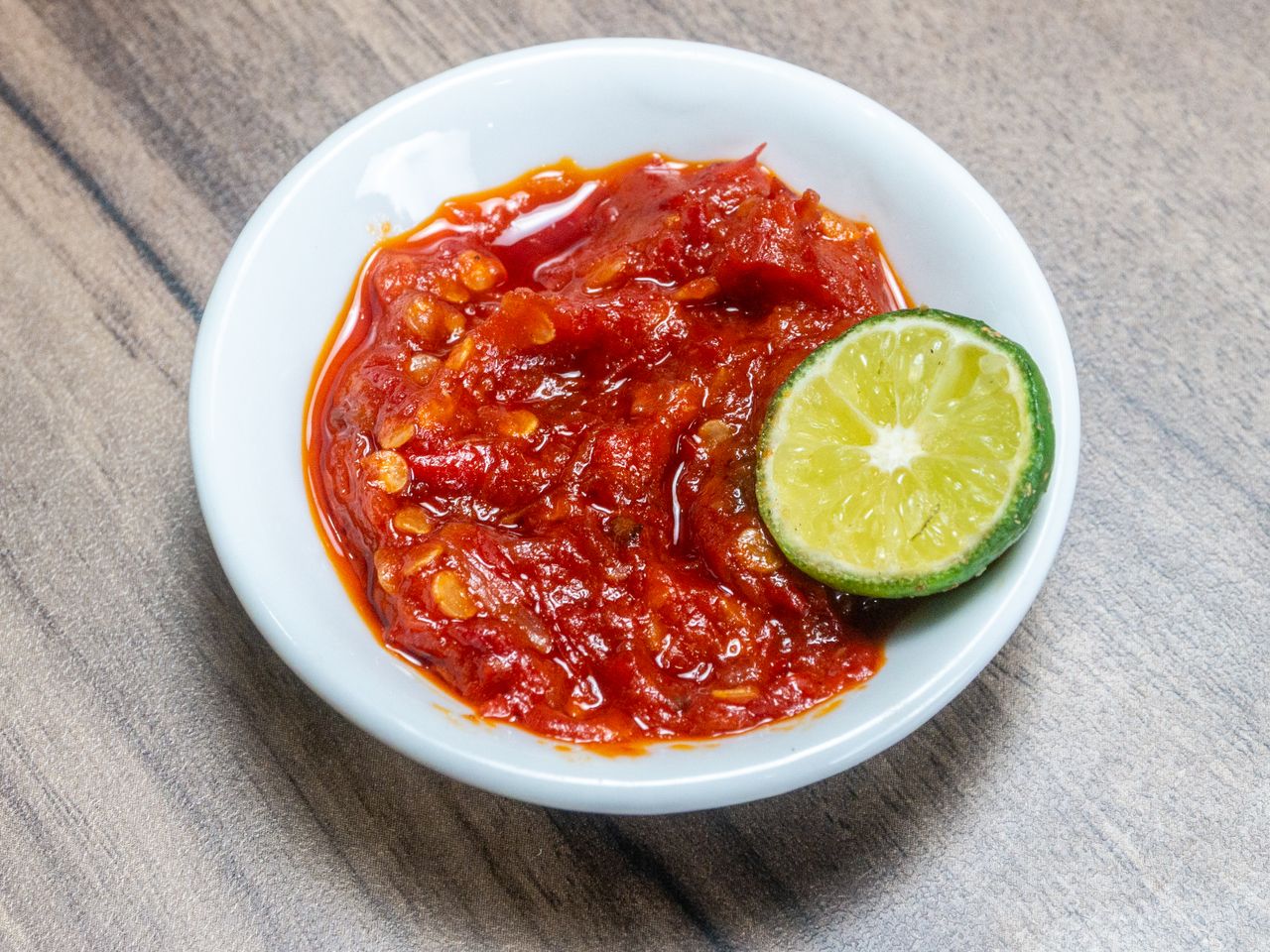
Spicy food has long occupied an unusual place in the American diet because it activates pain pathways even as demand for hotter sauces, snacks, and restaurant dishes keeps growing. New research is sharpening that paradox, showing that capsaicin, the compound that gives chili peppers their burn, may dampen certain kinds of pain while pleasure responses vary depending on experience and brain processing. The latest peer-reviewed findings, published June 1, 2026, help explain why the burn can hurt and still feel rewarding.
New research adds a measurable clue
A study published June 1, 2026 in Physiology & Behavior found that acute spicy stimulation reduced heat-pain perception in a controlled lab setting, according to the paper indexed by PubMed. The research involved 48 healthy adults who completed two sessions, one with a chili-based gelatin cube and one with a non-spicy control, before receiving 40 laser stimuli to the hand in each session. Participants rated both pain intensity and unpleasantness, giving researchers a direct measure of how oral spice exposure changed pain perception.
The authors reported that capsaicin’s oral burn did not simply add discomfort. Instead, the spicy condition reduced responses to later laser-induced heat pain, a finding that supports the idea that one pain signal can alter how another is processed. The paper also examined spicy-food preference, frequency of consumption, and preferred spice level to connect sensation with eating behavior.
That result matters because capsaicin is already known to activate TRPV1, the receptor strongly associated with heat and pain signaling. The new work narrows the question from “why does chili burn” to “why can that burn also blunt other pain,” giving scientists a more specific mechanism to test in future human studies.
What the findings suggest for everyday eaters
For consumers, the most immediate takeaway is that spicy food may feel different not only because of heat level, but because repeat exposure changes the experience. A 2025 NeuroImage study, also indexed by PubMed, found different neural correlates of capsaicin pleasantness in habitual versus non-habitual spicy eaters, indicating that regular chili consumption may shape how the brain codes the sensation. That helps explain why one person reaches for extra hot sauce while another experiences the same food as purely aversive.
Other recent research has pointed in a similar direction. A study available through PubMed Central reported an analgesic effect from spicy food intake and explored neural mechanisms tied to pain perception, while earlier work found that expectations can shape how people rate intensity, pleasure, and pain from hot sauce exposure. Together, those findings suggest the “hurts so good” response is not only about the pepper itself.
What remains unclear is how broadly those lab findings apply to meals in real-world settings. Researchers have not established that eating spicy restaurant food produces the same effect across all people, cuisines, or dose levels, and the studies do not show that more heat always means more pleasure.
Why pain and pleasure can coexist
The broader context comes from decades of sensory research on capsaicin and TRPV1. NIH has described TRPV1 as a key ion channel involved in sensing heat and pain, and earlier reviews in the pain literature have noted that capsaicin can both provoke burning and, under some conditions, produce analgesic effects. That makes spicy eating less of a contradiction than it first appears: the same system that signals threat can also be modulated, desensitized, or reframed by the brain.
Researchers have also argued that context matters. Prior neuroscience work has suggested that pain and pleasure are not strict opposites, and that relative relief, expectation, and learned preference can shift a noxious sensation into one that some people seek out. In spicy food, that may mean the initial burn is real, but the brain’s interpretation of it changes with familiarity and competing sensory signals.
For diners, the practical meaning is straightforward. The burn from chili peppers is still a pain response, but newer studies indicate that habit, expectation, and short-term analgesic effects may help explain why the experience remains appealing for many people, even when it stings.