
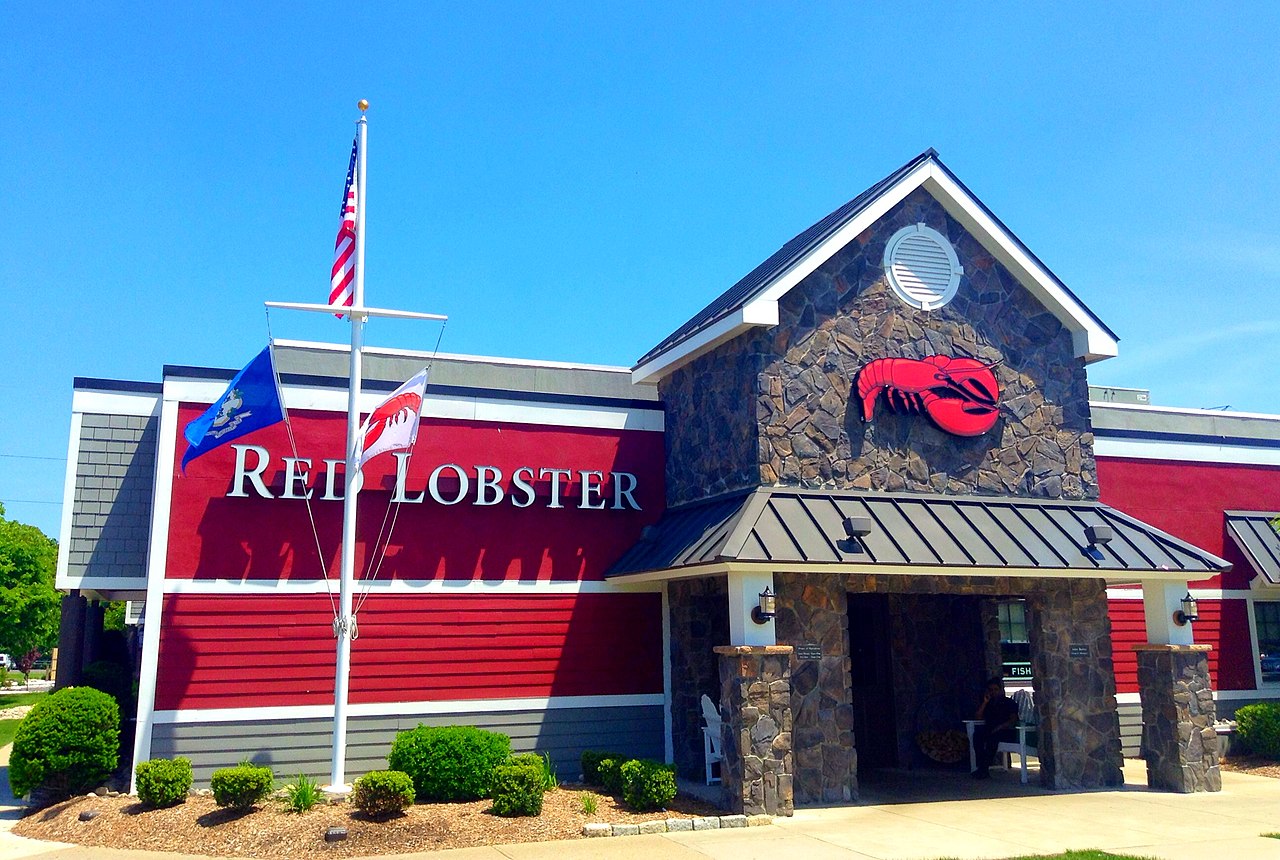
Restaurant chains across the U.S. are still trimming store counts as they confront high operating costs, uneven traffic, and the long aftereffects of pandemic-era debt and lease decisions. Red Lobster is the latest major casual-dining brand to keep shrinking, saying its newest closures are part of a deliberate effort to stabilize the business after its 2024 bankruptcy. The company’s latest move shows that even nationally recognized chains are still reducing footprints to focus on fewer, more profitable restaurants.
Red Lobster says the latest closures are part of a smaller-footprint strategy
Red Lobster has closed additional restaurants in recent weeks and now lists 484 U.S. locations, according to a September 8 report by Nation’s Restaurant News. That is 36 fewer than the 520 locations Technomic counted at the end of 2025, a decline of about 7% this year alone. The trade publication also reported that Red Lobster’s footprint is now roughly 25% smaller than it was at the end of 2023, before the chain began a wave of closures tied to its May 2024 Chapter 11 bankruptcy filing.
The company confirmed the strategy in a statement cited by Nation’s Restaurant News, saying the closures are part of a broader “right-sizing” effort rather than a one-time cutback. Red Lobster said reducing underperforming units will help fund restaurant refreshes and improve the guest experience at remaining stores. The company also described the move as part of a long-term growth plan rather than a retreat from the market.
Recent closures identified by local media and compiled by Nation’s Restaurant News include three restaurants in Alabama, two in Illinois, and one in California. Those reported closures followed other high-profile shutdowns this year, including a Columbus, Georgia, location that had operated for 55 years and a Times Square restaurant that closed in June after 23 years. Red Lobster has not published a single nationwide closure list tied to this latest round.
What is confirmed so far in affected cities, and what remains unclear
The most clearly confirmed recent closures are in Alabama, Illinois, and California, based on local reporting referenced by Nation’s Restaurant News. The company has not released a comprehensive city-by-city list for every restaurant affected in this latest “right-sizing” phase. That means customers in many markets may see reports of local closures before Red Lobster issues a broader public accounting of the changes.
What is known is the national scale. As of early September 2026, Red Lobster’s own website showed 484 U.S. locations, a figure cited by Nation’s Restaurant News after the latest closures were reflected online. That count provides the clearest snapshot of the chain’s current footprint, even as individual store shutdowns continue to emerge through local news reports and updated location pages.
For residents in states where closures have already been reported, the practical takeaway is that some long-running restaurants may disappear with little advance public notice. For customers elsewhere, nearby Red Lobster locations may remain open as the company concentrates spending on stores it believes can support future growth. Red Lobster has said it still expects new restaurants to be part of its future, with Chief Global Development Officer Kristen Briede saying in a July interview that new openings are anticipated eventually.
The company links the cuts to bankruptcy, leases, and underperforming stores
Red Lobster’s explanation for the continuing closures is rooted in problems the company and outside analysts have been discussing since last year’s bankruptcy. According to Nation’s Restaurant News, Red Lobster acknowledged in bankruptcy filings that it had overexpanded, a factor that contributed to sales and traffic problems. The chain has also been burdened by costly leases, a problem tied to the 2014 sale-leaseback of much of its real estate under former owner Golden Gate Capital.
Chief Executive Officer Damola Adamolekun has signaled for months that the company needed to get smaller before it could grow again. Reporting from Fortune earlier this year similarly described footprint reduction and cost control as central parts of the brand’s turnaround strategy. Red Lobster has paired the closures with efforts to improve operations, including restaurant remodels, service initiatives, and a revised version of Endless Shrimp intended to avoid the financial strain associated with the earlier promotion.
For customers, the immediate effect is a leaner chain with fewer locations but a stated focus on better-performing restaurants. Red Lobster said earlier this year that it was tracking ahead of its internal revenue and earnings forecasts, according to Nation’s Restaurant News, though the company has not publicly detailed the precise effect of each turnaround measure. Its current message is that additional pruning is meant to put the business on firmer long-term footing while it invests in the restaurants that remain.
News129.online is an online resource for readers offering readers access to informative content, useful insights, and noteworthy stories. Its growing collection includes informative materials covering current issues, practical topics, interesting developments, and subjects readers may want to explore.
The site is aimed at readers looking for an easy way to explore useful information, interesting subjects, and fresh online content. Readers can find the website at https://news129.online. News129.online strives to provide a simple and convenient experience for discovering interesting content, as the platform continues to expand with new publications and topics.