
Unusual restaurant experiences remain a durable part of the U.S. food business as operators look for ways to stand out beyond menu price and portion size. In Missouri, that strategy is visible in five destinations that have built their identities around flying bread, train-delivered burgers, haunted dining rooms, ice cream cocktails and a pool that extends into a cave. The restaurants span Sikeston, Kansas City, St. Louis and the Lake of the Ozarks, and each one pairs a meal with a feature the business itself presents as part of the draw.
Missouri’s best-known odd restaurants have turned novelty into a business model
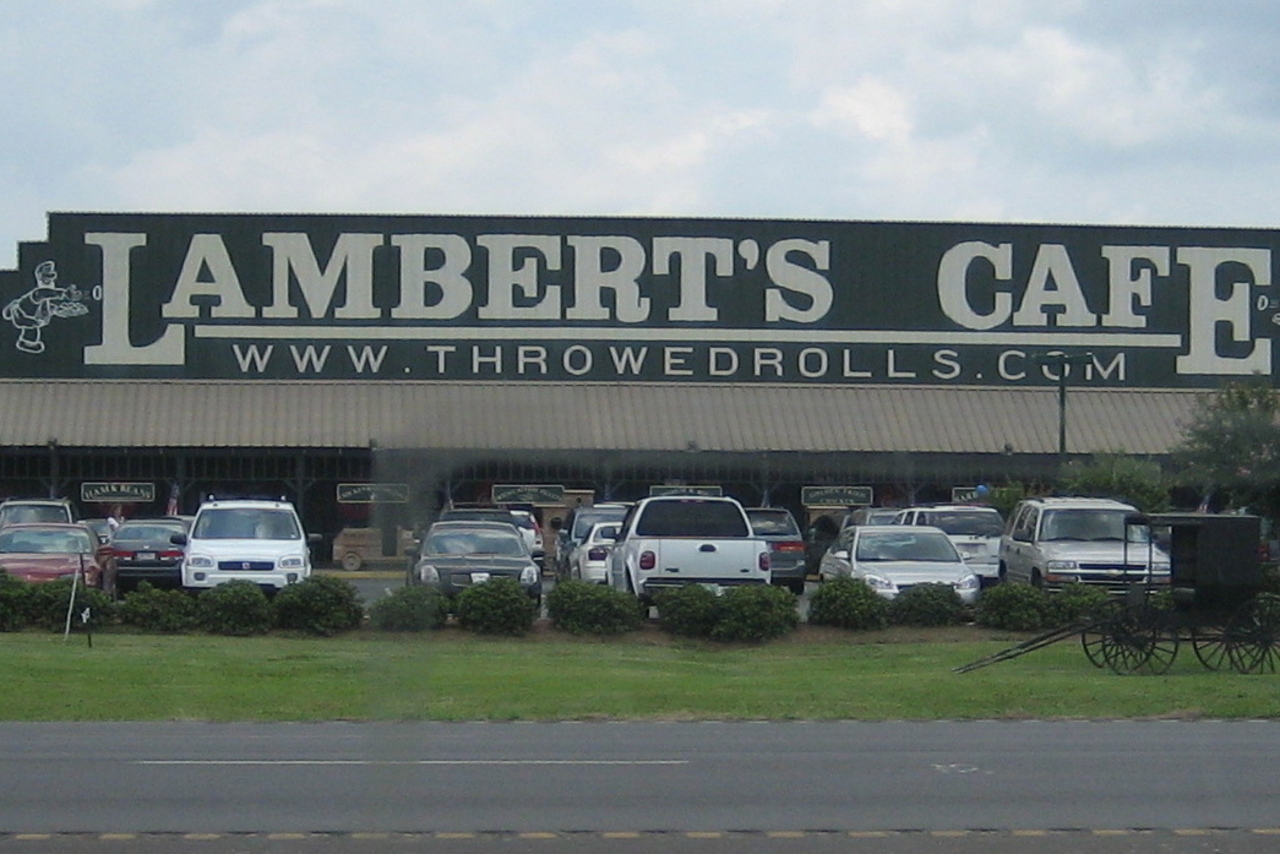
Lambert’s Cafe in Sikeston remains the state’s best-known example of a restaurant built around a single unusual service tradition. The company says the original Sikeston restaurant began throwing hot rolls in 1976 after founder Norman Lambert responded to a customer who asked him to “just throw” one, and the practice became a defining part of the brand. Lambert’s also says the Sikeston dining room is the original location, giving southeast Missouri the oldest version of the state’s best-known flying-food tradition.
In Kansas City, Fritz’s Railroad Restaurant has used an overhead train system as its signature service method for decades. The restaurant’s official site says the business was established in 1954, and current materials for its Crown Center location show meals are still lowered to tables by train delivery cars. That makes the service system a permanent operating feature rather than a limited-time attraction.
The other three restaurants on this list also market a distinct dining format. The Lemp Mansion in St. Louis operates as both a restaurant and inn, while also promoting mystery dinners and its long-publicized haunted reputation. The Fountain on Locust in St. Louis identifies itself as the “Home of the Ice Cream Martini,” and The Cave Bar & Grill near Camdenton says it offers a lakefront restaurant alongside a swimming pool that reaches into a natural cave.
The oddest dining experiences are concentrated in specific Missouri destinations
The list is spread across four Missouri tourism markets, with St. Louis accounting for two of the five destinations. The Lemp Mansion sits in south St. Louis and ties its restaurant identity directly to the city’s brewing history; the property’s official history says the home belonged to the Lemp family, whose beer fortune made them prominent in local business and social life. Today, the mansion combines dining, overnight stays and event programming in a single historic building.
The Fountain on Locust represents a different kind of St. Louis restaurant novelty. Its official site says the restaurant’s floor-to-ceiling hand-painted Art Deco murals and “Soap Hospital” radio comedy serial are part of the in-room experience, alongside its signature ice cream martinis. That places the concept somewhere between soda fountain, cocktail bar and themed restaurant.
Outside St. Louis, the geography is part of the appeal. Fritz’s draws on Kansas City’s family-dining and model-train nostalgia at Crown Center, while The Cave Bar & Grill ties itself directly to the Lake of the Ozarks visitor economy. The restaurant says its pool extends into the Forever Cave and describes itself as an experience unique to Camdenton. Not every detail about attendance or visitor volume is publicly released, but the businesses themselves clearly present the unusual setting as a core reason to visit.
These restaurants reflect a broader push for experience-driven dining in Missouri
The common factor across all five restaurants is that the meal is only part of the product. Lambert’s sells table service with a performance element, Fritz’s turns food delivery into a mechanical show, and The Fountain on Locust layers dessert and drinks into a carefully staged interior. In each case, the operator’s own marketing emphasizes the setting or service ritual as much as the menu.
That approach also helps explain why these businesses continue to attract attention in a crowded restaurant market. Lemp Mansion has expanded the dining occasion into overnight lodging, tours and themed events, while The Cave Bar & Grill connects food service to swimming, boating access and live entertainment. Those are practical ways to extend customer visits and differentiate from conventional casual dining.
For customers, the result is a set of restaurants where the unusual feature is confirmed, on the record and central to the visit. Missouri diners can still catch a roll in Sikeston, watch a burger arrive by train in Kansas City, order an ice cream martini in St. Louis, book a meal in a reputedly haunted mansion, or head from lunch toward a cave pool near Lake of the Ozarks. As experience-based dining continues to shape restaurant traffic, these five businesses remain among Missouri’s clearest examples of food served with a built-in attraction.