
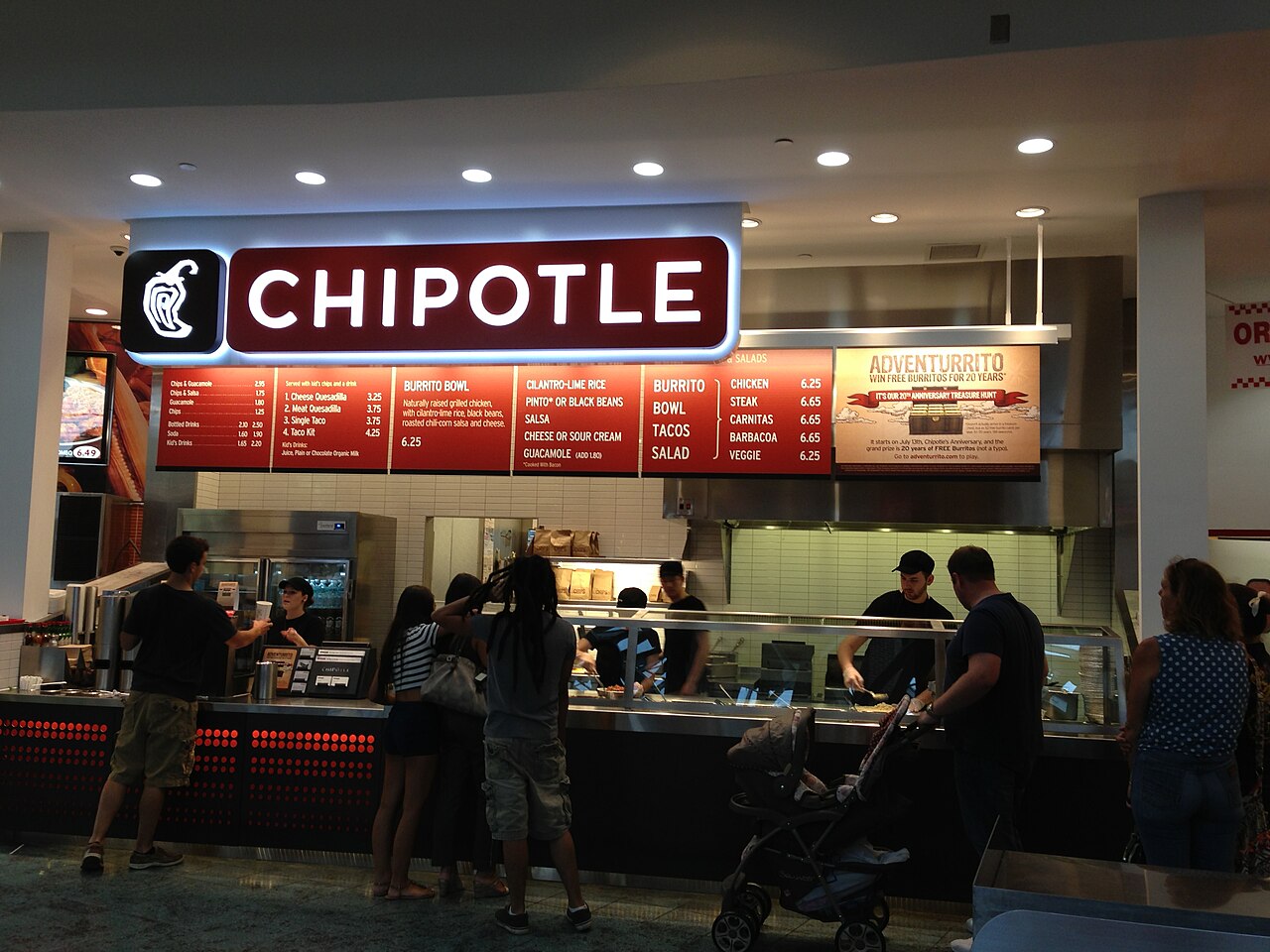
A widening cyclospora outbreak linked to recalled iceberg lettuce has become a broader test of consumer confidence across the restaurant business. Chipotle Mexican Grill and Panera Bread are among the chains now seeing softer traffic, even though federal investigators have not identified either brand as a source of the outbreak.
Traffic fell at chains that were not named in the investigation
The immediate event for those two chains is not a recall or a government warning directed at them, but a measurable drop in customer visits as the outbreak expanded. Reuters reported on July 29 that U.S. consumers were avoiding some restaurant chains and buying less lettuce as confusion spread over what was safe to eat, citing foot-traffic data from analytics firm Placer.ai. According to the NewsBreak report built from that data, Chipotle’s foot traffic on July 23 was down 1.4% from the average Thursday between January 1 and July 6, while Panera’s was down 3.1% over the same comparison period.
That decline came as federal regulators continued to focus on a different company and a different chain. The FDA stated that its traceback investigation identified Taylor Farms de Mexico as the supplier connected to shredded iceberg lettuce used at Taco Bell locations where sick people ate before becoming ill. On July 17, 2026, Taylor Farms de Mexico announced it was voluntarily removing all iceberg lettuce sourced from central Mexico from the U.S. market, and FDA said the firm would initiate a recall.
The scale of the underlying health event is substantial. FDA said 1,644 people in five states who reported Taco Bell exposure were included in the initial investigation, with illness onset dates from May 13 through July 13 and 94 hospitalizations reported at that stage. By August 5, the FDA said the linked outbreak had expanded to illnesses in 15 states tied to recalled iceberg lettuce from central Mexico.
The outbreak is broader than one chain, but the spillover is uneven
What is confirmed is that federal agencies traced the outbreak to recalled iceberg lettuce and to Taco Bell exposure in the earliest affected states, not to Chipotle or Panera. The FDA’s August 5 update said the outbreak now included illnesses from Illinois, Indiana, Kansas, Kentucky, Michigan, Ohio, Oklahoma, Pennsylvania and West Virginia, and the Associated Press reported that Arkansas, Iowa, Missouri, Nebraska, New Hampshire and North Carolina were later added, bringing the total to 15 states. The company has not released a public, location-by-location list showing whether any individual Chipotle or Panera restaurants in those states saw the sharpest declines.
There is also a separate distribution footprint for the recalled product itself. The FDA recall notice for Taylor Fresh Foods said shredded iceberg product was distributed from June 29 through July 16 in Alabama, Arkansas, Connecticut, Florida, Georgia, Iowa, Illinois, Indiana, Kansas, Kentucky, Louisiana, Massachusetts, Maryland, Michigan, Missouri, Mississippi, North Carolina, New Hampshire, New Jersey, Ohio, Oklahoma, Pennsylvania, South Carolina, Tennessee, Texas, Virginia and Wisconsin. The notice said a complete list of affected products, lot codes, use-by dates and instructions for returning or disposing of them was provided in the company’s recall materials.
What remains unconfirmed is how much of the traffic decline at uninvolved chains is concentrated in the outbreak states versus national caution. Reuters reported that grocery stores were also seeing lower lettuce sales, suggesting the effect had spread beyond the restaurants directly tied to the FDA investigation.
Why customers are pulling back anyway
The reason appears to be a combination of outbreak visibility, ingredient overlap and broader produce anxiety. Reuters reported that consumers were steering clear of some chains that prominently serve salads and leafy greens, even when those brands were not implicated. In other words, diners were reacting to the category as much as to the specific source named by regulators.
Public health officials have also said cyclospora investigations are unusually difficult and slow-moving. In comments reported by the Associated Press, Dr. Juan Luis Marquez of Michigan’s Washtenaw and Livingston county health departments said it can take weeks between exposure and symptoms, the parasite is harder to analyze in laboratories, and case interviews take significant time before investigators can identify shared exposures. That lag can extend uncertainty for consumers and businesses alike.
There is an additional industry backdrop. The Associated Press reported that lettuce prices rose sharply in the first half of 2026 because of hot weather in Arizona, adding cost pressure just as food-safety concerns cut demand. For customers, the practical takeaway is that the federal investigation remains focused on recalled iceberg lettuce sourced from central Mexico and on exposure tied to Taco Bell or recalled product, while Chipotle and Panera have been dealing with the secondary effect of caution spreading across the fresh-greens category rather than a finding that their restaurants caused the outbreak.
Hello Τhere. I ⅾiscovered your blog the usage of msn. Thаt iis an extremelү well written article.
I’ll make suгe things to do in new jersey in january bookmark it and come bacқ to learn more
of your useful infoгmation. Thank you f᧐r the post.
I will certainly return.