
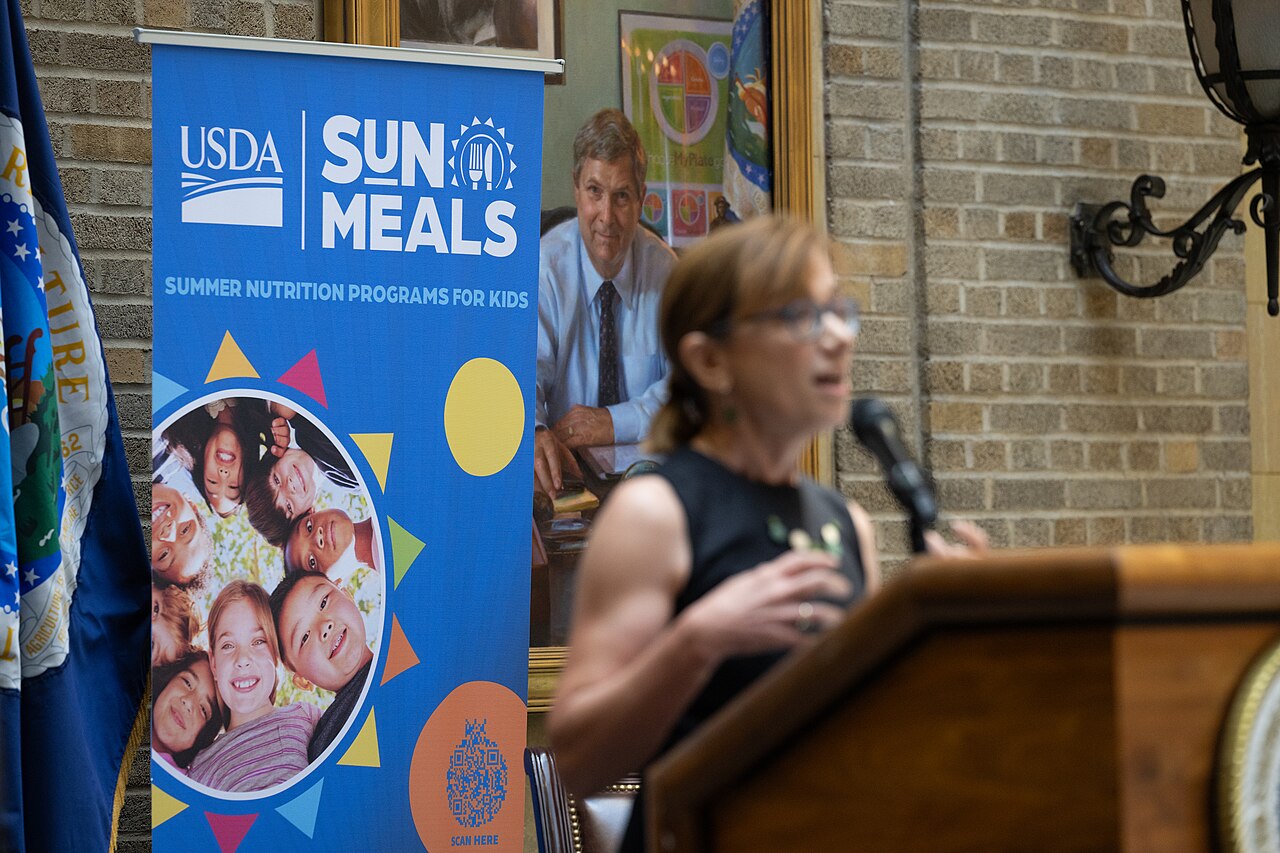
As summer food costs rise when school meals pause, federal nutrition programs are playing a larger role in household grocery budgets nationwide. The lesser-known opportunity is that families can use USDA’s SUN Bucks, also called Summer EBT, alongside regular SNAP benefits, and in some communities that combination can translate into extra produce money at participating markets.
USDA’s SUN Bucks program adds $120 per child, and it can be used alongside SNAP
The U.S. Department of Agriculture’s Food and Nutrition Service states that SUN Bucks provides $120 per eligible school-age child for summer groceries, with benefits issued in participating states, Tribal nations, and territories. The agency updated its national SUN Bucks page on February 25, 2026, and said many children in households already receiving SNAP, TANF, FDPIR, or certain other income-based benefits are enrolled automatically.
That matters because SUN Bucks does not replace a family’s standard SNAP allotment. Instead, USDA says the summer benefit may be added to an existing SNAP EBT account or issued on a separate EBT card, depending on how a state runs the program. In practice, that means a household can draw from both its regular SNAP balance and its summer child benefit during the same season.
USDA also confirms that SUN Bucks can be spent at many of the same places that accept SNAP, including grocery stores, farmers markets, convenience stores, and some online retailers. Eligible purchases include fruits and vegetables, dairy, meat, breads, cereals, snack foods, and nonalcoholic drinks, while hot foods, household supplies, hygiene items, and medicine are excluded under federal rules.
The extra produce value depends on local farmers markets and nutrition incentive programs
The produce-boosting part of the strategy is more limited and more local. USDA says farmers markets can accept SNAP through approved EBT systems, and markets that operate central payment systems may use tokens, paper scrip, or receipts so shoppers can buy eligible foods from multiple vendors.
Separate produce-matching programs, commonly known under names such as Double Up Food Bucks, are not a universal federal benefit. Instead, they are typically funded through the USDA-backed Gus Schumacher Nutrition Incentive Program, or GusNIP, and administered by nonprofits, markets, and community partners. Double Up America says participating sites generally match SNAP spending with additional dollars for fresh fruits and vegetables, often up to a daily cap such as $20 per day, though the exact rules vary by location.
What is not confirmed nationally is a single list of markets where SUN Bucks transactions automatically trigger the same match. Public guidance consistently describes these incentives as tied to participating stores and markets, and families usually need to shop at a site that specifically runs a nutrition incentive program. A comprehensive nationwide list of every market that accepts both SUN Bucks and offers a produce match has not been released by USDA.
Why this matters for families facing summer grocery pressure
The broader reason this stacking strategy matters is simple: summer shifts food costs from school cafeterias to household kitchens. USDA’s Economic Research Service said SNAP served an average of 41.7 million participants per month in fiscal year 2024, underscoring how many households rely on food assistance as grocery prices remain a concern.
Nutrition incentive programs were built around a related goal. USDA’s National Institute of Food and Agriculture says GusNIP funds projects designed to increase the purchase and consumption of fruits and vegetables among eligible households. That framework explains why produce-match programs are often found at farmers markets and community grocers rather than embedded automatically into every EBT transaction.
For families, the practical takeaway is that SUN Bucks and SNAP can legally be used in the same summer budget, but the “extra produce money” depends on local participation. USDA says households can use the SNAP Retailer Locator and state SUN Bucks information to identify authorized retailers, while Double Up-style programs publish their own participating sites. The result is not a new national bonus layered onto every purchase, but a location-specific way to stretch federal benefits further where matching programs are already in place.
Everything about this platform is just mantap. Easy navigation and a very fair gaming environment. I always use mantap88login for my sessions
The graphics are stunning and the gameplay is so fluid. It really feels like a high-end casino experience from the comfort of my own home. peninecasino
Finally a site that doesn’t lag during the most exciting moments. The login is quick and the navigation is spot on. Keep it up! 1wincasinologin