

A viral food trend can feel weightless online. In Walmart, it suddenly has weight, cost, shelf space, and consequences.
That shift is where internet novelty becomes real retail strategy. It is also where the industry learns whether a craze was just content or the beginning of a genuine consumer habit.
Virality Stops Being Entertainment and Starts Becoming Demand

On social platforms, a food trend is judged by views, recreations, and shock value. In mass retail, it is judged by a much harder set of questions: Can it be made at scale, delivered consistently, priced for everyday shoppers, and understood in a few seconds from a shelf? The moment a trend enters Walmart, it stops being a piece of culture and becomes a product test.
That matters because Walmart is not a niche marketplace. In its 2025 annual report, the company said Walmart U.S. generated $462.4 billion in net sales in fiscal 2025, with a business built around stores, e-commerce, pickup, and delivery at national scale. When a viral food idea reaches a retailer of that size, it has crossed from online fascination into the mainstream economy.
Walmart itself has acknowledged that trends now emerge from social media and that speed matters. In 2025, the company said its trend-sensing tools were designed to bring on-trend items to customers faster, shortening traditional product timelines in some categories. That statement was made in the context of fashion, but the logic applies directly to grocery and food merchandising: the old retail calendar is too slow for an internet that can mint a craze over a weekend.
Its own consumer research shows the tension clearly. Walmart’s 2025 Retail Rewired report found that traditional search still dominates, but social media is a major discovery engine, and more than half of respondents said they would rather discover trends on their own based on what is trending on social media. At the same time, only 24% said they trust social media influencers, while 27% said they trust AI-based recommendations and 49% said they did not know which to trust. That is a revealing snapshot of the modern grocery shopper: curious, trend-aware, but still skeptical.
When a trend enters Walmart, then, it is no longer powered only by attention. It has to survive contact with shoppers who are comparing price tags, reading labels, and deciding whether a product deserves a spot in the cart beside milk, bread, and cereal. In that environment, virality may open the door, but utility, affordability, and trust decide whether it stays.
The Shelf Changes the Trend Itself

A viral food trend rarely arrives in stores unchanged. Social media rewards spectacle, customization, and extreme combinations. Retail rewards simplification. The shelf version is usually cleaner, easier to explain, safer to ship, and easier to repeat. What looked chaotic in a short-form video becomes standardized into a kit, a flavor extension, or a limited-time packaged product.
One clear example is the chamoy pickle phenomenon. On social platforms, the trend thrives on oversized reactions and endless personalization, with creators stuffing pickles with candy, seasoning, and spicy-sour toppings. On Walmart’s marketplace, that same idea appears as ready-made chamoy pickle kits marketed explicitly as a famous TikTok trend. The transformation is instructive: a messy, performative internet snack gets converted into an organized retail bundle with defined components, a price point, and a buy-now button.
The same pattern is visible in pickle flavor more broadly. Food Business News reported in June 2025 that Nissin launched a limited-edition Dill Pickle Cup Noodles and quoted a company executive saying pickles were dominating both social trends and grocery shelves. That line captures the retail lifecycle perfectly. Once a flavor has enough online momentum, large manufacturers stop treating it as fringe and start treating it as a modular platform that can be dropped into familiar formats consumers already understand.
The shelf also strips away some of the original spontaneity. A viral trend online invites imitation and improvisation; in a big-box setting, it has to be legible to someone who has never seen the original video. Packaging must do the explanatory work that an influencer once did. The result is a version of the trend that is often less weird, less risky, and more broadly edible.
That editing process is not a failure of authenticity. It is how a trend survives translation. A product that cannot be explained quickly, stocked efficiently, or manufactured consistently is unlikely to make it beyond social media. When it does make the jump, the trend becomes more disciplined, and in many cases more durable, precisely because retail has sanded off the chaos that made it viral in the first place.
Walmart Turns a Trend Into a Value Proposition
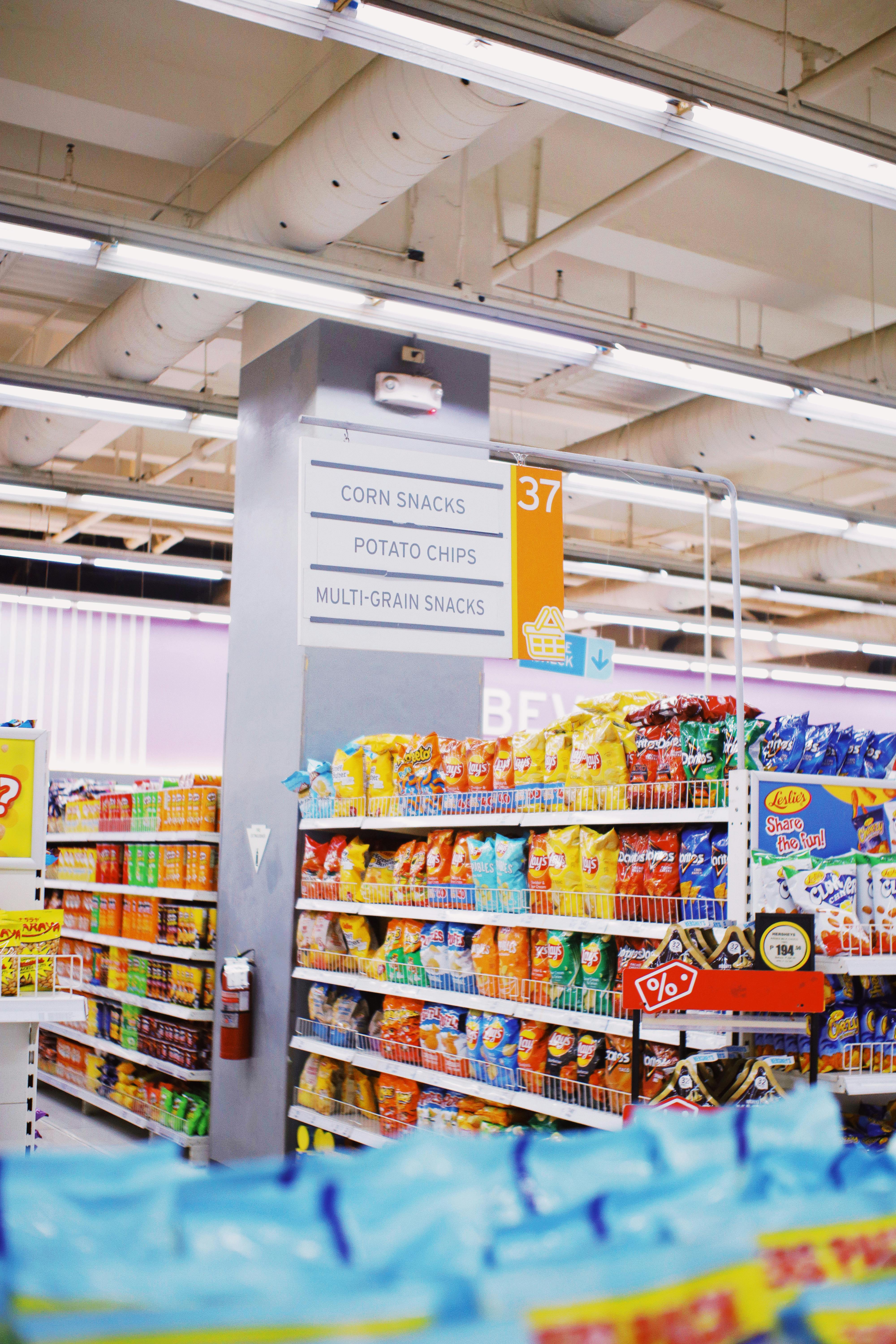
The biggest difference between a trend online and a trend at Walmart is that Walmart must make it affordable enough for mass adoption. Viral food culture often begins with scarcity, limited drops, or premium pricing. Big-box retail works in the opposite direction. It asks whether the same idea can be offered at a price that feels impulsive but not irresponsible.
That value equation is central to Walmart’s entire business model. The company’s annual report emphasizes its integrated store-and-digital network, including same-day pickup and delivery options across substantially all stores. That scale matters because a trend becomes far more powerful once it is easy to add to a routine grocery order instead of something consumers must hunt down from a specialty seller. Convenience lowers the barrier to trial.
Walmart’s own 2025 research also underscores how strongly shoppers prioritize speed and practical value. In the Retail Rewired report, 69% said the speed of the shopping journey is at least somewhat important in deciding where to shop, and 47% said they would trust a digital assistant to choose and purchase household essentials within a set budget. Those findings point to an important reality: by the time a viral trend reaches Walmart, it is competing not only for attention but for frictionless inclusion in an ordinary household budget.
This is why some trends explode further at Walmart while others stall. A trend that can be folded into an existing habit has a better chance than one that demands a whole new ritual. A pickle-flavored noodle cup, a pistachio-chocolate dessert, or a spicy-sour candy kit can ride on familiar shopping behavior. A product that requires too much explanation, too many accessories, or too high a price often loses momentum once the novelty fades.
There is also a reputational effect. Social media can make almost anything look irresistible for 30 seconds. Walmart gives the trend a different kind of legitimacy by placing it in a retail environment associated with routine family purchasing. That does not make every viral item wise or lasting, but it does make it feel safer, more normalized, and more reachable. In practice, Walmart is often the point where a trend stops being a dare and starts looking like dinner, dessert, or snack food.
Some Trends Become Categories, and Some Break the Supply Chain

The most interesting moment in a viral trend’s retail journey comes after the initial launch. Does it collapse once the hype cools, or does it evolve into a recognizable flavor family, ingredient trend, or permanent aisle fixture? The answer often depends on whether the craze taps into a deeper consumer appetite already forming beneath the content cycle.
Dubai chocolate is a good example of a trend moving beyond its original viral form. According to the Associated Press, the original bar was created by Fix Chocolatier in the United Arab Emirates in 2021 and had exploded on social media by 2023. By 2025, the concept had spread into croissants, milkshakes, and other desserts, and the AP reported that the surge in demand had even contributed to a pistachio shortage, according to an Iranian nut producer. That is what retail-scale success looks like: not a single viral item, but a flavor-and-texture blueprint migrating across formats.
Trade coverage suggests this is becoming a wider pattern. Food Business News reported that during the past year, Dubai chocolate and s’mores flavors had filled supermarket aisles in products ranging from ready-to-drink coffee to ice cream. It also noted that familiar foods are increasingly being translated into entirely different packaged formats, which is exactly how internet-born trends mature into supermarket logic.
The downside is that scale reveals every weakness. Social media does not care if an ingredient is difficult to source, if margins are thin, or if the flavor profile appeals only to adventurous early adopters. Retail does. A trend can trigger ingredient shortages, create inconsistent product quality, or expose the gap between online enthusiasm and repeat purchasing. What seemed abundant in content can become scarce in supply almost overnight.
This is also why buyers and manufacturers watch for second and third derivatives of a trend. If the original product is too fragile or expensive, the market looks for adjacent ways to capture the same excitement. That is how a single viral bar, beverage, or homemade snack can spawn cookies, frozen desserts, snack mixes, and seasonal limited-time offers. Once Walmart enters the picture, the question is no longer whether the trend was real. It is whether the industry can build a category around it before consumer attention moves on.
What Walmart Really Proves About a Viral Food Craze

When a viral food trend enters Walmart, it faces the only test that social media cannot administer: repeat purchase by ordinary shoppers under ordinary conditions. That is the true graduation from trend to business. Views can predict curiosity, but only retail can measure staying power in a meaningful way.
The broader retail world is already adapting to this blurred line between media and merchandising. Modern Retail reported in 2025 that TikTok Shop had become a place where food and beverage brands could introduce new flavors, test products, and do the kind of limited-time experimentation once reserved for grocery partners. But the same report suggested that social commerce increasingly works as an upstream signal for the larger retail system. In other words, the internet may spark the craze, but mass retailers still determine whether it becomes part of everyday consumption.
That helps explain why landing at Walmart is both an opportunity and a filter. It offers immense reach, logistical power, and normalization. But it also forces discipline. Products must justify themselves on price, packaging, quality, and convenience. They must appeal not just to trend chasers, but to parents, budget shoppers, and consumers who may never have heard of the original hashtag. As Walmart’s own research shows, shoppers are interested in trends, yet they remain highly attentive to trust, relevance, and speed.
The deeper lesson is that retail does not merely follow culture; it edits and institutionalizes it. Walmart takes a viral food moment and asks whether it can survive contact with mainstream America. If the answer is yes, the product becomes more than a meme. It becomes a standardized flavor, a mainstream indulgence, a private-label inspiration, or a repeatable seasonal play.
So what happens when a viral food trend leaves social media and enters Walmart? It grows up. It loses some chaos, gains scale, meets the discipline of price and logistics, and reveals whether it was ever really about novelty at all. In the end, Walmart does not just sell the trend. It decides whether the trend was ready to become part of everyday life.