
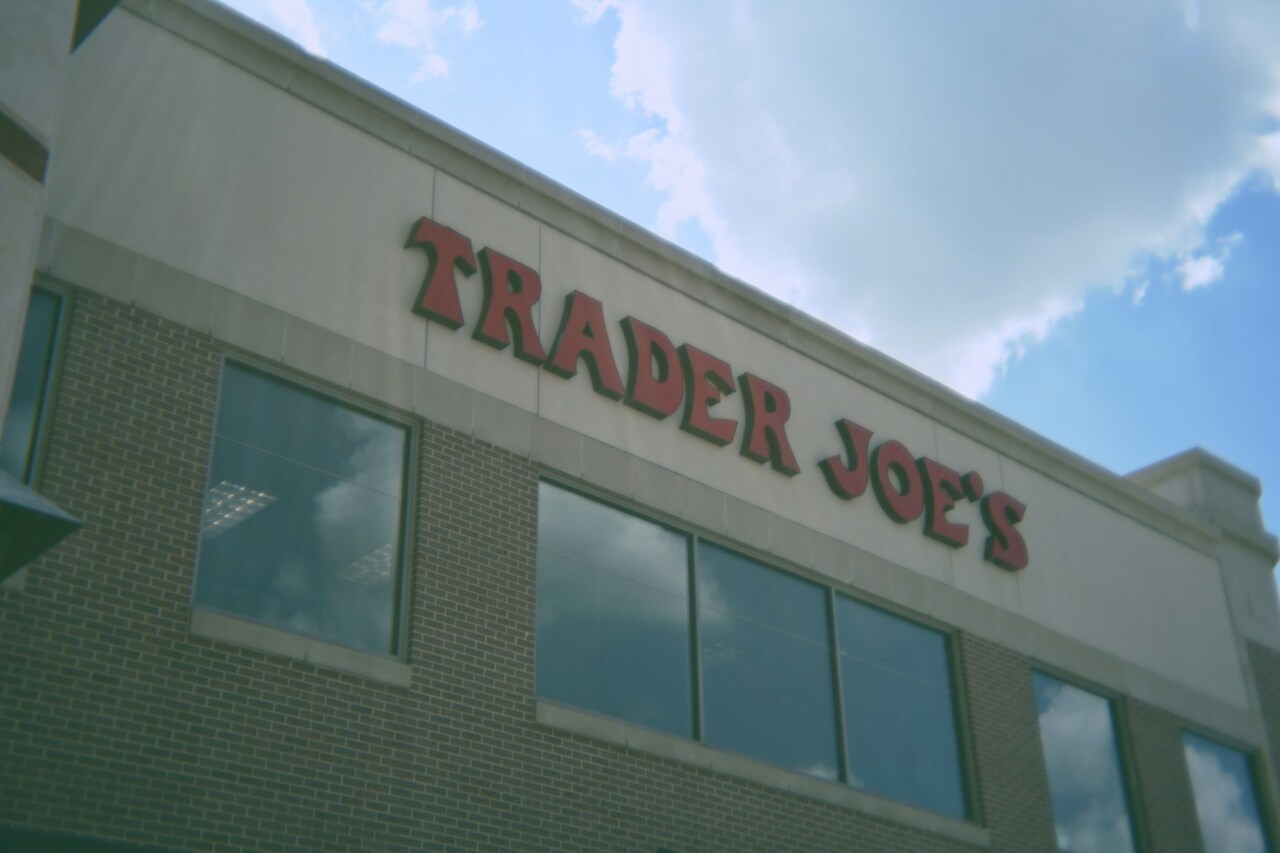
Across the grocery industry, shoppers have become more sensitive to food safety notices, price pressure, and product consistency. Trader Joe’s remains one of the country’s most closely watched grocery chains, but recent recalls, federal labor filings, and the company’s own explanations for product turnover have added to customer frustration. The result is not a single crisis but a series of documented issues that help explain why some shoppers say the chain no longer feels as dependable as it once did.
Recalls and safety notices have become harder for shoppers to ignore
One reason some shoppers are reassessing Trader Joe’s is the sheer visibility of recent recall activity tied to products sold under its label. On February 7, 2024, Trader Joe’s announced a recall of Chicken Enchiladas Verde, Cilantro Salad Dressing, Elote Chopped Salad Kit, and Southwest Salad after cotija cheese used in those products was linked to potential Listeria monocytogenes contamination, according to the FDA. The agency said the recalled items were sold in Trader Joe’s stores nationwide and directed customers to discard them or return them to any Trader Joe’s store for a full refund.
Another 2024 recall affected Trader Joes Nuts – 50% Less Sodium Roasted & Salted Whole Cashews, sold under SKU 37884. The FDA said Wenders LLC initiated that recall on March 17, 2024, because lots T12139, T12140, T12141, and T12142 had the potential to be contaminated with Salmonella. Distribution was confirmed in Alabama, Arkansas, Arizona, California, Colorado, Idaho, Kansas, Louisiana, New Mexico, Nevada, Oklahoma, Oregon, Tennessee, Texas, Utah, and Washington, and consumers were told not to eat the product and to return it for a full refund.
Federal outbreak records added another safety concern in spring 2024. The FDA said Infinite Herbs-brand organic basil sold at Trader Joe’s was recalled on April 18, 2024, in 2.5-ounce clamshell packaging with UPC 8 18042 02147 7. The agency listed distribution at Trader Joe’s stores in Alabama, Connecticut, Delaware, Florida, Georgia, Iowa, Illinois, Indiana, Kansas, Kentucky, Maine, Maryland, Massachusetts, Michigan, Minnesota, Missouri, Nebraska, New Hampshire, New Jersey, New York, North Carolina, Ohio, Pennsylvania, Rhode Island, South Carolina, Tennessee, Virginia, Vermont, Wisconsin, and Washington, D.C., and said customers should not eat it and should throw it away if they could not confirm whether frozen basil was part of the recall.
Product churn, out-of-stocks, and uneven consistency remain persistent complaints
Trader Joe’s has also acknowledged a business model that can disappoint shoppers who want reliability. In the company’s “Inside Trader Joe’s” podcast transcript on discontinued products, company representatives said the chain does not keep every item indefinitely and that, “overwhelmingly,” slow sales are the main reason products are discontinued. The same transcript also said items can leave shelves because of quality issues, weaker value, or competitive pressure.
That approach helps explain why one of the most common frustrations is the disappearance of favorite items. For regular shoppers, a rotating assortment can feel exciting until a staple product vanishes without a long runway or clear replacement. Trader Joe’s has said it tries to make room for new items, but the tradeoff is that consistency is not always the priority shoppers may expect from a weekly grocery stop.
Availability has also been an issue in safety-related cases. During the FDA’s 2024 organic basil outbreak investigation, the agency said Trader Joe’s had voluntarily removed the recalled product from stores and that it should no longer have been available for sale. While that response followed food safety guidance, it also reinforced a broader customer concern: when products disappear suddenly, shoppers often do not know whether the cause is a recall, a supplier issue, or a permanent discontinuation.
Labor disputes, pricing pressure, and customer expectations have raised the stakes
A third source of tension has come from labor conflict that has spilled into public view. National Labor Relations Board records show an open case filed February 12, 2024, involving Trader Joe’s East in Manhattan, with allegations that include discharge-related and concerted-activity retaliation claims. The NLRB docket does not by itself establish a final ruling, but the existence of continued proceedings has kept labor practices part of the public conversation around the brand.
Price sensitivity has also changed the way shoppers evaluate Trader Joe’s value proposition. The chain still markets itself around private-label value, but when a favorite item is recalled, discontinued, or temporarily unavailable, the comparison is no longer just price versus competitors. Shoppers are also weighing dependability, replacement options, and whether a limited-assortment store can still cover a full household grocery trip.
For customers, the practical takeaway is that Trader Joe’s remains popular while also facing a more demanding retail environment. Federal records from 2024 show multiple product safety events, and the company’s own statements confirm that discontinuations are built into its merchandising model. That combination means some shoppers are still enthusiastic, but others are looking for stores that offer more predictable inventory, fewer surprises, and clearer continuity from one visit to the next.
Pretty! This has been a really wonderful post. Many thanks for providing these details.