
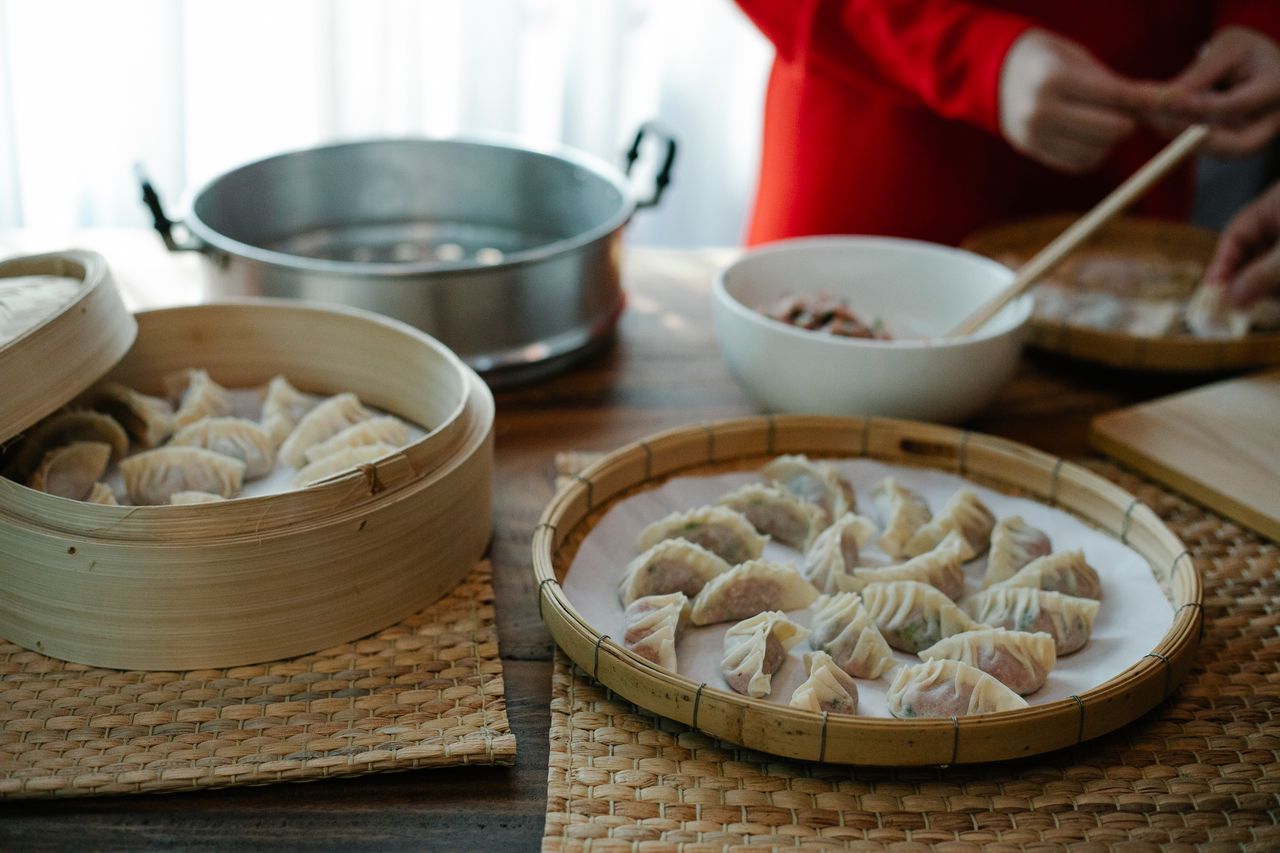
A dumpling party works because dinner and the activity are the same thing. With a little setup, it becomes one of the easiest ways to feed a group and keep everyone busy in the kitchen.
Why dumplings work so well for a crowd
Bon Appétit has made the case for years that dumplings are one of the most practical foods for group cooking, partly because the work is easy to divide and partly because the payoff is immediate. In a 2015 story, the magazine described dumplings as inexpensive, beginner-friendly, and quick to cook, which helps explain why they fit parties better than many more formal dinner menus.
That same article drew on advice from Kenny Lao, the former owner of Rickshaw Dumplings in New York, who showed Bon Appétit how he sets up a home dumpling session. Lao’s point was simple: people often assume dumplings involve too many steps, but the process gets easier when each task is separated and organized before guests arrive.
Portion planning matters as much as the filling. In an earlier Bon Appétit Chinese New Year guide, Lao recommended budgeting about 20 dumplings per guest, describing that number as generous and useful for mishaps. For home cooks, that makes dumplings one of the clearest make-ahead party formats, since the host can scale the count up or down without changing the basic plan.
The best version of the party is not overly ambitious. A single filling, store-bought wrappers, and one or two cooking methods are enough. That keeps the night focused on wrapping, chatting, and getting hot dumplings to the table instead of turning the event into a long prep project.
The prep that makes the party easier
The strongest recurring advice across dumpling guides is to do the cold prep first. Bon Appétit’s 2015 party article says meat fillings can be made up to two days ahead, and that extra chill time actually helps because a cold filling is easier to portion and fold.
Wrapper timing depends on whose method you follow, so it helps to match the advice to the source. Lao told Bon Appétit that he keeps store-bought wrappers in the freezer and lets them thaw at room temperature for at least 30 minutes before wrapping. Your source notes also distinguish that approach from Esther Choi’s guidance in Food & Wine, which recommends thawing wrappers the day before or a few hours ahead.
At the table, Lao’s “dumpling action stations” are the practical heart of the party. Bon Appétit says each station should include prepared filling, wrappers, a small bowl of water for sealing, and a parchment-lined tray for finished dumplings. The article also recommends a damp kitchen towel over the tray so wrappers do not dry out and crack while guests keep folding.
For nervous beginners, filling size can make or break the experience. In her April 11, 2021 Bon Appétit guide, Hetty Lui McKinnon advised starting with 1 to 2 teaspoons of filling, then increasing later as folding gets easier. That tip can be the difference between neat dumplings and leaking ones.
How to cook, serve, and freeze the extras
Once the tray fills up, the easiest move is to cook in batches and keep the sauces simple. Bon Appétit’s Lao method for pan-frying uses 2 tablespoons of oil and 3 tablespoons of water, then covers the pan and cooks the dumplings for about seven minutes, until the bottoms crisp and the tops steam through.
Sauce does not need much embellishment. Bon Appétit recommends serving dumplings with soy sauce, vinegar, and chili oil, which keeps the focus on the filling and lets guests mix their own balance of salty, sharp, and spicy flavors at the table.
A good host should also plan for leftovers before the first batch even hits the skillet. Both Bon Appétit and Food & Wine support freezing uncooked dumplings in a single layer on a tray first, then transferring them to bags once firm. The exact freezing times may differ by source, but the tray-first method is consistent and useful because it prevents the dumplings from sticking together.
That practical detail may be the best argument for throwing a dumpling party at all. Guests get a hands-on meal, the host gets a manageable format, and the freezer ends up stocked for another night. In a home kitchen, that is often what makes a gathering memorable: not complexity, but a plan that keeps the food coming.