7 Freezer-Aisle Favorites That Legally Aren’t Allowed to Call Themselves Ice Cream

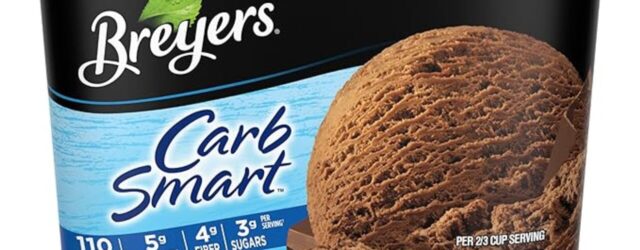
Breyers CarbSmart

They sit in the same frosty case, wear the same indulgent flavors, and often come home in the same grocery bag. But under U.S. food law, not every creamy frozen treat earns the right to be called ice cream.

That distinction is more technical than most shoppers realize. It comes down to standards of identity, ingredient formulas, and in some cases, whether the product contains dairy at all.

Why the label matters more than shoppers think

In the U.S., “ice cream” is not just a casual description. The FDA standard says a product sold under that name must meet specific compositional rules, including at least 10% milkfat, and frozen custard falls under the same federal section with additional egg-yolk requirements. That is why a product can taste rich and still need a different legal name if the formula misses the threshold.

That is also why “frozen dairy dessert” has become such a familiar phrase. Breyers openly explains that some of its products are labeled that way because of FDA definitions around milkfat content, even though they are made with milk, cream, and sugar and are designed to deliver an ice-cream-like eating experience. In other words, the label signals a regulatory distinction, not necessarily a dramatic drop in pleasure.

Sherbet and fruit bars sit in their own lanes for similar reasons. Federal rules place sherbet between 1% and 2% milkfat, which means it cannot be sold as ice cream, while products like Outshine are marketed plainly as frozen fruit bars because fruit and juice, not cream, define the formula. The result is a freezer aisle where legal naming is less about craving and more about chemistry.

The seven favorites that miss the legal cutoff

Breyers CarbSmart is one of the clearest examples. The company groups CarbSmart among its frozen dairy desserts, a sign that these lower-carb pints and bars are formulated outside the federal ice-cream standard even though they target the same audience and occasions as a traditional scoop.

Many Breyers Cookies & Candies flavors also live in that gray zone. Breyers notes that some tubs in its lineup are ice cream while others are frozen dairy dessert, and the reason is formula-specific. Heavy add-ins, texture goals, and milkfat balance can all affect which legal name ends up on the carton.

Halo Top built a national following by selling lighter pints as “frozen dessert,” leaning into lower calories rather than the traditional richness required for standard ice cream. Talenti offers another useful example from a different angle: it prominently sells gelato and Gelato Layers, but “gelato” is not a standalone federal standard of identity in the way ice cream is, so the legal product description often defaults to frozen dessert language in retail listings.

Then there are the obvious non-ice-cream stars: Outshine Frozen Fruit Bars, which are fruit-based novelties rather than dairy desserts; sherbet, which is legally its own category; and oat-milk favorites such as Breyers Non-Dairy Vanilla, which cannot be ice cream because they contain no dairy cream at all. My/Mochi, by contrast, often can use “ice cream” because the frozen center meets that standard even though the exterior is chewy rice dough.

What shoppers should take from the fine print

The first takeaway is that this is not a scandal. A package labeled frozen dairy dessert is not “fake” by default; it is simply being sold under the correct legal name for its composition. In fact, brands sometimes choose these formulas to cut fat, reduce sugar, accommodate plant-based diets, or create a softer texture straight from the freezer.

The second is that legal categories can help you shop smarter. If you want classic richness, look for products explicitly labeled ice cream and, if relevant, frozen custard. If you want lighter texture, fruit-forward flavor, or dairy-free ingredients, the alternatives may be exactly what you actually prefer.

The final lesson is that the freezer aisle has become more diverse than the old vanilla-chocolate-strawberry framework. Today’s bestsellers include low-carb pints, oat-milk scoops, sherbet, gelato-style desserts, and fruit bars, each shaped by different rules and consumer demands. The name on the carton may be legal language, but it also tells you what kind of indulgence you are really buying.

Your Favorite Restaurant Menu Might Be Quietly Changing

Chipotle menu

Across the U.S. restaurant industry, menu language is increasingly centered on protein, portion balance and foods positioned as compatible with changing eating habits. That shift is becoming more visible as chains and food brands respond to the rise of GLP-1 medications and the broader consumer demand patterns around them. By April 21, 2026, reporting from FOX 5 DC, citing Johns Hopkins, Vogue and a recent Food Policy study, showed that what diners see on chain menus is being quietly but measurably reshaped.

Chains are making protein-forward changes in public

The menu shift is no longer limited to health-focused brands or specialty concepts. Vogue reported on April 2, 2026, that major chains are redesigning offerings around higher protein, smaller portions and more customizable meals, reflecting what restaurant operators say customers are increasingly seeking. That means changes are showing up not just in marketing copy, but in curated menu sections and preset digital orders.

Shake Shack is one of the clearest examples. The company said its Good Fit Menu officially launched on December 18, 2025, positioning it as a curated lineup built from its existing menu with an emphasis on protein, customization and what it described as GLP-1-friendly choices. On its official announcement, Shake Shack listed options ranging up to 52 grams of protein, including lettuce-wrap burgers and other modified core items.

Chipotle also formalized the trend. Vogue reported that Chipotle launched its first High Protein Menu in December 2025, with choices ranging from 15 grams to 81 grams of protein, while the company’s GLP-1 support page says the new High Protein Menu includes options framed as GLP-1-friendly, such as a High Protein-Low Calorie Bowl and a High Protein-High Fiber Bowl. In Vogue, interim chief marketing officer Stephanie Perdue said the company saw an opportunity to make high-protein choices “more visible and convenient.”

The change is national, but local menus may not look identical

For diners, the effect is often subtle. In many markets, the shift does not necessarily mean an entirely new printed menu board; instead, it can appear through app-based categories, preset bowls, lighter modifications, lettuce wraps, macro callouts or digital prompts that steer customers toward higher-protein combinations. That makes the change easy to miss, even when it is widespread.

What is confirmed is that national chains are publicly highlighting these options in ways they were not a year earlier. Shake Shack said its Good Fit Menu is available in Shake Shacks and online, while Chipotle’s high-protein and GLP-1-oriented meal framing is now visible on its official digital channels. Those are broad national signals that affect how customers encounter menu choices in cities and suburbs alike.

What is not yet publicly known is the full location-by-location extent of these shifts in every state or metro area. Companies have not released a comprehensive market-by-market list showing where every protein-forward digital category, merchandising prompt or localized menu emphasis appears. In practice, that means customers in one area may see the same broader strategy presented differently depending on ordering channel, participating location or seasonal promotion timing.

GLP-1 demand is colliding with long-running nutrition marketing

The underlying reason is broader than a single fad. A January 2026 Food Policy study found that GLP-1 use increases willingness to pay for many protein products and can reduce price sensitivity for some of them, suggesting these medications are changing demand in ways food companies can measure. Researchers described that as a real shift in consumer behavior, not just a branding exercise.

Vogue reported that dietitians and menu developers are focusing on combinations that better fit how some GLP-1 users eat: more protein, more fiber and smaller portions that may feel easier to tolerate. That helps explain why restaurants are emphasizing balance and convenience rather than simply adding more food. It also helps explain why chains are packaging existing ingredients into new, highly specific menu pathways.

At the same time, Johns Hopkins Bloomberg School of Public Health has cautioned that protein marketing can outpace overall nutrition quality, a point highlighted in the April 21 FOX 5 DC report. The school noted that most Americans already consume substantial protein, while many fall short on fiber-rich foods. For customers, that means the practical change is likely to be more protein callouts, more portion-conscious options and more menu customization, even as the broader nutrition value of those items still varies from one order to the next.

Your Daily Coffee or Tea Habit Might Be Doing More Than You Realized

For millions of Americans, coffee and tea remain daily staples as health researchers continue to examine how routine caffeine intake affects long-term wellness. This month, new cardiovascular guidance from the American Heart Association sharpened the conversation around what moderate consumption may mean for heart health. The latest evidence suggests that, for many adults, a familiar morning habit may be doing more than providing a short-term lift.

A new review puts numbers on a common daily habit

The American Heart Association on July 20, 2026, published a new scientific statement on caffeine and cardiovascular disease, saying the latest research supports that, for most adults, consuming up to 400 milligrams of caffeine per day, or about five 8-ounce cups of caffeinated coffee, is safe. In its accompanying public statement, the organization said moderate caffeinated coffee intake appears to be linked to a lower risk of cardiovascular disease for some people. The group also said evidence remains more limited for other caffeinated products, including energy drinks and shots.

That update matters because coffee is the most common source of caffeine for U.S. adults, and tea remains another major source in everyday diets. The American Heart Association said randomized trials and observational studies point to a complex picture rather than a single effect, with some findings linking coffee intake to lower rates of atrial fibrillation and type 2 diabetes. At the same time, the organization said high-dose caffeine products may carry more heart-related risk than coffee or tea consumed in moderate amounts.

A separate updated systematic review indexed by PubMed in 2026 reached a similar broad conclusion, reporting that coffee and caffeine appear to have outcome-specific effects rather than being uniformly harmful or beneficial. That review reinforces a message now repeated across major health guidance: the scale of intake matters, and the source of caffeine matters too.

What is confirmed, and what researchers are still sorting out

What is confirmed is that moderate intake, especially from coffee and tea, continues to be associated with favorable outcomes in several large studies. A JAMA study summarized by Harvard Health in 2026 examined data from more than 131,000 U.S. adults and found that higher caffeinated coffee intake was associated with lower dementia risk and lower reports of subjective cognitive decline. Harvard Health also reported on separate research linking 200 to 300 milligrams of caffeinated coffee or tea per day with lower risk of diabetes, coronary artery disease, and stroke.

What is not yet known is whether the benefits come primarily from caffeine itself, from plant compounds such as polyphenols, or from the broader behavior patterns of people who drink coffee and tea regularly. The American Heart Association said more rigorous research is still needed on how different caffeine sources affect the body and how effects vary by age, genetics, health status, and sensitivity to stimulants. Researchers also have not established that coffee or tea directly prevent disease in the way a medication might.

That distinction remains important because much of the evidence is observational. The studies can show association, but they do not by themselves prove that drinking coffee or tea causes better long-term outcomes.

What this means for daily routines and consumer choices

For customers, the practical takeaway is relatively clear. The Food and Drug Administration says 400 milligrams of caffeine a day is generally not associated with dangerous, negative effects in most adults, a threshold that broadly aligns with the American Heart Association’s new guidance. That does not mean every caffeinated product carries the same profile, and both sources distinguish between moderate coffee or tea intake and highly concentrated caffeine products.

Consumers should also expect more discussion about timing, dose, and beverage type rather than simple advice to drink more or drink less. Harvard Health reported in 2026 on research suggesting that coffee consumed in the morning, rather than throughout the day, may be associated with lower cardiovascular and all-cause mortality. That finding does not change official guidance, but it reflects how researchers are increasingly studying real-world consumption patterns, not just total intake.

For now, the most factual conclusion is that a routine cup of coffee or tea may be associated with broader health effects than many people assume, particularly when consumed in moderate amounts. Health groups are not advising people to start using caffeine as treatment, but the current evidence does support that, for most adults, a daily habit centered on coffee or tea may fit within a healthy lifestyle while research continues.

After 47 Years, This Arizona Wing Spot Just Closed the Door That Started It All

Restaurant closures have continued to reshape legacy dining brands across the country as operators face higher costs, shifting traffic patterns and changing customer habits. In Arizona, that trend now includes the end of a locally significant restaurant: Native Grill & Wings has closed its original Tempe outpost after 47 years in business. The June 15 shutdown ends service at the location that traced its roots to the first Native New Yorker opened by Floyd and Judy Anderson in 1979.

The original Tempe location has officially closed

Native Grill & Wings permanently closed its Tempe restaurant at 1301 E. Broadway Road on June 15, according to Mouth By Southwest, which reported that the south Tempe location had ended a nearly half-century run. The closure involved one restaurant, but it was the founding location in the company’s history, making it more significant than a standard unit shutdown. The site had operated for decades near Broadway Road and Dorsey Lane after the business first launched near McClintock Drive and Baseline Road in 1979.

The company’s own location directory still described Native as an Arizona-grown brand and, as of recent site listings, showed 15 Arizona locations. City of Tempe records identify 1301 E. Broadway Road as a historic restaurant property later associated with Native New Yorker and Native Grill & Wings, reinforcing the site’s long connection to the brand. That makes the closure the end of the last operating restaurant directly tied to the company’s starting chapter in Tempe.

NewsBreak, citing a farewell message from the Anderson family, reported that the founding family thanked customers, employees and friends after the restaurant served generations of Valley diners. Floyd Anderson died in 2009, and the family later sold most of the chain in 2014 while retaining ownership of two locations, according to the same report. No court filing, bankruptcy petition or public regulatory notice tied to the Tempe closure was identified in the reporting reviewed.

What the closure means in Tempe and across Arizona

For Tempe, the confirmed impact is straightforward: the Broadway Road restaurant is closed, and the city has lost a longtime neighborhood sports-bar destination that had operated through multiple eras of local growth. The address is the only Tempe location shown in Native Grill & Wings’ Arizona site map, so the closure appears to leave the brand without an active restaurant in Tempe based on the company’s public listings. The company has not released a broader public statement detailing staffing effects at the restaurant.

Across Arizona, Native Grill & Wings still has an operating footprint. The company directory lists 15 Arizona locations, and the chain continues to describe itself as a franchise rooted in the Phoenix area. NewsBreak reported that the Anderson family still had one remaining restaurant in Arizona after the Tempe closure, but the company has not released a comprehensive public breakdown distinguishing family-held stores from franchised locations.

What is not yet known is whether additional Arizona closures are planned or whether the Tempe property will be replaced by another restaurant. Separate reports in June and July noted other Native-related closures in the state, including Sierra Vista and Mesa references in local coverage, but the company has not issued a statewide closure list. On the facts currently confirmed, the June 15 event is the closure of the original Tempe restaurant, not a full exit from Arizona.

The closure fits broader pressures on longtime restaurant operators

No official reason for the Tempe closure was given in the public reports reviewed. Mouth By Southwest specifically said no reason was provided, and the family farewell cited by NewsBreak focused on gratitude rather than an explanation. That means any direct cause remains unconfirmed by the company or by the founding family in public statements tied to the closing.

The broader operating backdrop for restaurants, however, is well established. NewsBreak placed the closure in the context of long-running independent and regional restaurants facing a more difficult environment and changing consumer habits. Native’s own current brand materials show a smaller Arizona footprint than the 20 franchised locations the company promoted in a 2025 news release, suggesting contraction over the past year even though the company continues to operate in the state.

For customers, the practical takeaway is that the original Tempe restaurant is no longer serving, while other Arizona Native Grill & Wings locations remain listed by the company. Customers looking for the brand will need to use those remaining Arizona stores rather than the longtime Broadway location. As of late July 2026, the company’s public site continues to present Native Grill & Wings as an Arizona-founded chain with active restaurants elsewhere in the state.

A Major Rule Change Could Be Coming for Peptides Sold in the US

The market for compounded wellness and performance drugs has drawn increasing federal scrutiny as regulators revisit what ingredients can legally be used in medicines sold in the United States. That review now squarely includes peptides, with the FDA this month convening advisers to examine several peptide substances that have been widely marketed for uses ranging from wound healing to insomnia. The discussion does not create an immediate ban, but it signals a potentially significant rule change for a category that has expanded well beyond traditional pharmacy compounding.

FDA has advanced a formal review of multiple peptide substances

The U.S. Food and Drug Administration scheduled its Pharmacy Compounding Advisory Committee to meet on July 23 and July 24, 2026, to discuss seven peptide-related bulk drug substances being considered for inclusion on the Section 503A bulks list, according to the agency’s meeting notice. On July 23, the committee reviewed BPC-157, KPV, TB-500, and MOTs-C. On July 24, it reviewed emideltide, also referred to as DSIP, along with semax and epitalon.

That list matters because Section 503A governs traditional compounding by state-licensed pharmacies and physicians. Under federal law, bulk drug substances generally must meet specific criteria to be used in compounding, and FDA is still building out the formal list of substances that qualify. The July meeting did not itself change the law, but it marked a public step in the agency’s evidence review for peptide ingredients that have been sold in compounded formulations.

FDA’s meeting materials identified the uses it evaluated for each substance, including ulcerative colitis for BPC-157, wound healing for TB-500, obesity and osteoporosis for MOTs-C, and insomnia for epitalon. The agency said nominators would be invited to present supporting information. That makes the proceeding significant for pharmacies, telehealth-linked sellers, and patients because the committee’s discussion can inform later FDA decisions on whether these substances should remain viable candidates for lawful compounding.

The practical impact is national, but many details are still unresolved

Because Section 503A applies to traditional compounders across the country, any eventual FDA decision could affect peptide sales in every state, including those routed through local pharmacies or shipped to consumers through broader wellness businesses. What is confirmed is that the federal review is active and public. What is not yet known is how quickly FDA will act on each peptide substance after the advisory committee meeting, or whether each ingredient will ultimately be allowed, restricted, or effectively pushed out of lawful compounding channels.

The agency has not released a single nationwide list of every pharmacy, clinic, or seller that may be using the peptide ingredients reviewed in July. It also has not announced a state-by-state enforcement map tied to this week’s advisory committee agenda. That means consumers and businesses do not yet have a public inventory showing where specific compounded products containing BPC-157, TB-500, semax, epitalon, or other reviewed peptides are currently being dispensed.

What is clear is that FDA oversight is extending beyond a narrow niche. In an April 30, 2026 announcement, the agency separately proposed excluding semaglutide, tirzepatide, and liraglutide from the 503B bulks list for outsourcing facilities, saying it did not identify a clinical need for those compounds to be made from bulk substances when FDA-approved drugs are available. That action involved a different statutory pathway, but it underscored the same regulatory direction: compounded ingredients face closer review when approved alternatives exist.

FDA says safety and legal standards are driving the broader crackdown

The main reason for the current review is the structure of federal compounding law and FDA’s assessment of safety, medical necessity, and evidence. The agency has said compounding with bulk substances is limited under Sections 503A and 503B of the Federal Food, Drug, and Cosmetic Act, and that substances must satisfy statutory criteria or fit within specific policies while FDA completes its listmaking work. In plain terms, the government is examining whether peptide ingredients marketed in compounded products have enough support to justify continued use.

FDA has also separately flagged a number of peptide-related substances as presenting potential significant safety risks. On its current safety-risk page, the agency lists concerns for compounds including BPC-157, KPV, MOTs-C, TB-500, semax, epitalon, GHRP-2, GHRP-6, and ipamorelin acetate. The concerns cited by FDA include limited human safety data, risks tied to peptide-related impurities, immunogenicity, and in some cases reports of serious adverse events.

For consumers, the immediate takeaway is that no blanket nationwide prohibition was issued on July 23 or July 24. The practical near-term effect is greater uncertainty for products sold as compounded peptides while FDA continues its review and weighs further decisions. The agency’s recent statements indicate it intends to preserve access to lawful compounding where standards are met, while tightening oversight where clinical need or safety support is lacking.

PepsiCo Just Warned Shoppers About Something Coming Later This Year

Grocery inflation has eased from its earlier peak, but major food manufacturers are still signaling that price stability is not guaranteed for the rest of 2026. PepsiCo, one of the country’s largest snack and beverage makers, said on July 9 that shoppers could face more pricing pressure later this year as its own costs begin to climb again.

PepsiCo tied the warning to second-half cost pressures

PepsiCo issued the warning alongside its second-quarter 2026 results, which covered the period ended June 13. The company reported net revenue of $24.18 billion and adjusted earnings per share of $2.20, both above Wall Street expectations, according to PepsiCo’s prepared management remarks and Reuters reporting. Even with those results, the company said input costs are expected to rise in the second half of the year.

Chief Financial Officer Steve Schmitt said in PepsiCo’s July 9 prepared remarks that the company is expecting higher input-cost inflation in the second half of 2026 than in the first half. Reuters separately reported that PepsiCo specifically pointed to commodity inflation, along with higher packaging and logistics expenses, as the main pressures building later this year. Those are the costs that can eventually affect prices on widely sold brands including Lay’s, Doritos, Gatorade and Pepsi beverages.

The company did not announce a specific nationwide retail price increase on July 9. Instead, it warned investors and shoppers that its cost base is becoming more difficult as the year moves forward, while still maintaining its fiscal 2026 outlook for organic revenue growth of 2% to 4% and core constant-currency earnings-per-share growth of 4% to 6%, according to Reuters and PepsiCo’s earnings materials.

What the warning means in stores across the United States

For shoppers in the United States, the immediate takeaway is that PepsiCo has flagged broad national cost pressure, not a confirmed shelf-price change tied to a single state or city. The company sells through grocery chains, mass retailers, convenience stores and gas stations across the country, so any later pricing impact would likely be felt through those channels rather than through a single local announcement. PepsiCo has not released a state-by-state list of where any future price adjustments could appear first.

What is confirmed is that PepsiCo’s North American business showed signs of strain in the quarter. Reuters reported that North American food sales fell about 2% during the period, while other coverage of the earnings release said North American beverage volumes also declined. That suggests the company is balancing two competing forces at once: higher operating costs on one side and cautious consumer spending on the other.

Earlier in 2026, PepsiCo moved in the opposite direction on some products by cutting prices on certain U.S. snacks by up to nearly 15%, according to a February company announcement. That reduction applied to some Lay’s, Doritos and Cheetos products ahead of the Super Bowl. The latest warning does not reverse that move outright, but it does show the company believes cost inflation remains a live issue for the back half of the year.

PepsiCo says inflation and consumer caution are colliding

PepsiCo’s explanation for the warning centers on a familiar food-industry problem: expenses are rising again even as many consumers remain price sensitive. In its prepared remarks, the company said it expects higher input-cost inflation later this year, while Reuters reported that commodity, packaging and transportation-related costs are all part of the concern. PepsiCo also said productivity improvements and tariff refund claims could offset some of that pressure, but not eliminate it.

The consumer side of the equation is also important. Reuters and other coverage of the earnings report said PepsiCo has been dealing with tighter household budgets in North America, especially in categories tied to discretionary or impulse purchases. That matters because many PepsiCo products are sold in convenience stores and gas stations, where spending can weaken when fuel costs and broader living expenses rise.

For customers, the practical expectation is not a single announced price jump on a fixed date, but the possibility of renewed pressure on snack and beverage prices later in 2026 if cost inflation persists. PepsiCo has not announced a broad U.S. pricing timetable, and it has not identified specific products that will become more expensive. What the company has confirmed is that cost pressures are building in the second half, even as it continues to hold its full-year financial guidance.

Food Banks Are Stocking Up Like Never Before: Here’s What They’re Bracing For

Food Bank

Food banks across the United States are entering the second half of 2026 with demand still elevated and public hunger data at the highest level in about a decade. The immediate concern now is not a single recall or closure, but a broad supply-and-demand squeeze as food banks expand purchases, line up donations, and brace for more households turning to emergency food assistance.

Food banks are increasing purchases as demand remains high

Feeding America and its partner food banks are purchasing unusually large volumes of food ahead of expected strain, according to reporting published by Axios on July 25, 2026. Feeding America CEO Denis McDonough told the outlet that food banks are buying food at record levels while also expanding application assistance and seeking added supply from farmers and retailers.

The scale of the system is already large. Axios reported that Feeding America’s network generated nearly 6 billion meals last year and includes more than 200 food banks and 60,000 faith-based and charitable partners. Feeding America’s Spring 2026 Impact Report separately said the network helped provide access to 3.1 billion meals from July through December 2025, including 674 million meals from purchased food, 561 million from federal commodities and 1 billion from retail donations.

Those figures help explain why stockpiling is not simply a warehouse story. Food banks are trying to secure product from several channels at once, including direct purchases, retail recovery and farm partnerships, because no single source is expected to cover future need if federal and household assistance both weaken at the same time.

The impact is national, but local shortages and wait times may vary

The pressure is being felt nationally, though the local effect will differ by city, county and pantry network. Reuters reported on March 25, 2025, that food banks and pantries in states including West Virginia, Illinois, Wisconsin and California had already lost millions of dollars in federal funding and food deliveries, limiting how much produce, meat and other items they expected to distribute in the following months.

What remains unclear is how that strain will break down community by community in the months ahead. No single national source has released a comprehensive list of every affected local pantry, county warehouse or municipal distribution schedule tied to the latest wave of preparation. In practice, that means residents may see different conditions depending on where their local food bank gets its inventory and how much it relies on federal commodities versus private donations and purchased food.

There are, however, clear indicators of broad need. USDA’s Economic Research Service reported that 13.7% of U.S. households, or 18.3 million households, were food insecure in 2024. That report, released in December 2025, marked the highest national household food insecurity rate in a decade.

SNAP changes, inflation and federal cuts are driving the buildup

The main reason food banks are stocking up is that leaders expect charitable demand to rise as federal nutrition support shrinks. Reuters reported on July 9, 2026, that President Donald Trump’s tax and spending law, signed in July 2025, shifted significant SNAP spending to states and expanded work requirements. Axios, citing the Center on Budget and Policy Priorities, reported that SNAP participation fell by more than 4.5 million people between the law’s enactment in July 2025 and April 2026.

Feeding America has warned that SNAP changes alone could remove the equivalent of 6 billion to 9 billion meals annually, according to Axios. The same report said SNAP provides roughly nine meals for every one supplied by Feeding America food banks, underscoring why nonprofit providers say they cannot replace federal benefits on their own.

Food banks are also contending with a thinner federal pipeline and persistently higher costs. Reuters reported in March 2025 that the USDA had halted about half of TEFAP funding, roughly $500 million, according to a Feeding America representative. For residents, the practical takeaway is straightforward: food banks are trying to build inventory now because many expect heavier usage later, even though leaders continue to say charitable food distribution cannot fully substitute for SNAP or stable federal supply.

One of Seattle’s Most Award-Winning Restaurants Is Quietly Serving Its Last Meals

Restaurant closures have continued to reshape fine dining in major U.S. cities as owners contend with higher labor, rent and supply costs alongside uneven consumer spending. In Seattle, that pressure has now reached Copine, the Ballard restaurant that built a national profile for French-rooted cooking and earned a 2023 James Beard Award nomination for Outstanding Restaurant. Its final stretch ended quietly at the close of May, marking the end of one of the city’s most decorated neighborhood dining rooms.

Copine’s Ballard run ended at the close of May

Copine, the French-American restaurant at 6460 24th Ave. NW in Ballard, closed following its final service on May 31, 2026, according to Puget Sound Business Journal. The restaurant had opened in 2016, giving it nearly a decade in Seattle before the owners decided not to continue in the space. The timing had been signaled months earlier in messages posted by co-owner Jill Kinney on the restaurant’s website.

Kinney wrote in a December 4, 2025 update that Copine would remain in its Ballard space until May 2026, when the lease ended. In a May 29, 2026 post titled “Goodbye…for now,” she confirmed the restaurant was “closing up shop here in Ballard” and tied that decision to the economics of the space and the demands of operating it. KIRO 7, citing MyNorthwest, also reported on May 29 that Copine would close that Saturday, as the restaurant finished its last weekend of service.

The closure ends a notable chapter for a restaurant that drew national recognition. The James Beard Foundation named Copine a 2023 nominee for Outstanding Restaurant, placing the Seattle dining room among the national finalists in one of the foundation’s top categories. That nomination helped cement Copine’s status as one of Seattle’s most acclaimed independent restaurants during its 10-year run under chef Shaun McCrain and Kinney.

What is confirmed in Seattle, and what remains unclear

What is confirmed is narrow and specific: Copine’s Ballard restaurant has closed, and the owners publicly tied that decision to the end of their lease and the economics of remaining in the space. The address identified in published coverage is 6460 24th Ave. NW, and the neighborhood affected is Ballard. This is not a chainwide retrenchment or a multi-location closure; available reporting points to a single Seattle restaurant.

The owners have not announced a replacement restaurant, a reopening elsewhere in Seattle, or a relocation within Ballard. Kinney wrote in December 2025 that she and McCrain planned to take time off when the lease ended, and in the May 29 post she said they were not yet sure what would come next. Publicly available statements do not identify a new site, a new opening date or a new concept.

For Seattle diners, that means the immediate local impact is the loss of one nationally recognized special-occasion restaurant in Ballard. Copine had already shifted its final months of service, telling guests in a January 1, 2026 post that the menu would move to a four-course format and reservation-only service, including bar seats. The owners also stated that their goal was to keep service going through the end of the run with their core team in place, but they did not release a broader public accounting of staffing outcomes beyond those statements.

The owners pointed to costs, scale and softer demand

The reasons cited by the owners were direct. In the May 29 farewell message, Kinney wrote that Ballard’s Copine space carried high costs tied to rent, product, utilities and fuel surcharges, and said the business also prioritized paying its team appropriately. She added that the operation was labor intensive and that the decision was not driven by one issue alone, but by the cumulative pressure of multiple factors.

Earlier statements from the restaurant show those pressures building over time. In a July 2, 2025 post, Kinney wrote that Copine had spent five months operating at a marked deficit and said economics had determined its next immediate step. In a March 15, 2025 post, she described hospitality as a rocky business environment and cited rising costs across food, wine, utilities, insurance and maintenance.

Kinney also connected the closure to weaker special-occasion demand and broader economic uncertainty. In a May 3, 2025 post, she referenced a National Restaurant Association industry update saying consumer sentiment was being hurt by a slowing economy, tariff uncertainty, inflation and the stock market. For customers, the practical takeaway is now straightforward: Copine’s Ballard chapter has ended, and the owners’ latest public statement says only that they intend to take a break before deciding what comes next.

This One Cucumber Salad Somehow Pairs With Almost Any Meal You’re Making

It is rare for a side dish to feel this useful. Even rarer is one that improves dinner without asking much from the cook.

That is exactly why cucumber salad keeps showing up on great tables, from backyard grills to weeknight kitchens.

Why cucumber salad works with nearly everything

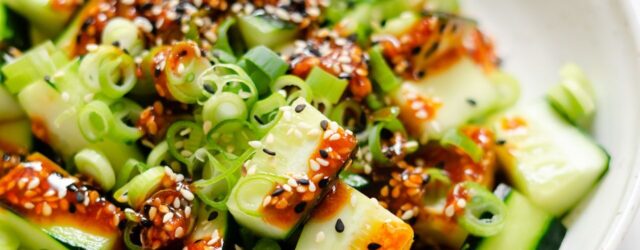
The genius of cucumber salad is structural, not trendy. Cucumbers are about 95% water, according to Harvard Health, which gives the salad a cooling quality that naturally offsets salty, spicy, fatty, or heavily seasoned food. USDA nutrition data also places raw cucumber at roughly 15 calories per 100 g, so it adds volume and freshness without making a meal feel heavier.

That matters because most main dishes lean rich in one direction or another. Roasted chicken brings browned fat, grilled steak brings smoke, fried cutlets bring crunch, and sandwiches often bring salt and mayo. A cucumber salad cuts through all of it. Acid from vinegar or lemon wakes up the palate, while dill, mint, or garlic add aroma without competing for attention.

Classic versions from USDA MyPlate, the University of Maryland Extension, and PBS Food all point to the same dependable formula: cucumber, a tangy element like vinegar or lemon, and a creamy or lightly sweet counterpoint such as yogurt. Food Network’s version adds lemon, dill, and mint, reinforcing how herbs brighten the salad while keeping it flexible.

That flexibility explains its unusual range. A vinegar-forward bowl belongs next to barbecue, burgers, sausages, or smoked fish. A yogurt-based version, closer to tzatziki or Eastern European creamy cucumber salads, fits equally well with spiced lamb, roast salmon, grain bowls, falafel, or simple baked potatoes.

The flavor formula that makes it dependable

What makes this salad dependable is balance. Good cucumber salad is never just cold cucumber in dressing; it is a controlled mix of crunch, tang, creaminess, and herbaceous lift. Bon Appétit’s vinegar cucumber salad and Epicurious’s dilled versions both show how a restrained dressing lets the vegetable stay central instead of turning limp and overly acidic.

The first key is texture management. Salting sliced cucumbers briefly before dressing helps draw off some surface moisture, which keeps the salad crisp and prevents a watery bowl. That technique is especially useful in yogurt-based versions, where excess liquid can dilute flavor fast and make the dressing feel thin instead of luscious.

The second key is choosing the right flavor direction for the meal. If dinner is rich, such as ribs, grilled chicken thighs, or a panini, use vinegar and dill for sharper contrast. If dinner is spicy, charred, or heavily seasoned, a Greek-yogurt version with garlic, lemon, and mint gives a softer cooling effect that feels more restorative.

The third key is restraint. Too much sugar makes it flat, too much onion overwhelms it, and too much garlic turns it into dip. The best bowls taste clean and precise. That is why cooks return to the same narrow family of ingredients again and again: cucumbers, vinegar or lemon, yogurt or a touch of sweetness, salt, pepper, and fresh herbs.

How to use it all week without getting bored

The easiest way to think about cucumber salad is as a modular side. Make one base bowl, then change the accent. On Monday, pair a dill-and-vinegar version with grilled chicken. On Tuesday, fold in Greek yogurt and mint for salmon or falafel. By Wednesday, add thin red onion and serve it beside burgers, sausages, or roast pork.

It also works beyond the dinner plate. Spoon it over rice bowls to cut through soy, sesame, or chile heat. Tuck a creamy version into pita wraps with rotisserie chicken. Serve a sharper, less creamy mix next to egg salad, tuna melts, or leftover meatloaf, where its brightness keeps familiar foods from tasting tired.

This is also a practical refrigerator salad. Cucumbers are affordable, dressing ingredients are usually already in the kitchen, and the preparation is almost frictionless. USDA and extension-style recipes rely on pantry basics like vinegar, dill, and yogurt, proving that you do not need specialty ingredients to make something that tastes intentional.

In the end, its versatility comes from discipline, not drama. Cucumber salad does one job exceptionally well: it brings cold, crisp, tangy relief to whatever else is on the plate. That is why it pairs with almost any meal you are making, and why it keeps earning a place at the table.

This Buc-ee’s Sign Has One Word So Wrong, Customers Can’t Stop Talking About It

Buc-ee’s has built its brand on consistency, polished presentation and tightly managed travel-center operations across the South. That is why a single gas-pump sign with visibly distorted wording has become a news story of its own. The sign, which circulated online in July, has prompted questions not only about a typo, but about how the artwork was produced and whether similar materials appear at other Buc-ee’s locations.

A typo-filled Buc-ee’s sign became the event itself

The specific issue centers on a Buc-ee’s pump-policy sign that includes the chain’s beaver mascot beside an illustrated fuel pump, with text that appears to read “STOP. TILL UP. POMP.” The San Antonio Express-News reported on July 22, 2026, that the image was being criticized online after it was shared in Reddit discussion threads, where users said the distorted lettering resembled common errors seen in AI-generated graphics. Buc-ee’s representatives told the newspaper they “do not have any comment to provide,” leaving the company’s role in the design process unconfirmed.

What is verified is the image itself. The misspelled or warped wording is visible in the circulated photograph, and that visual error is what turned a routine instructional sign into a broader branding story. Parade, which also covered the image in July, described the sign as a flashpoint for criticism because the artwork appeared inconsistent with Buc-ee’s typically polished store presentation.

The scale of the issue remains limited in confirmed terms. No public record reviewed for this report shows that Buc-ee’s announced a chainwide design rollout tied to the sign, and no verified company statement has established how many stores, if any, displayed the same graphic. At this stage, the confirmed event is a viral sign image and the reaction around it, not a documented companywide campaign.

Texas is at the center, but the location details are still incomplete

The sign story is rooted in Texas, where Buc-ee’s is based and where the Express-News first reported the controversy. Even so, the exact store location shown in the widely shared photo has not been publicly confirmed in the reporting available, and Buc-ee’s has not released a store-specific explanation. That leaves an important gap in what can be reported about local impact.

What is confirmed is that the sign appears to relate to a real pump rule now visible at Buc-ee’s fuel islands. Multiple reports this year, including coverage from the Express-News, FOX 4 and other Texas outlets, said Buc-ee’s shifted card users toward paying at the pump rather than inside the store, a change that began March 1, 2026. The practical message behind the viral sign is that customers should note their pump number before going inside to complete a fuel transaction.

What is not yet known is whether the typo-filled artwork appeared at one Texas travel center, several Texas stores, or locations beyond the state. The company has not released a comprehensive list of affected stores, and there is no public confirmation that customers in a specific Texas city were shown identical signage. That distinction matters because an isolated sign-production error is materially different from a broader signage rollout.

The broader context is Buc-ee’s pump policy and scrutiny over automation

The attention around the sign is tied to a larger customer conversation already underway at Buc-ee’s in 2026. Texas media outlets reported earlier this year that the company’s fuel areas were under added scrutiny after Buc-ee’s introduced updated payment instructions requiring credit and debit transactions at the pump. Those reports framed the policy as part of an effort to keep pumps moving and reduce delays caused when customers leave vehicles at fueling spots while shopping inside.

That context helps explain why this particular sign spread so quickly. A basic operational notice landed in front of a customer base already discussing pump access, preauthorization holds and the pace of transactions at Buc-ee’s stores. The distorted wording then shifted the discussion from policy enforcement to production quality, especially because online commenters associated the visual mistakes with AI-generated imagery, according to the Express-News and Parade.

For customers, the practical takeaway is narrower than the online debate. The confirmed operational point is that Buc-ee’s expects many card transactions to be completed at the pump, while the unanswered question is how the flawed sign was created and where it was posted. Until Buc-ee’s issues a fuller statement, the public record shows a visible typo, a real pump-policy reminder and a company that has declined to comment further on the image.