The Vegetable Swap Smart Shoppers Are Quietly Making Right Now

Frozen Vegetables

Vegetable prices have remained an unsettled part of the U.S. grocery bill in 2026, even as overall food-at-home inflation has been more moderate than the spikes consumers saw earlier in the decade. Against that backdrop, the swap many budget-focused shoppers are making right now is moving at least part of their cart from fresh vegetables to frozen vegetables, while also leaning harder on cabbage, carrots, onions, potatoes, and beans. The shift is less about a single trend item than a practical response to price volatility and waste.

Frozen vegetables are emerging as the clearest budget substitute

The most visible swap is from fresh vegetables to frozen ones, a change supported by both price and nutrition data. The USDA Economic Research Service updated its Food Price Outlook on June 25, 2026, and said food-at-home prices are forecast to rise 3.2% in 2026, while its vegetables and pulses reporting has continued to describe fresh vegetable pricing as a category that can move unevenly by commodity and season. USDA also reported that imports accounted for about one-third of U.S. vegetable availability in 2025, underscoring how supply and sourcing can shape what shoppers see at retail.

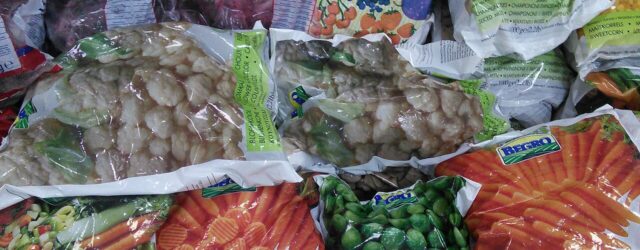
Frozen vegetables have become the practical alternative because they offer predictability at the shelf. Harvard Health has said it does not matter whether consumers buy produce from the produce aisle or the frozen section, so long as the frozen items are not loaded with sauces or other additives. That guidance has helped make frozen broccoli, green beans, peas, spinach, and mixed vegetables a straightforward replacement for higher-priced fresh items.

The swap also addresses food waste, which is part of the cost equation for many households. A frozen bag can be portioned out meal by meal, while fresh greens and tender vegetables often need to be used quickly. In grocery terms, that means the savings are not only on sticker price but also on how much product actually gets eaten.

Cabbage, root vegetables, and beans are filling the gap in everyday meals

Beyond the freezer case, shoppers are also shifting toward vegetables and pantry staples that store longer and stretch further. Cabbage has become a common replacement for more expensive leafy greens because one head can be used across salads, slaws, sautés, and soups. Carrots, onions, potatoes, and sweet potatoes are also drawing attention as low-cost staples that can work as sides or as the base of a full meal.

That shift is consistent with the economic realities around produce distribution. USDA research on transportation costs has found that fuel and shipping expenses can affect fresh fruit and vegetable prices, especially for perishable products moving long distances. For consumers, that makes sturdier vegetables with longer shelf lives more appealing when budgets are tight.

Beans are part of the same pattern, even though they are not a direct substitute for every vegetable purchase. Canned and dried beans can bulk up soups, grain bowls, salads, and skillet meals at a relatively low cost per serving. In practice, shoppers are not only replacing one vegetable with another; they are rebuilding meals around ingredients that keep longer, travel better, and provide fiber and satiety at a lower total cost.

The broader context is volatility, seasonality, and a push toward flexibility

What is driving the swap is not one shortage or one company decision but a broader pricing environment. USDA data shows food and fuel prices have been among the more volatile consumer categories over the long term, and the agency’s produce outlook continues to point to the role of seasonality, sourcing, and commodity-specific changes in what consumers pay. That means shoppers can see meaningful price differences between fresh and frozen, or between tender greens and hardier vegetables, even within the same store.

Seasonality is also central to the shift. USDA and land-grant university nutrition guidance have long noted that produce prices vary across the year, and that frozen options can provide consistency when fresh items are out of season or shipping from farther away. For households trying to control weekly spending, flexibility matters more than loyalty to any one vegetable.

For customers, the immediate takeaway is practical: the “smart shopper” vegetable swap is not eliminating vegetables, but changing which forms and varieties go into the cart. Frozen vegetables, cabbage, root vegetables, and beans are gaining ground because they align with current price conditions, store well, and still support balanced meals, while USDA’s latest outlook suggests grocery shoppers should continue to expect a mixed pricing environment through 2026.


Most Americans Agree on This One Food Issue Even When They Don’t Agree on Anything Else

National food debates often split along political lines, but recent polling suggests ingredient safety is an exception. A July 6 roundup from IFMA The Food Away from Home Association, citing new surveys from POLITICO and Fox News, found broad agreement on tighter oversight of additives, pesticides and food labeling. That makes food transparency one of the clearest areas of overlap in a polarized consumer landscape.

Polling shows broad support for tougher food oversight

The clearest finding is the scale of agreement. In IFMA’s July 6 report, which summarized recent consumer polling tied to the Trump administration’s Make America Healthy Again agenda, 75% of Americans said there is not enough regulation of chemical additives in food, while 64% said pesticides used in agriculture are not sufficiently regulated, according to the association’s recap of a POLITICO poll.

The same roundup said support extended beyond people who identify with the MAHA movement itself. IFMA reported that respondents broadly backed removing pesticides and artificial food dyes from the food supply, and it said about two-thirds of respondents were concerned about the amount of ultra-processed foods in the U.S. food supply. The report was compiled by Dr. Joy Dubost, a food scientist and registered dietitian, and published from Chicago on July 6.

A separate Fox News poll pointed in the same direction. Fox News reported that voters favored protecting public health over lowering food prices by a 16-point margin, 58% to 42%, while 89% said improving food safety is important, 85% supported expanding access to healthy foods, 83% backed limiting harmful additives and 81% said increasing transparency in food labeling should be a government priority.

What the findings mean across states and local food markets

The polling is national, not state-specific, and neither survey summary released a full state-by-state breakdown in the material reviewed. That means it is not yet possible to say whether support is stronger in California than in Arkansas, or whether urban and rural markets differ in the same way on every food issue. What is confirmed is that majorities spanning Democrats, Republicans and independents backed several of the same food policy priorities in the Fox News poll.

That matters for local food businesses because many of the issues now under debate are increasingly decided through a mix of federal and state action. IFMA’s July 6 roundup noted that policymakers are advancing proposals tied to food dyes, pesticides, ultra-processed foods and ingredient disclosure, while separate sections of the same report highlighted new state rules in places such as California and Arkansas on labeling and nutrition-related SNAP policy.

For consumers, the practical local effect may show up first on packaging, menus and product reformulation rather than in a single nationwide rule. The company and government agencies involved have not issued one comprehensive national list of products or restaurants that would change first. Still, the polling suggests that clearer labels and cleaner ingredient expectations are not confined to one region or party coalition.

Why this issue is drawing consensus now

Part of the explanation is that the debate has moved beyond movement branding and into broader concerns about everyday food purchasing. IFMA said relatively few Americans identify themselves as part of MAHA, but many share its priorities on ingredients and nutrition. In the POLITICO findings cited by IFMA, concerns over chemical additives, pesticides and ultra-processed foods ranked among the strongest points of agreement.

The policy environment is also reinforcing the issue. IFMA’s report said federal and state policymakers are continuing to advance initiatives focused on food dyes, pesticides, ingredient disclosure and chronic disease prevention. In the same roundup, the association pointed to the FDA Human Foods Program’s 2026 guidance agenda, including planned work on caffeine labeling, the “healthy” claim and food facility product categories, as another sign that labeling and ingredient questions remain active regulatory priorities.

For customers, the immediate takeaway is not a single ban or rule change but a sustained shift in what food buyers say they want from regulators and brands. The most concrete expectation, based on the polling and current policy agenda, is continued pressure for clearer labels, cleaner formulations and more visible food safety standards as governments and manufacturers respond to an issue that now tests well across party lines.

8 Grocery Habit Experts Say You’re Skipping After Every Shopping Trip

Grocery shopping is only one part of food safety in American households, as federal agencies continue issuing recalls and routine guidance on how food should be handled at home. The specific habits experts emphasize after each trip are less about shopping itself and more about what happens once bags cross the kitchen threshold. Based on federal food safety guidance and consumer recall advice, several steps repeatedly appear as the practical measures many families still skip.

Sign up, check, and keep records after groceries come home

One of the most overlooked post-shopping habits is signing up for official recall alerts and checking recall notices regularly. The FDA says consumers can subscribe to recall updates through its recalls and safety alerts system, and the agency states that recalls are used to remove food products that violate federal regulations. FoodSafety.gov also advises consumers to review the identifying details in a recall notice, including how to tell whether a product in the pantry, refrigerator, or freezer is affected. Those details matter because recalls can involve precise lot codes, package dates, or labeling language rather than an entire product category.

A second habit experts point to is holding on to receipts and purchase records for at least several weeks. While federal guidance does not require paper receipt storage in every case, recall notices often ask consumers to verify what product they bought, when they bought it, and whether it matches the affected package information. Digital receipts, loyalty account histories, and photos of labels can all help households match products to a recall more quickly. That is especially useful when products are repackaged or moved into storage containers after purchase.

A third habit is labeling opened or decanted items before the original packaging is discarded. If cereal, flour, rice, or snacks are transferred into jars or bins, consumers may lose access to the brand, UPC, lot code, or best-by date that would help confirm whether a product is covered by a recall. Keeping that information attached, written down, or photographed gives households a clearer way to respond if an alert appears days or months later. Federal recall systems rely on those identifiers to separate affected food from unaffected inventory.

Clean storage areas, reusable bags, and anything that touched risky food

Another habit many households skip is cleaning reusable grocery bags after repeated use. Federal food safety advice from CDC and USDA emphasizes keeping food-contact areas clean and separating foods that can spread contamination, especially raw meat, poultry, seafood, and eggs. If reusable bags carry leaking meat packages, unwashed produce, or spilled dairy, those surfaces can transfer bacteria to the next set of groceries. Washing or wiping them between trips is a simple step that aligns with the broader clean-and-separate approach federal agencies recommend.

The same principle applies inside the refrigerator. USDA’s Food Safety and Inspection Service says refrigerators should be kept at 40 degrees Fahrenheit or below, and the agency advises thorough cleaning of surfaces that come into contact with raw animal products. When a recalled or spoiled item has been stored in a refrigerator or freezer, USDA also recommends washing interior surfaces and using a sanitizing solution after cleanup if odors or contamination remain. That makes shelf and drawer cleaning more than a cosmetic task; it is part of limiting cross-contact after a spill, leak, or recall.

Produce drawers are another easy-to-miss zone. Moisture, soil, and food residue can build up after repeated shopping trips, especially when leafy greens, herbs, berries, or unpackaged vegetables are stored loose. CDC advises consumers to keep produce separate from raw meat and to follow core food safety steps that include cleaning and chilling. In practice, that means fresh drawers and shelves should be wiped out before newly purchased food is loaded on top of older residue.

Quarantine questionable items and inspect packaging before storage

When a shopper hears about a possible recall but does not yet know whether a specific package is affected, food safety experts say separation matters. FoodSafety.gov advises consumers to identify whether they have the recalled item and to wash hands thoroughly after handling it. Until the product details are confirmed, isolating the item in a sealed bag or separate container can reduce the chance that juices, crumbs, or allergen residue spread to other groceries. That is especially relevant for foods tied to bacterial contamination or undeclared allergens.

Packaging inspection is another habit that often gets skipped in the rush to unpack. FDA consumer guidance on buying and storing safe food tells shoppers to watch for food safety red flags, and CDC advises choosing fruits and vegetables that are free of bruises or damage unless they will be cooked. For shelf-stable groceries, punctured boxes, broken seals, leaking tubs, swollen packages, and heavily dented cans can all signal handling problems that deserve attention before the food is stored or served. Catching those issues early is one of the few safety checks consumers fully control at home.

For customers, the practical takeaway is straightforward: the safest grocery routine continues after the receipt prints. Federal agencies consistently frame food safety around cleaning, separating, identifying, and promptly chilling food, not just buying it. That means a post-trip routine built around alerts, records, inspection, and cleanup is less about extra work than about reducing uncertainty when a recall or contamination issue surfaces later. The official guidance remains focused on prevention, with CDC and FDA continuing to stress that small handling steps at home can help lower the risk of foodborne illness.

One of Alabama’s Weirdest Restaurants Is Also a Literal Train Wreck

Roadside dining has become a growing part of regional travel coverage as restaurants compete on experience as much as menu. In south Alabama, that trend is especially visible at Derailed Diner in Robertsdale, where the restaurant’s entire identity is built around the look of a train crash. The result is one of the state’s most unusual dining rooms, positioned for travelers moving along Interstate 10 in Baldwin County.

A Robertsdale diner built around a staged crash

Derailed Diner operates at 27801 County Road 64 in Robertsdale, and the restaurant’s current ordering page confirms the business serves lunch, dinner, breakfast, desserts and kids’ meals from that Baldwin County address. The official Alabama tourism site has described the attraction as a restaurant that resembles a train yard, while recent Gulf Coast Media coverage published on March 12, 2025, reported that guests can dine inside a train car and sit near decor built from repurposed vehicles. Together, those details confirm the central feature is not a loose railroad theme but a full-scale wreck presentation tied directly to the dining experience.

The menu itself is that of a broad family diner rather than a novelty snack counter. The restaurant’s Toast page lists burgers, sandwiches, salads, country fried steak, pork chops, fish, breakfast plates, shakes, pies and kids’ meals, indicating a full-service operation rather than a photo stop alone. Hours posted on that page show service from 11 a.m. to 9 p.m. Sunday through Wednesday and Friday through Saturday, with Thursday listed as closed.

Independent visitor descriptions match the restaurant’s stated concept. Tripadvisor reviews and other travel coverage describe train cars, themed tables and a school-bus-based bar area, reinforcing that the “train wreck” branding is literal in the physical design of the space. While third-party reviews are not official records, they align with the restaurant’s address, menu platform and regional travel reporting.

What the theme means in Baldwin County

For Baldwin County, Derailed Diner is part of a broader tourism economy that depends on highway traffic, Gulf Coast visitors and day-trippers moving between Mobile, Pensacola and Alabama beach communities. The restaurant sits near I-10 Exit 53 in Robertsdale, according to travel listings and mapping sources, giving it a location designed to catch motorists looking for a stop that is more memorable than a standard chain meal. That geography helps explain why the restaurant’s design leans so heavily into spectacle.

What is confirmed is that the restaurant remains an identifiable stop in Robertsdale with active online ordering and regularly posted hours. What is not publicly clear from the available source material is when the themed build-out was first completed, how many annual visitors stop specifically for the attraction, or whether the operators consider it primarily a local restaurant, a travel-center amenity or a roadside attraction. The company has not published that fuller breakdown in the sources reviewed here.

Recent regional media accounts also place the diner within a cluster of offbeat Gulf Coast stops that trade on novelty without abandoning standard comfort-food service. That matters locally because Baldwin County’s food identity is often associated with seafood and waterfront dining, while Derailed Diner instead uses inland roadside Americana to draw attention. It gives Robertsdale a destination that is visually distinct from the beach-oriented image that dominates much of lower Alabama tourism coverage.

Why Alabama keeps supporting places like this

The business context behind restaurants like Derailed Diner is straightforward: experiential dining has become a practical way for independent operators to stand out in a crowded market. Alabama tourism coverage has repeatedly highlighted restaurants where the setting is central to the visit, and the NewsBreak roundup that included Derailed Diner framed that approach as part of a broader pattern across the state, alongside destinations defined by rock bluffs, antique courtyards and waterfront bar culture. In that context, the Robertsdale diner is competing as much on atmosphere as on food.

That strategy is especially relevant along interstate corridors, where restaurants compete for travelers making quick decisions from roadside signage and visual cues. Independent travel features from 2025 emphasized that visitors do not expect to see a full-sized train car appearing to burst into or out of a roadside business, which is exactly the surprise factor the diner is selling. The concept turns a fuel-and-food stop into a destination in its own right.

For customers, the practical takeaway is clear: this is a functioning Robertsdale diner with a large menu and a heavy transport theme, not a museum piece or temporary pop-up. Publicly available restaurant information shows it is open on a regular weekly schedule, and current travel coverage indicates the themed seating and train-wreck facade remain the main draw. In a state where many “unique” restaurants rely on a single decorative gimmick, Derailed Diner’s identity is still anchored in a physical set piece that travelers can verify when they pull off the interstate.

The Lettuce Outbreak Just Hit Two Major Chains: Here’s the Latest

A major summer food-safety investigation has widened from restaurants into grocery retail as federal officials track a multistate Cyclospora outbreak linked to iceberg lettuce. The latest developments center on Taco Bell locations in five states and recalled Marketside lettuce sold through Walmart, after Taylor Fresh Foods said it was pulling implicated product from the U.S. market on July 17, 2026.

Taco Bell and Walmart are now part of the same lettuce recall story

The clearest confirmed action came from Taylor Fresh Foods, which announced July 17 that Taylor Farms de Mexico was voluntarily removing all iceberg lettuce sourced from central Mexico from the U.S. market, according to the FDA recall notice. The company said the move was prompted by a multistate Cyclospora outbreak, and the FDA said its traceback investigation identified a single supplier of iceberg lettuce from Mexico used by Taco Bell locations where sick people ate before becoming ill. FDA investigators said 1,644 people infected with Cyclospora who reported Taco Bell exposure had been identified in Indiana, Kentucky, Michigan, Ohio, and West Virginia, with illnesses beginning between May 13 and July 13 and 94 hospitalizations reported, but no deaths.

The recall also reached retail shelves. In the FDA-posted company notice, affected retail products included Marketside Iceberg Salad in 12-ounce and 24-ounce bags with best-if-used-by dates from July 18, 2026, to August 3, 2026, and Marketside Shredded Lettuce in 8-ounce and 16-ounce bags with best-if-used-by dates from July 18, 2026, to August 3, 2026. Walmart’s recalls page now lists the Taylor Fresh Foods recall among its food recalls, indicating the products were sold through Walmart channels.

The FDA page does not list an enforcement recall number, UPC codes, or a hazard classification such as Class I in the public recall announcement now posted. It does say consumers who purchased the recalled iceberg lettuce should discard it immediately and not consume it, and that full refunds are available at the location of purchase.

The confirmed footprint is broad, but many local locations have not been publicly named

Taylor Fresh Foods said the recalled shredded iceberg product was distributed from June 29 through July 16 in Alabama, Arkansas, Connecticut, Florida, Georgia, Iowa, Illinois, Indiana, Kansas, Kentucky, Louisiana, Massachusetts, Maryland, Michigan, Missouri, Mississippi, North Carolina, New Hampshire, New Jersey, Ohio, Oklahoma, Pennsylvania, South Carolina, Tennessee, Texas, Virginia, and Wisconsin. That state list is broader than the five-state Taco Bell outbreak because the recall includes foodservice and retail distribution, not only restaurant supply tied to known illnesses.

What remains unconfirmed is the full local map. Federal officials have identified Taco Bell exposure in Indiana, Kentucky, Michigan, Ohio, and West Virginia, but the FDA has also said not every Taco Bell location in those states necessarily received the implicated lettuce. Neither Taco Bell nor the FDA has released a full public list of specific affected restaurant addresses or city-by-city store names tied to the outbreak.

The same limitation applies on the grocery side. The recall identifies the Marketside product types, sizes, and date ranges, but the public materials do not include a store-by-store Walmart list or city-level distribution breakdown. For consumers, that means the best confirmed geographic guide remains the 27-state distribution list and the product descriptions and dates in the FDA-posted notice, rather than any unofficial map of local stores.

Why this is happening, and what customers should expect next

The immediate cause cited by federal investigators is traceback evidence pointing to one supplier. The FDA said its investigation found convergence on Taylor Farms de Mexico as the supplier of shredded iceberg lettuce used by Taco Bell locations connected to the illness cluster, while Taylor Fresh Foods said it had stopped receiving product from the implicated lot, suspended distribution of iceberg lettuce from central Mexico, and notified customers. Reuters also reported that Sysco said it was removing iceberg lettuce sourced from Mexico from its supply chain, showing the response extends beyond one chain.

The broader context is that Cyclospora outbreaks tied to fresh produce are difficult to contain once product has moved through foodservice and retail channels. The FDA has described the Taco Bell-associated illnesses as only a subset of nationwide Cyclospora illnesses under investigation, and AP reported that Taylor Farms expanded its voluntary recall as the outbreak spread national concern beyond restaurant dining rooms and into supermarkets.

For customers, the practical guidance is narrow and specific. The recall notice says not to consume the affected iceberg lettuce, to discard it immediately, or seek a full refund at the place of purchase, while Taco Bell said it had completed removal of affected Taylor Farms lettuce from its restaurants as of July 17. The public investigation remains active, so additional brands, retailers, or distribution channels could still be identified by regulators as the traceback continues.

Is This Buc-ee’s Rumor in Wyoming Actually True?

As Buc-ee’s continues expanding beyond Texas, each new store announcement tends to trigger speculation about where the chain could go next. In Wyoming, that has translated into recurring rumors that the beaver-branded travel center may be headed to Cheyenne or another interstate stop. The verified record, however, shows no confirmed Buc-ee’s project in Wyoming today.

No Wyoming Buc-ee’s has been announced

The central fact is straightforward: Buc-ee’s has not announced a Wyoming store, and its official materials do not list one. The company’s public-facing site shows active and upcoming locations, but Wyoming is not among the states with a confirmed Buc-ee’s opening, according to Buc-ee’s own website. That means there is no verified opening date, no company-confirmed construction site and no official hiring push tied to a Wyoming project.

The nearest existing store is in Johnstown, Colorado, where Buc-ee’s opened its first Colorado travel center on March 18, 2024, according to Colorado Public Radio. The Johnstown site is at 5201 Nugget Road along Interstate 25, placing it roughly 55 miles south of Cheyenne. That proximity appears to be one reason Wyoming rumors keep circulating, especially among drivers who regularly travel between southeastern Wyoming and the northern Front Range.

What is confirmed is limited to Colorado, not Wyoming. Buc-ee’s announced the Johnstown project in 2022 and later opened it in 2024, but no equivalent announcement has been made for Cheyenne, Casper, Rock Springs or any other Wyoming city. If a Wyoming project were advancing in the usual public way, it would likely leave a paper trail through development filings, local agendas, company statements or recruitment activity. No such comprehensive public record has surfaced.

Why Cheyenne keeps coming up in the conversation

Among Wyoming communities, Cheyenne is the city most often mentioned in speculation because it sits at the junction of Interstate 25 and Interstate 80. That location gives it a logical highway profile for a large-format travel center that depends on heavy vehicle traffic, including long-distance leisure travel. Even so, a good geographic fit is not the same thing as a confirmed project.

At this point, what is confirmed in Wyoming is mostly what has not happened. There is no public indication Buc-ee’s has selected land in Cheyenne, filed a site plan, started construction or launched location-specific hiring there. The company also has not released a full list of future Wyoming locations because it has not publicly identified Wyoming as an active market.

Comparison with nearby Colorado has helped fuel confusion. Some social media posts have pointed to Buc-ee’s broader regional growth or to Colorado activity as evidence that Wyoming is next, but the official record does not support that conclusion. For Wyoming residents, the practical reality is that the closest store is still across the state line in Johnstown, and that remains the only confirmed Buc-ee’s serving the broader Cheyenne area.

A Colorado zoning fight is real, but it is not a Wyoming project

Part of the current rumor cycle appears tied to Buc-ee’s pursuit of another Colorado location, this time in northern El Paso County near County Line Road. El Paso County said on July 7, 2026, that Buc-ee’s EPCO, LLC filed an appeal after the county’s Planning and Community Development Director was unable to determine how the proposed use should be classified under the land code. The county also said the appeal concerns only whether the use fits the C-1 zoning district and does not approve or deny the actual development.

That distinction matters for Wyoming readers because the Colorado case has sometimes been discussed online as if it signals northward movement toward Cheyenne. It does not. El Paso County separately clarified on July 14, 2026, that the appeal was not even on the July 23 land-use agenda and would instead be heard at a future public meeting, according to the county’s update.

For customers and travelers in Wyoming, the takeaway is narrow but clear. There is no verified Buc-ee’s coming to Wyoming at this time, and no official documents show one in the development pipeline. Unless Buc-ee’s announces a site or local governments publish project records, Wyoming residents should expect the Johnstown, Colorado, store to remain the nearest confirmed option.

What’s Really Behind the Taylor Farns And There Recent Popularity

Taylor Farms sits at the center of a U.S. fresh-food industry where a small number of giant suppliers move produce into grocery coolers, restaurant kitchens, and prepared meals at national scale. The California company has drawn unusual public attention in July 2026 because federal investigators tied a Cyclospora outbreak to shredded iceberg lettuce supplied by Taylor Farms de Mexico and served at Taco Bell locations in five Midwestern states. That has made a business long familiar to retailers and restaurant buyers newly familiar to everyday shoppers.

The recall put a major supplier in public view

Taylor Farms became a national headline on July 17, 2026, when the FDA posted the company’s recall announcement stating that Taylor Farms de Mexico was voluntarily removing all iceberg lettuce sourced from central Mexico from the U.S. market because of possible Cyclospora contamination. The FDA notice said the product was distributed from June 29 through July 16 and that the action followed a multistate outbreak investigation. The company said it had stopped receiving product from the implicated lot and suspended distribution from the region.

The scale helps explain the sudden attention. According to the FDA notice, the recalled shredded iceberg and related salad products were distributed in Alabama, Arkansas, Connecticut, Florida, Georgia, Iowa, Illinois, Indiana, Kansas, Kentucky, Louisiana, Massachusetts, Maryland, Michigan, Missouri, Mississippi, North Carolina, New Hampshire, New Jersey, Ohio, Oklahoma, Pennsylvania, South Carolina, Tennessee, Texas, Virginia, and Wisconsin. AP reported that the recall announcement covered 25 shredded lettuce and salad-mix products with best-by dates extending into early August.

The five-state restaurant link made the story larger. Federal health officials said the outbreak investigation focused on Taco Bell locations in Indiana, Kentucky, Michigan, Ohio, and West Virginia, while Taco Bell said the affected ingredient had been removed from its supply chain nationwide. That combination — a large supplier, a major restaurant chain, and a multistate illness investigation — pushed Taylor Farms into mainstream consumer attention.

Its size and distribution make the name travel fast

Taylor Farms’ recent popularity is also a function of how large the company already was before most consumers noticed it. On its corporate story page, Taylor Farms says it has grown to 20,000 employees and production facilities across the United States, Canada, Mexico, and Western Europe. A 2026 profile published by UC Berkeley Haas described the company as a $7 billion enterprise with more than 25,000 employees, 30 processing facilities, and 165 million servings of produce produced each week.

That footprint means Taylor Farms is not only a grocery-store salad brand. The Berkeley profile said the company operates across retail, foodservice, and prepared foods, and partners with major retail groups, club stores, and quick-service restaurant chains. In practical terms, a Taylor Farms product may appear under its own label, under a store brand, or inside a restaurant meal where the consumer never sees the supplier’s name.

What is confirmed is that the current recall involves iceberg lettuce from central Mexico, not every product sold under the Taylor Farms name. The company said in its FDA-posted announcement that it was removing only the implicated iceberg lettuce from that region. What is not yet fully public is a comprehensive consumer-facing list of every downstream restaurant, cafeteria, distributor, or store brand that may have received affected product beyond the notices already issued.

The real reason behind the surge in attention

The deeper reason Taylor Farms is suddenly popular is that its business sits at the intersection of two forces: concentration in the fresh-food supply chain and rising public sensitivity to food safety. When one supplier handles high volumes across retail and foodservice, any recall can move quickly from a procurement issue to a consumer news story. Reuters reported that the company and Sysco both moved to remove iceberg lettuce sourced from Mexico as officials worked to contain what had become one of the country’s largest recent foodborne illness outbreaks.

There is also a history component. The July 2026 scrutiny did not emerge in a vacuum, because Taylor Farms had already appeared in prior federal traceback investigations involving produce, including the 2024 McDonald’s onion-linked E. coli outbreak cited by Reuters. That does not by itself establish fault in every case, but it does explain why the company’s name now draws faster recognition when federal agencies identify it during an active investigation.

For customers, the practical takeaway is narrower than the headlines suggest. The current public attention is about a specific lettuce recall and the unusually broad reach of one produce supplier, not proof that all Taylor Farms products are affected. As of the FDA-posted recall announcement, the company said it had notified customers, suspended distribution of the implicated iceberg lettuce from central Mexico, and was continuing to work with the FDA, CDC, and state authorities on the investigation.

Why Some of the Biggest Food Brands Are Begging for a Tariff Exception

As the Trump administration weighs a new round of trade actions in 2026, major consumer brands across several industries are asking Washington to carve out exceptions for products they say cannot realistically be sourced at home. In food, that push has centered on Nestlé, Mars, McCormick and TreeHouse Foods, whose filings say ingredients such as coffee, palm oil, spices and aromatic rice are tied to climates and supply chains the United States does not have, according to Supply Chain Dive and federal trade records. The dispute matters nationally because any new duty on those imports would land first on food manufacturers and then move through to supermarket prices.

Major brands formally asked for exemptions

The clearest public marker of the fight came in early July, when Supply Chain Dive reported on July 10 that Nestlé, Mars, McCormick and other companies had submitted exemption requests to the Office of the U.S. Trade Representative ahead of public hearings. More than 1,500 stakeholders filed written responses seeking relief from proposed tariffs, according to that report. The requests covered ingredients and goods across sectors, but the food filings stood out because they focused on products companies said are not available domestically at the necessary scale.

The underlying federal process is active and time-specific. In the Federal Register, USTR said written comments on the Brazil Section 301 action were due July 1, 2026, and that a public hearing was scheduled for July 6, 2026, in Washington. That notice said the agency was proposing tariffs on articles from Brazil and invited comments on which products should be excluded, including whether a tariff would cause supply disruptions or fail to shift sourcing.

Nestlé asked for relief on products including palm oil and instant coffee, while Mars sought exemptions tied to basmati and jasmine rice, and McCormick requested relief for spices and herbs, according to Supply Chain Dive’s review of company submissions. TreeHouse Foods also flagged palm oil. The companies’ central argument was not that tariffs are inconvenient, but that some ingredients are functionally impossible to replace with U.S.-grown supply in the near term.

What the filings mean in the U.S. market

The immediate impact is national, because these ingredients flow into products sold across U.S. grocery, foodservice and convenience channels rather than into one isolated region. Reuters reported on July 8 that the National Coffee Association asked the administration to keep Brazilian green coffee exempt from tariffs and to add instant coffee to the tariff-free list, saying the category is important to U.S. manufacturing of ready-to-drink coffee, syrups and other products. Brazil supplies about one-third of U.S. coffee needs, according to Reuters.

What is confirmed is that companies and trade groups have asked for exemptions before tariffs are finalized. What is not yet known is which specific finished products, brands or retail categories would be affected if USTR denies those requests, because neither the agency nor the companies have released a comprehensive list linking every ingredient request to store-level SKUs. There also is no public final determination yet showing the full exemption list for every food input named in the comments reviewed here.

For consumers, that means the potential effect is easier to understand at the ingredient level than at the shelf level. Coffee, rice, seasoning blends, sauces, frozen meals and packaged foods often rely on imported inputs that cannot be quickly swapped out without reformulation or higher cost. If duties are applied, manufacturers may absorb part of that increase, seek supply-chain changes or pass through some share in prices, but company-by-company responses have not been fully detailed in the public record reviewed here.

The companies’ case: tariffs would raise costs, not reshore crops

The cause of the exemption campaign is the structure of the tariff proposals themselves. USTR’s Federal Register notice said commenters should address whether products are necessary raw materials, whether alternative sources exist at reasonable prices and quantities, and whether tariffs would create serious dislocations in supply. That framework opened the door for food manufacturers to argue that some imports are essential inputs rather than categories that can be reshored through trade pressure.

McCormick’s filing, as described by Supply Chain Dive, said exemptions for its spices and herbs were needed because of domestic availability limits and would “promote efficiencies in U.S. food ingredients manufacturing.” Nestlé similarly said domestic alternatives to certain palm oil imports with equivalent quality do not exist. Those arguments go to the core policy question: whether a tariff can change sourcing behavior when climate, geography and agricultural systems constrain where a crop can be grown.

Reuters’ reporting on the coffee industry adds a price dimension to that policy debate. The National Coffee Association said tariffs had contributed to visible price inflation on some coffee-related products, while the proposed Brazil action would impose a 25% tariff on certain imports from that country. As of July 15, Reuters reported the U.S. planned to impose that 25% tariff on some Brazilian goods under Section 301, showing that the exemption fight is unfolding alongside real trade action, not a theoretical policy review.

USDA, HHS, and EPA Just Teamed Up on What’s Ending Up on Your Plate

Federal agencies are putting new attention on the food chain at a time when nutrition policy, pesticide oversight, and farm production are increasingly being discussed together nationwide. That broader shift sharpened this year as the U.S. Department of Agriculture, the Department of Health and Human Services, and the Environmental Protection Agency rolled out connected initiatives aimed at influencing what food is produced and how it ultimately reaches consumers. The latest moves do not amount to a single recall or enforcement action, but they do show a coordinated federal effort focused on what ends up on American plates.

A three-agency food policy push is now taking shape

The clearest marker came on February 27, 2026, when HHS, USDA, and EPA announced more than $1 billion in investments and a joint plan to accelerate farm modernization and long-term food supply security, according to HHS. The agencies said the effort would support research into chemical contaminants, strengthen food-system resilience, and develop alternatives to practices that may increase human exposure to agricultural chemicals. HHS described the package as a coordinated federal strategy rather than a standalone program.

That interagency work moved into a more specific phase on July 1, 2026, when EPA announced an innovation challenge with up to $30 million in prize funding for alternatives to conventional chemical crop desiccation, per the agency. EPA said crop desiccation involves spraying pesticides to dry crops in the final days before harvest, and the challenge is intended to help farmers reduce reliance on those chemicals while protecting health and the environment. The agency framed that action as directly tied to food grown with fewer conventional pesticides.

The federal structure behind those announcements is also longstanding. EPA says it sets food tolerances, or maximum residue limits, for pesticide residues under the Federal Food, Drug, and Cosmetic Act, while USDA and HHS share responsibility for federal nutrition guidance through the Dietary Guidelines for Americans. Taken together, those roles give the three agencies influence over both how food is produced and how it is recommended or served.

The immediate impact is national, but local details are still limited

For consumers, the most visible near-term change may not come first from farms or grocery shelves, but from institutional food service. On July 8, 2026, HHS and CMS launched the voluntary Make Hospital Food Healthier Pledge, inviting hospitals to reduce highly processed foods and prioritize meals aligned with the Dietary Guidelines for Americans, according to HHS. On July 16, 2026, HHS said Tampa General Hospital had signed the pledge, and USDA Secretary Brooke Rollins said USDA was partnering with HHS to help more nutrient-dense food reach schools, hospitals, and communities.

What that means in any one state is still developing. The federal government has not released a state-by-state list of hospitals expected to participate, and it has not published a nationwide count of facilities that have signed on beyond the individual announcements now public. Likewise, EPA’s July 1 challenge is national in scope, but the agency has not identified which states, commodities, or growers would be first to benefit from any eventual prize-backed solutions.

That leaves local institutions watching federal guidance without a full map of on-the-ground changes yet. Hospitals, school food operators, growers, and food manufacturers may all be affected over time, but the agencies have not released a comprehensive local-by-local rollout schedule. For now, what is confirmed is the national policy direction, not a complete list of immediate changes in each community.

Why the agencies are coordinating, and what residents should expect next

The agencies have tied their coordination to public health, food security, and chemical-risk questions. HHS said in its February announcement that new research will use New Approach Methodologies to better understand human health and environmental risks from chemical contaminants in the food system. EPA, in its July 1 announcement, said reducing conventional chemical use before harvest could lower exposure while maintaining workable harvest practices for farmers.

Separate but related federal actions point in the same direction. HHS said its hospital-food initiative is meant to reduce highly processed foods in care settings and align meals more closely with federal dietary guidance. EPA has also highlighted pesticide-labeling compliance and ongoing tolerance actions under federal food law, signaling that food-safety oversight and agricultural chemical policy are being discussed alongside nutrition in a more integrated way than consumers typically see.

For residents, the practical takeaway is that changes are more likely to appear gradually through hospital menus, institutional purchasing standards, farm-practice incentives, and future food-policy updates than through a single immediate shift at retail. The agencies have announced funding, voluntary pledges, research priorities, and regulatory work, but they have not said that consumers should take any specific action right now. What is confirmed is that USDA, HHS, and EPA are now publicly treating nutrition, chemical exposure, and food-system planning as connected parts of the same federal agenda.

New Farm Investments Could Transform What’s On School Trays

School meal policy is shifting as federal officials push districts to serve more fresh, minimally processed food and build stronger purchasing ties with nearby producers. That effort accelerated this year with new USDA funding tied directly to local procurement, kitchen upgrades and agricultural education. For families, the result could be noticeable changes on lunch trays as schools add more seasonal produce, local proteins and scratch-cooked menu items.

USDA completes a record year of farm-to-school grant funding

The U.S. Department of Agriculture said on July 7, 2026, that it had completed the largest single-year investment in the history of the Patrick Leahy Farm to School Grant Program. According to USDA’s Food and Nutrition Administration, the department awarded nearly $20 million in fiscal 2026 to 68 projects designed to connect schools, summer meal sites and child care programs with American farmers, ranchers, fishers and food producers. USDA had already announced the first cohort of awards on April 16, 2026, before closing out the year’s full total in July.

USDA said the grant money supports local food purchasing, school gardens, taste tests, field trips and agricultural education, alongside projects that help districts build lasting regional supply chains. The agency also said the fiscal 2026 round followed a redesigned grant process meant to emphasize larger-scale projects and stronger partnerships. Since the program launched in 2013, USDA says it has awarded more than $119 million through more than 1,265 projects across all 50 states, Washington, D.C., Puerto Rico, Guam and the U.S. Virgin Islands.

The same federal push also includes kitchen modernization support. In its April announcement, USDA said schools can use related equipment assistance to buy items such as combination ovens, refrigerators and steamers that make scratch cooking and safe storage of fresh food more practical in older cafeterias.

What districts and families may see locally on cafeteria menus

The national funding is broad, but the local effect will depend on which districts, nonprofits and partner groups won awards in each state. USDA has published a fiscal 2026 awardee list and project descriptions, confirming that grants were spread across multiple states and designed to increase access to local foods in school meals. Even so, a full district-by-district picture is not yet uniform nationwide, and not every school system will see immediate menu changes at the same pace.

What is confirmed is that the program is built around direct sourcing and regional partnerships. USDA says funded projects can support purchasing relationships with nearby farms and producers, which may lead schools to serve more fresh fruits, vegetables, dairy and locally raised proteins when those items fit budgets, seasonality and procurement rules. Some grantees are also using funds for student education, including gardens, farm visits and classroom activities tied to food production.

What is not yet known in many areas is exactly which menu items will change first, or when families in a given district will see new offerings appear consistently. USDA has not released a single comprehensive national list showing projected cafeteria menu revisions school by school, and districts typically set menus locally based on supply, staffing and kitchen capacity.

The shift is tied to nutrition rules, equipment needs and local sourcing goals

The policy backdrop extends beyond grants alone. USDA finalized updated school meal standards in 2024 that included a phased approach to reducing added sugars and made it easier for schools to specify that unprocessed agricultural products be locally grown, raised or caught when making purchases for meal programs. Those standards give districts another incentive to rethink menus around less processed ingredients and more basic food preparation.

USDA has also said equipment remains a major barrier for many schools. In its 2026 farm-to-school announcements, the department tied healthier meal preparation to practical needs such as refrigeration, steaming and scratch-cooking capacity. That means the transformation of school trays is not only about buying local produce, but also about whether cafeterias have the storage, labor and tools needed to prepare it safely and efficiently.

For students and families, the most immediate expectation is gradual rather than universal change. Some schools may add seasonal fruits and vegetables first, while others may expand local dairy, meat or garden-based education. USDA’s stated direction is clear: more local food in child nutrition programs, backed by grants and equipment support that the agency says are intended to strengthen child health and support American agriculture over time.