
A Longtime Factory Just Went Quiet, and Nearly 100 Workers Are Wondering What Comes Next

Mission Foods

Mission Foods has stopped production at its longtime tortilla factory in Pueblo, Colorado, and plans to permanently close the facility on October 13, 2026, according to the company’s WARN notice and local coverage of the shutdown. The closure affects 90 employees at the plant, ending a food manufacturing operation that traces its Pueblo roots back decades.

For grocery shoppers, the immediate issue is less about empty shelves than about the local food economy behind a familiar refrigerated and bread-aisle product. In Pueblo, the shutdown means a tortilla plant that once connected local jobs to a national grocery brand has gone quiet.

Production stopped in August, with layoffs set for October

Mission Foods halted production at the Pueblo plant on August 14, 2026, and filed a Worker Adjustment and Retraining Notification notice with the Colorado Department of Labor and Employment showing a plant closure affecting 90 workers. Reporting from the Colorado Springs Gazette said layoffs are slated to begin October 13 and all separations are expected to be completed by October 27.

The facility is on Santa Fe Drive in Pueblo, according to the reference reporting. UFCW Local 7, the union representing workers there, said employees were called to a plant-wide meeting on August 14 and told the facility would stop operating immediately. The union said some workers had spent more than four decades at the plant.

Mission Foods has described the decision as difficult but, based on the source material provided, has not publicly given a specific reason for shutting this facility. The notice described the action as a closure, and the reporting indicates the notices are final, with an effective layoff date of October 13, 2026.

Pueblo workers face the sharpest impact, and some details are still unsettled

The workers most directly affected are in Pueblo, where the plant has been part of Mission Foods’ operations since the company acquired locally owned Candy’s Tortillas in 1994, according to the source material. The factory itself dates to the 1950s, when Candelario “Candy” Estrada and Cedelia “Sadie” Estrada began making tortillas for local customers.

Although production has already ended, employees are expected to continue receiving pay and benefits through the official closure date in October, according to the reference reporting. That gives affected households a short bridge, but not certainty about what comes after the final separation dates later in the month.

Some unionized employees may be able to displace more junior workers at Mission Foods distribution centers in Pueblo or Aurora, a process often called bumping rights. The source material says nonunion employees do not have the same rights. Mission Foods has not released a broader public breakdown of how many workers, if any, may stay with the company through those transfers.

The closure ends a local food manufacturing chapter

What is confirmed is the scale of the loss for Pueblo’s food production base. UFCW Local 7 said the closure came without advance warning to workers or the union, and union leaders criticized the company’s handling of the decision. The Gazette reported that Local 7 President Kim Cordova tied the closure to what she described as years of underinvestment at the plant.

For home cooks, there is no official notice in the source material that Mission Foods tortillas will disappear from store shelves in Colorado. The stronger, verified impact is local: fewer manufacturing jobs tied to a product many families buy every week, and one less food plant operating in Pueblo.

The closure also ends a long run for a facility linked to Pueblo’s tortilla-making history. By the dates in the source material, the site’s story stretches from a family tortilla business in the 1950s to Mission Foods ownership beginning in 1994, and now to a shutdown with layoffs beginning October 13, 2026.


Your Morning Coffee Leftovers May Soon Have a Second Life Inside Someone’s Walls

Your used coffee grounds may be headed somewhere unexpected: into bricks, wall panels or concrete. Researchers at Swinburne University of Technology said on June 27, 2025, that a coffee waste brick had reached a commercial milestone through an intellectual property licensing deal with Green Brick, backed by Hampton Capital, while RMIT University has already moved coffee biochar concrete into pilot projects and public demonstrations.

For American households, that matters less as a novelty than as another example of food leftovers being recast as building inputs. Coffee is one of the most common daily kitchen wastes, and these projects are trying to turn that waste stream into something useful in the walls, walkways and structures people live around.

A lab idea is starting to move into real products

Swinburne said its low emission brick is made by blending used coffee waste from cafes and restaurants with clay and an alkali activator. According to the university, the process allows the bricks to be baked at temperatures below 400 degrees Celsius, which it said is 80 percent lower than traditional firing temperatures.

The June 27, 2025, announcement centered on commercialization, not retail sales. Swinburne said Dr. Yat Wong’s project had secured an IP licensing deal with Green Brick to bring the product to market with support from Hampton Capital. The university also said Australia sells more than 1.3 million cups of coffee a day, creating about 10,000 tonnes of spent coffee grounds a year.

Other coffee based construction ideas are further along in testing than in store shelves. In London, Studio Egret West said it built a pavilion called BREW HOUSE for Clerkenwell Design Week 2026 using 600 experimental BREW BRICKS. The firm said the project used about 300 kilograms of waste coffee grounds collected from London coffee shops and mixed them into traditional clay brick production with York Handmade Brick Company.

The people most affected are builders, cities and waste haulers, for now

These materials are not yet something U.S. shoppers can pick up next to lumber or drywall, and the companies involved have not said when that might happen. Swinburne’s announcement described a plan to bring the brick to market, but it did not give a launch date, price or sales region.

RMIT’s work shows where coffee waste may reach households first: public infrastructure and large building projects rather than the do it yourself aisle. The university said on February 25, 2025, that its coffee concrete had progressed from lab research to a footpath trial in Gisborne and was also being used in Victoria’s Big Build projects. On November 28, 2025, RMIT said it had also demonstrated the material through pilots and exhibitions while working with industry and government partners.

That means the near term impact is likely indirect. If these materials scale up, cafes, restaurants, local governments and construction suppliers would be the first groups handling coffee waste differently. The universities and designers involved have not announced any U.S. consumer distribution plans.

The push comes from waste, emissions and sand use

The case for using coffee leftovers in construction is mostly about waste and carbon. Swinburne said conventional brick making depends on high temperature kilns powered by fossil fuels, while its process aims to cut those temperatures sharply. RMIT has focused on concrete, where sand extraction and cement related emissions are both major issues.

RMIT said earlier experiments heated used coffee grounds to about 350 degrees Celsius without oxygen to create biochar. In a concrete mix where that biochar replaced 15 percent of sand, the university said 28 day strength increased by about 30 percent. In a later life cycle analysis published November 28, 2025, RMIT said carbon dioxide reductions reached 15 percent, 23 percent and 26 percent when biochar replaced sand at 5 percent, 10 percent and 15 percent.

For home cooks and families, the practical takeaway is simple: yesterday’s coffee waste is being treated less like trash and more like a raw material. What is confirmed so far is a mix of licensing deals, pilot projects and demonstrations, not broad consumer availability. But the direction is clear, coffee grounds are being tested for a second life inside the built environment.

Patrick O’Connell’s New Book Has a Title You Won’t Forget, Here’s the Story Behind It

Chef Patrick O’Connell, founder of the Inn at Little Washington, released his first memoir, Main, Middle & Gay, on September 15, 2026, according to publisher Macmillan. The book’s title is unusually direct, but the explanation is grounded in place: it refers to the three historic streets around the central block occupied by the Inn in Washington, Virginia.

For readers who cook at home and follow restaurant culture, the book lands as more than a celebrity memoir. It ties one of the country’s best-known dining destinations to the small-town setting and personal history that shaped it, offering a closer look at how a restaurant becomes a long-running food business.

The title is the story, and the publisher has put it front and center

Macmillan lists Main, Middle & Gay as a 304-page memoir from Celadon Books with a list price of $30 and an on-sale date of September 15, 2026. The publisher describes it as O’Connell’s “first-ever memoir” and says the title is drawn from “the three historic streets” in the town where his life and career took root.

That explanation has also been repeated by the Inn at Little Washington in promotion for a September 16 event at the Virginia Museum of History and Culture. The Inn said the memoir chronicles O’Connell’s journey through the restaurant world and traces his path from early food jobs to opening a restaurant in an abandoned garage.

A recent interview with Out gave the clearest plain-language explanation of the title. The publication reported that the name comes from “the three principal streets of Little Washington,” originally named by George Washington in 1748, that border the block occupied by the Inn. In the same interview, O’Connell said, “My story and the history of our town are now one.”

The people most likely to care are restaurant readers, travelers and serious home cooks

This is not a mass-market supermarket story, but it does sit squarely in food culture. O’Connell is identified by Macmillan and the Inn as the chef and founder of the Michelin-starred Inn at Little Washington, which is also part of Relais & Châteaux. That gives the memoir an audience that overlaps with cooks, hospitality workers and travelers who track where American dining ideas come from.

The memoir also appears aimed at readers interested in how food careers are built over time. Macmillan says O’Connell writes about growing up gay in the 1950s, working as a paperboy and as a cook at a hamburger joint, then teaching himself to cook while traveling in Europe before opening the Inn.

For households, the practical effect is less about a new recipe collection and more about access to a chef’s origin story. Macmillan’s listing does not present the book as a cookbook. It presents it as a memoir about the business and emotional foundations behind a destination restaurant.

Why the title matters to the food world

The title works because it signals both geography and identity. According to Macmillan, the memoir centers on O’Connell’s “special place at the intersection of Main, Middle, and Gay.” That phrasing links the restaurant’s physical address to the chef’s personal story, which is a cleaner and more memorable hook than a standard chef memoir title.

That matters in a crowded fall book market, especially for food publishing, where chefs often alternate between cookbooks, memoirs and restaurant histories. The Inn at Little Washington is using that hook in live events tied to the launch, including the Virginia Museum of History and Culture appearance on September 16 and a September 18 program in Washington, D.C., featuring O’Connell with José Andrés and Tom Sietsema.

For readers, the result is a book title that does real reporting work before page one. It tells you where the story happens, whose life it is, and why the restaurant and the town cannot be separated. Macmillan’s page makes one consumer detail especially clear: the hardcover is priced at $30.

Starbucks Is Closing Another Wave of Coffee Shops, Here’s How Many This Time

Starbucks said it will close about 250 coffeehouses in North America later this week, the latest round of cuts as the company keeps reshaping its store fleet. In a September 24 message to employees, Chief Operating Officer Mike Grams said the closures follow a review of locations that do not fit the customer experience Starbucks wants or do not show a path to acceptable financial performance.

For households, the immediate effect is simple. Some neighborhoods will lose a nearby coffee stop, while workers at affected stores face transfers or severance if they cannot be placed elsewhere. Starbucks has not released a public list of the specific stores.

Starbucks confirmed another 250 closures this week

The company said the planned closures cover about 250 coffeehouses across the United States, Canada and Mexico. Grams said Starbucks “carefully reviewed” its North America coffeehouse portfolio and identified stores where it could not “consistently deliver the experience” it wants for customers and employees, or where it did not see a path to acceptable financial performance.

That 250 store figure represents about 1 percent of the company’s more than 18,000 locations across the three countries, according to Nation’s Restaurant News. The move follows a much larger wave of closures last year. The Associated Press reported that Starbucks closed 627 stores in North America and Europe last September, while Nation’s Restaurant News said the chain closed nearly 600 locations in North America last year alone.

Starbucks framed the decision as part of its broader “Back to Starbucks” strategy under CEO Brian Niccol. A filing with the Securities and Exchange Commission said Starbucks’ board approved further actions under that strategy on September 22. Grams said closing stores is difficult, but the company wants every coffeehouse to be a place customers enjoy and workers are proud to work in.

Shoppers will feel it locally, but the store list is still unknown

The biggest unanswered question for customers is which cafes are on the list. Starbucks has not publicly identified the cities, neighborhoods or shopping centers affected by the roughly 250 closures, so shoppers do not yet have a company-issued map of which stores are leaving.

What is confirmed is the geographic scope. The closures are in North America, meaning the United States, Canada and Mexico. Starbucks Workers United said 20 unionized stores are among the 250 locations slated to close, according to the Associated Press. The union said it requested more information from Starbucks and argued that any unionized store closures should be subject to bargaining.

For workers, Starbucks said it is discussing transition options, including opportunities to transfer to other stores. Grams also said severance will be provided for employees who cannot be placed in another shop. For customers, that means service may shift to nearby cafes rather than disappear entirely in some markets, but Starbucks has not said how many communities will lose their only store.

The closures are tied to Starbucks’ cafe overhaul

Starbucks says the cuts are happening alongside a large renovation push. In a company update published September 23, Starbucks said more than 1,000 coffeehouses across the United States and Canada have already been redesigned. The company also said more “uplifts” are underway in markets including Atlanta, Austin, Dallas, Houston, Miami, Nashville, Orlando, Seattle and Washington, D.C.

Nation’s Restaurant News reported that Starbucks is on track to remodel 1,500 locations by the end of this fiscal year. The company has also been moving away from formats that do not fit its updated in-store vision, including some seatless Pickup stores that cannot be upgraded into the kind of cafe environment it now wants.

For shoppers and home cooks, the practical takeaway is that Starbucks is narrowing its footprint in some places while spending heavily on others. Some customers may lose the fastest or closest option for a takeout coffee run, while others may see remodeled cafes with more seating and a different in-store setup. What Starbucks has confirmed, for now, is the total: about 250 closures later this week.

Burger King Is Rethinking Its AI Drive-Thru Strategy, Here’s What Changed

Burger King

Burger King is scaling back how hard it leans on AI in the drive-thru after early tests showed some customers do not want to place their order with a bot. The chain said it is now working on a way to give guests more control over whether they order through voice AI or a human employee.

For households that rely on fast food for quick dinners, school night pickups or road trip stops, that change is less about technology hype and more about whether the ordering line feels easy, familiar and accurate.

Burger King says AI will stay in testing, not take over ordering

Burger King has been testing AI voice ordering for several years with Google and other partners, but the company said the next phase will be more limited and more flexible. Speaking at the FSTEC conference on Wednesday, Chakri Somisetti, Burger King’s vice president of brand technologies, said the company learned that making AI the only option created friction for some guests.

Somisetti said Burger King “quickly realized” that forcing AI as the only way to order “doesn’t go well.” He said some pilot restaurants saw “drive offs” because guests did not want to talk to a bot. That is a notable change in tone from a fast food industry that has spent years pitching AI as a faster, smoother way to handle drive-thru lines.

The chain is still testing voice AI in about 50 to 70 locations, according to Somisetti. Nation’s Restaurant News also published a correction saying an earlier version of its story incorrectly stated Burger King was testing the technology in 1,500 locations. The current figure, 50 to 70, is the confirmed count in the source material.

The shift is national, but Burger King has not said which stores are involved

Burger King has not released a list of the cities or states where those 50 to 70 test locations operate. That means customers cannot yet tell from public company information whether their local restaurant is part of the pilot, or when a human first option may appear at more stores.

What is clear is that the issue is not limited to one market. Technomic data shared at FSTEC showed a broad consumer preference for human interaction when ordering food. According to the research presented at the conference, 46% of consumers said ordering in the restaurant with an employee is appealing.

By contrast, only 23% said ordering from an AI drive-thru bot is appealing, while 46% said it is unappealing. Rich Shank, Technomic’s vice president of innovation, said kiosks and AI ordering can make sense, but “it is not for everyone.” For families ordering customized meals, kids’ food and add-ons, that gap helps explain why a person at the speaker can still matter.

Burger King is still spending on tech, but behind the scenes

The company’s pullback does not mean Burger King is abandoning restaurant technology. Somisetti said technology has been part of the chain’s broader “Reclaim the Flame” turnaround, but much of that investment has happened out of sight for customers.

According to Burger King, the company spent $400 million on technology over the past several years, largely to unify its data and tech stack. The goal, Somisetti said, was to build a stronger foundation for growth rather than add gadgets that do not solve a clear problem for guests or restaurant teams.

Burger King has also started using AI in the back of house through an assistant called Patty, which communicates with employees through headsets and can remind them to use phrases like “please” and “thank you.” Somisetti said the company evaluates technology against specific goals and key performance indicators before investing. For customers, that suggests the next round of restaurant AI may be less visible at the menu board and more focused on helping workers keep orders moving and service consistent.

A Dave’s Hot Chicken Franchisee Just Filed Bankruptcy, and It’s Blaming Its Bank for a Lost $30M Sale

Daves_Hot_Chicken

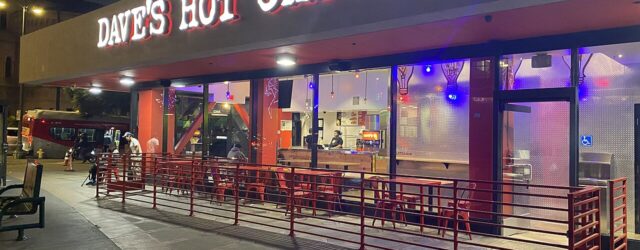
A seven-unit Dave’s Hot Chicken franchisee has filed for Chapter 11 bankruptcy and is blaming its lender for disrupting a proposed sale that it says could have paid off the debt. According to Nation’s Restaurant News, TIG Reaper filed in the U.S. Bankruptcy Court for the Eastern District of Pennsylvania on Sept. 21.

For diners, the immediate takeaway is simpler than the court fight. Dave’s Hot Chicken said the affected restaurants remain open, so families ordering takeout in parts of Pennsylvania, New Jersey, and Delaware should not see an immediate shutdown tied to the filing.

Bankruptcy filing centers on an $8.8 million dispute

Nation’s Restaurant News reported that TIG Reaper has operated as a Dave’s Hot Chicken franchisee since 2024. The company runs seven restaurants across Pennsylvania, New Jersey, and Delaware, and court papers also say three more locations are in late-stage development.

In the filing, TIG Reaper listed total assets and liabilities between $10 million and $50 million. Its largest listed creditor is Bank Midwest, at about $8.8 million. The franchisee also listed about $305,000 in merchant cash advances from three lenders, according to the report.

The financing at the center of the dispute dates to August 2024, when Bank Midwest extended a $1.65 million term loan and a $5 million drawdown line of credit to TIG Reaper. In November 2025, the bank increased that drawdown facility to $8.35 million and expanded the collateral package to cover 10 restaurants, Nation’s Restaurant News reported.

Bank Midwest later accelerated about $8.8 million in debt and sued TIG Reaper on Sept. 8, seeking roughly $8.84 million, plus penalties and fees, and asking for a receiver to take control of and sell restaurant assets. TIG Reaper said it made a nearly $104,000 payment on July 20 and disputes several nonmonetary defaults.

Restaurants stay open, but local markets are the ones to watch

Dave’s Hot Chicken told Nation’s Restaurant News that this is a dispute between TIG and its lender, not a broader problem for the chain. The company said the matter does not involve Dave’s Hot Chicken corporate or the wider franchise system, and it added that the affected restaurants remain open.

The source material confirms only the states involved, not a city-by-city list of the seven stores. TIG Reaper operates across Pennsylvania, New Jersey, and Delaware, but the company has not released a public list in the provided source of which specific cities are included.

That means the households most likely to notice any future change are the ones already eating at TIG-operated Dave’s locations in those three states. For everyone else, there is no indication in the source material that the bankruptcy filing affects the rest of the chain’s restaurants.

The filing lands during a period of rapid growth for Dave’s Hot Chicken. According to Technomic data cited by Nation’s Restaurant News, the chain’s 2025 sales grew 51% to $965.9 million, while unit count grew 52.3% to finish the year with just under 400 locations.

Franchise debt fights can shape what stays on the menu

TIG Reaper says the bank conflict cost it a chance to sell its Dave’s Hot Chicken business for approximately $30 million. According to the complaint described by Nation’s Restaurant News, that proposed sale would have been enough to repay the bank, but TIG alleges the bank’s default declarations interfered and caused a prospective buyer to cut its offer.

On the same day as the bankruptcy petitions, Sept. 21, TIG Reaper and three related entities countersued Bank Midwest, alleging breach of contract and other claims. The franchisee is seeking at least $14 million in damages and wants the bankruptcy court to declare that its Dave’s entities are not responsible for debts tied to separate Qdoba businesses.

That distinction matters because TIG is also a multi-brand franchisee. Nation’s Restaurant News reported that it recently defaulted on a $20 million loan from Bank Midwest tied to 41 Qdoba restaurants across Delaware, New Jersey, New York, Pennsylvania, and Florida.

TIG argues the Dave’s and Qdoba loans were separate and not cross-collateralized. For households, the practical effect is that the chicken chain’s counters are still serving customers today, while the bigger question, whether these seven restaurants stay under the same owner or change hands, will be decided in court.

These Historical Food “Facts” Aren’t Actually True, and Most People Still Believe Them

fortune cookie

Food history is full of stories that sound too perfect not to repeat. That is exactly why so many of them survive long after historians and researchers have shown they are misleading, exaggerated, or flatly wrong.

Marie Antoinette never told the poor to eat cake

Few food myths are more durable than the claim that Marie Antoinette said, “Let them eat cake.” Historians have spent years dismantling that story, and outlets including History and National Geographic have noted there is no evidence she ever said it. The line was attached to her long after it had already circulated as a way to mock out-of-touch royalty.

The phrase itself is also often simplified in translation. The French wording usually cited refers to brioche, not cake in the modern frosted-dessert sense. That distinction does not rescue the quote’s authenticity, but it does show how a dramatic English version helped cement the myth in popular culture.

Why has it lasted? Because it reduces a complex political and economic crisis into one unforgettable line. The French Revolution involved bread shortages, taxation, inequality, and collapsing trust in the monarchy, but a single cruel-sounding quote is easier to remember than structural causes.

That same pattern appears throughout food history. Once a story neatly matches what people want to believe about a villain, a nation, or an era, it becomes sticky. In Marie Antoinette’s case, the food myth became a moral fable, even though the documentary record does not support it.

The fortune cookie is not a traditional Chinese invention

Many Americans still assume the fortune cookie is an ancient Chinese custom. In reality, Smithsonian’s reporting and other historical accounts point instead to a likely Japanese origin, with the cookie taking shape in the United States before becoming strongly associated with Chinese restaurants. Its modern identity is more immigrant American than classically Chinese.

Earlier Japanese versions were larger, darker, and often flavored differently, with fortunes placed in a somewhat different way. Researchers have linked them to sweets sold near temples and to Japanese immigrant communities in California. After World War II, as Japanese American communities were devastated by internment and Chinese restaurants expanded in the U.S., the cookie’s public identity shifted.

That shift is a reminder that food myths often grow from social upheaval, not just culinary confusion. A dish or snack can change ownership in the public imagination when migration, war, and business patterns reshape who is seen serving it.

The result is one of the strangest cases in food lore: a cookie widely treated as quintessentially Chinese in America even though historians say its roots are probably Japanese. The myth persists because restaurant culture, not archival evidence, is what most people encounter first.

Carrots do not give healthy people superhuman night vision

The belief that carrots dramatically improve night vision sounds scientific, which is one reason it has endured. Carrots do contain beta carotene, which the body converts into vitamin A, and vitamin A deficiency can cause vision problems, including difficulty seeing in low light. But Smithsonian and medical authorities make an important distinction: carrots help correct deficiency, not upgrade normal eyesight beyond its natural limits.

The myth grew especially powerful during World War II. According to Smithsonian and the Imperial War Museums, British officials promoted the idea that carrot-eating gave Royal Air Force pilots exceptional nighttime sight. The real military advantage was radar, and the carrot story helped obscure that technology from the enemy.

This is a classic example of a half-true claim becoming a false popular “fact.” A nutrient with a legitimate role in eye health was turned into a kind of edible performance enhancer. That leap from prevention to enhancement is where the history goes wrong.

Food myths survive when they offer an appealing shortcut: eat this, and history or biology becomes simple. But real food history is usually more revealing than the legend. It shows how propaganda, translation, migration, and national identity can shape what people think they know every time they sit down to eat.

10 Snacks From the ’70s That Disappeared, But Once Ruled Every Pantry

Jell-O

Some snacks do more than fill a lunchbox. They mark an era, reflect changing food trends, and reveal how quickly pantry kings can disappear.

The 1970s were packed with products that felt futuristic, indulgent, or just plain fun. Many became household staples before fading as tastes, ownership, and marketing priorities changed.

Candy bars and sweets that captured the decade

Few discontinued snacks say “1970s” more clearly than Space Food Sticks, Marathon Bars, and Reggie! Bars. Pillsbury turned the space race into pantry marketing with Space Food Sticks, a chewy rod-shaped snack introduced around 1970 after food technologist Howard Bauman developed the concept from space-age nutrition research. The product sold the fantasy of science, convenience, and energy in one slim package, which made it irresistible to kids and parents alike.

The Marathon Bar leaned into pure excess. Sold in the United States by Hershey in the 1970s, it was famous for its unusually long braided caramel covered in milk chocolate and wrapped with a ruler printed on the package to emphasize its length. It became a pop-culture snack, but it disappeared by the early 1980s, leaving behind a level of brand memory that still outperforms many products that lasted longer.

Then there was the Reggie! Bar, launched in 1978 by Standard Brands through Curtiss Candy and named for baseball star Reggie Jackson. The bar rode celebrity marketing at full speed, and later reporting by Fast Company said it generated $11 million in the New York area alone during its debut year. Its run was brief, ending in 1981, but that short life proved how powerfully sports fame could move candy off shelves.

Wacky Wafers and Banana Flip rounded out the sweet side of the decade. Wacky Wafers became known for oversized fruit-flavored candy discs, while Banana Flip built a devoted following as a chocolate-covered banana-flavored nougat bar. Leaf Brands, which now revives nostalgic candies, still treats both as artifacts of a distinctly playful snack era.

Pantry novelties that felt futuristic at home

Some of the most memorable ’70s snacks were less about flavor than format. Nabisco’s Snack Mate, introduced in 1965 and still heavily associated with mid-century and 1970s entertaining, put aerosol cheese spread directly into consumers’ hands. The Smithsonian notes that it was marketed as a modern convenience food, the kind of product that fit an era obsessed with saving time and making packaged foods feel ingenious.

Jell-O 1-2-3 took the same spirit into dessert. Introduced in 1969, the mix separated as it set into three layers: a creamy top, mousse-like middle, and gelatin base. That transformation made it feel almost magical in a home kitchen, and it remained widely familiar for years before being discontinued in 1996, long after its 1970s peak.

Quisp also deserves a place in any discussion of vanished pantry rulers. General Mills built the cereal around a cartoon alien and a crunchy, sweet corn shape that stood out in a decade driven by mascots and Saturday-morning marketing. While Quisp has returned in limited forms over the years, it no longer occupies the permanent cultural shelf space it once held as a childhood staple.

What unites these products is that they sold an experience as much as a taste. They were tactile, visual, and conversation-starting, whether sprayed from a can or separated into layers in the refrigerator. That helped them dominate pantries in an era when novelty itself was a selling point.

Why these once-dominant snacks disappeared

Most of these snacks did not vanish because people forgot them overnight. They disappeared because the market changed around them. Corporate mergers reshaped portfolios, shelf space became more competitive, and products built around novelty often struggled once the surprise wore off or production became less efficient than simpler, faster-selling alternatives.

Health expectations also evolved. By the late 20th century, consumers were more skeptical of heavily processed foods pitched as futuristic miracles, especially products high in sugar, salt, or artificial ingredients. That shift did not erase nostalgia, but it changed what brands considered worth keeping in permanent rotation.

Even so, the afterlife of these snacks is remarkable. Planters Cheez Balls, another pantry icon with roots in the late 20th-century snack boom, were discontinued in 2006 before making a limited return in 2018 after years of fan demand. That pattern shows how strongly discontinued snacks linger in memory, even when their original cultural moment has passed.

The vanished snacks of the 1970s mattered because they reflected a country fascinated by convenience, spectacle, and branding. They were lunchbox status symbols, TV-ad stars, and impulse buys that helped define what a stocked pantry looked like. They disappeared from shelves, but not from the collective memory of the people who grew up reaching for them.

A New Study of 8.8 Million People Found a Surprising Link Between Processed Food and Death Risk

A new analysis published September 22 in Family Medicine and Community Health pooled data from nearly 8.8 million adults and found that eating more ultra-processed food was associated with higher risks for several chronic diseases, including a higher risk of death from any cause. The paper analyzed 51 prospective cohort studies from the Americas, Europe, Asia and Oceania, with follow-up periods ranging from two to 32 years.

For grocery shoppers, the findings matter because ultra-processed foods are common, shelf-stable and easy to grab on busy days. The study focused on an amount many households would recognize from the snack aisle: 100 grams a day, or about 3½ ounces.

The study measured risk in small daily increases

According to the study abstract indexed by PubMed, each additional 100 grams of ultra-processed foods consumed per day was associated with a 14% higher risk of cardiovascular events, a 4% higher risk of cancer, a 3% higher risk of all-cause mortality and a 2% higher risk of metabolic syndrome or diabetes. The analysis covered 8,819,894 adults across 51 prospective cohorts, making it one of the larger pooled looks at this question to date.

Fox News, citing the study and a related release, reported that 100 grams is about the size of a 3½-ounce bag of corn chips, a small box of candy or a single-serve cup of mini cookies. That framing helps translate the research into food amounts shoppers can picture in a lunch box, after-school snack or convenience meal.

The study was observational, not a clinical trial. Kelly Springer, a New York-based registered dietitian and founder of Kelly’s Choice, told Fox News Digital that the results cannot prove ultra-processed foods directly caused the poorer outcomes. She also noted that the research relied on self-reported diets and may not fully account for other lifestyle factors.

The foods in question are common in U.S. carts

The analysis described ultra-processed foods as industrially made, heavily processed products that often contain additives. Examples cited in the coverage included sugary drinks, processed meats, packaged snacks and candy. Those are foods many families buy because they are portable, familiar and quick to serve.

People with the highest intake of ultra-processed foods also had higher risks of digestive diseases, depression or anxiety, obesity, cancer and cardiovascular events than those with the lowest intake, according to the report summarized by Fox News. The paper’s authors wrote that chronic diseases linked to ultra-processed foods often cluster as multimorbidity, which is one reason primary care clinicians are paying attention to the pattern.

This is also relevant in the United States because ultra-processed foods already make up a large share of the diet. A CDC data brief published in August 2025 found that, from August 2021 through August 2023, the mean percentage of total calories consumed from ultra-processed foods among people age 1 and older was 55.0%.

What the findings could mean in home kitchens

The practical takeaway is not that every packaged food must disappear from the kitchen. Springer told Fox News Digital, “It’s not that you can never eat them again.” Her advice focused less on restriction and more on building meals and snacks around foods with protein and fiber.

She suggested pairings such as an apple with peanut butter, nuts with cucumbers, or meals built around beans, chicken or tuna with fruits, vegetables and whole grains. That approach lines up with the study authors’ conclusion that reducing ultra-processed foods and replacing them with minimally processed alternatives may be relevant for chronic disease prevention and primary care management.

For families trying to balance cost, time and convenience, the study does not sort foods by brand, retailer or price point. What it does show is that risk rose with each added 100 grams per day, a quantity equal to one modest snack-sized portion from the packaged snack aisle.

An Outbreak Just Put a Damper on Olive Garden’s Summer, Here’s What Happened

Olive Garden

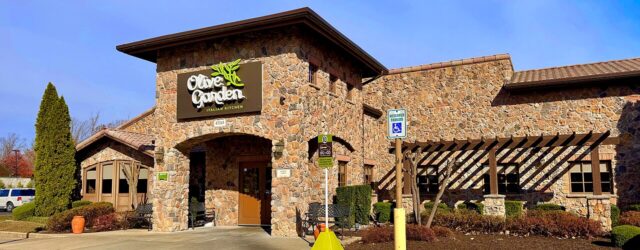
Restaurant chains across the U.S. spent the summer navigating the fallout from a major food-safety scare tied to iceberg lettuce. For Olive Garden, the issue did not involve contamination at its own restaurants, but it still changed how the brand marketed one of its best-known meal deals. Parent company Darden Restaurants disclosed the impact on September 24, 2026, when it reported quarterly results.

Olive Garden changed course as lettuce concerns weighed on summer sales

Olive Garden scrapped a planned push behind its unlimited soup, salad, and breadsticks offer during the quarter after broader consumer concern over lettuce intensified, according to comments from Darden executives on the company’s September 24 earnings call. Nation’s Restaurant News reported that Olive Garden was prepared to promote the long-running offer but pivoted after a multistate cyclospora outbreak was linked to tainted iceberg lettuce. Darden CFO Raj Vennam said the chain itself was not implicated in the outbreak.

The effect still showed up in the numbers. Olive Garden posted 1% same-store sales growth for the three-month period ended August 30, according to Darden and Nation’s Restaurant News. Vennam said lettuce concerns and the World Cup together reduced sales by 150 to 200 basis points during the quarter, while customers choosing lighter portions created another 50-basis-point drag on product mix.

Darden executives said business improved later in the quarter as those pressures eased. The company also launched its Never-Ending Pasta Bowl promotion in late August and said the response was positive. CEO Rick Cardenas said Olive Garden plans to bring back marketing support for the unlimited soup, salad, and breadsticks lunch offer later in the current quarter, while also testing a new lunch platform built around value and portion abundance.

The outbreak reached multiple states, but Olive Garden has not released restaurant-level details

Federal investigators traced the summer outbreak to iceberg lettuce sourced from central Mexico and recalled by Taylor Farms de Mexico, according to the FDA and CDC. The FDA said on July 17, 2026, the company initiated a voluntary recall after traceback work linked the product to the outbreak. By late August, the FDA said the outbreak had reached 11,458 reported illnesses across 20 states, with at least 278 hospitalizations and two deaths previously reported in Michigan.

The outbreak was first tied to nine states: Illinois, Indiana, Kansas, Kentucky, Michigan, Ohio, Oklahoma, Pennsylvania, and West Virginia, according to the FDA. Later updates added Arkansas, Iowa, Missouri, Nebraska, New Hampshire, North Carolina, Maine, Massachusetts, Georgia, Tennessee, and Texas, while the FDA also said recalled product distribution had been confirmed in additional places including Alabama, Connecticut, Florida, Louisiana, Maryland, Mississippi, New Jersey, South Carolina, Virginia, Wisconsin, and others.

What remains unclear is how many Olive Garden restaurants, if any, changed sourcing or service practices market by market. The company has not released a full list of affected Olive Garden locations or identified specific cities where lettuce-related customer hesitation was most pronounced. Darden’s disclosure focused on consumer behavior at the brand level, not on closures, menu suspensions, or individual restaurant disruptions.

Federal investigators classified the lettuce recall at the highest level, and Darden says traffic began to recover

The broader context helps explain why a chain not directly tied to the contaminated product still felt an effect. The FDA said on August 28 that it classified the Taylor Farms de Mexico recall as Class I, the agency’s highest risk category, meaning there was a reasonable probability that exposure to the recalled product could cause serious health consequences or death. The agency said the scale and severity of the outbreak were significant compared with prior cyclospora incidents.

The recall itself did not change on August 28, but the FDA said the original July 17 action covered retail products as well as iceberg lettuce distributed to Taco Bell. Federal officials later said the outbreak linked to that lettuce had ended as of September 11, though the FDA continues post-outbreak response work and investigation into the cause of contamination. The agency also said it was confident the recalled iceberg lettuce was no longer on the market.

For Olive Garden customers, the immediate takeaway is more about marketing and traffic than food-safety findings at the chain itself. Darden said Olive Garden was not implicated, and executives said results improved as the lettuce headwind eased. The company’s current plan is to resume support for its salad-centered lunch value messaging later this quarter, alongside a new lunch test aimed at driving weekday visits.