
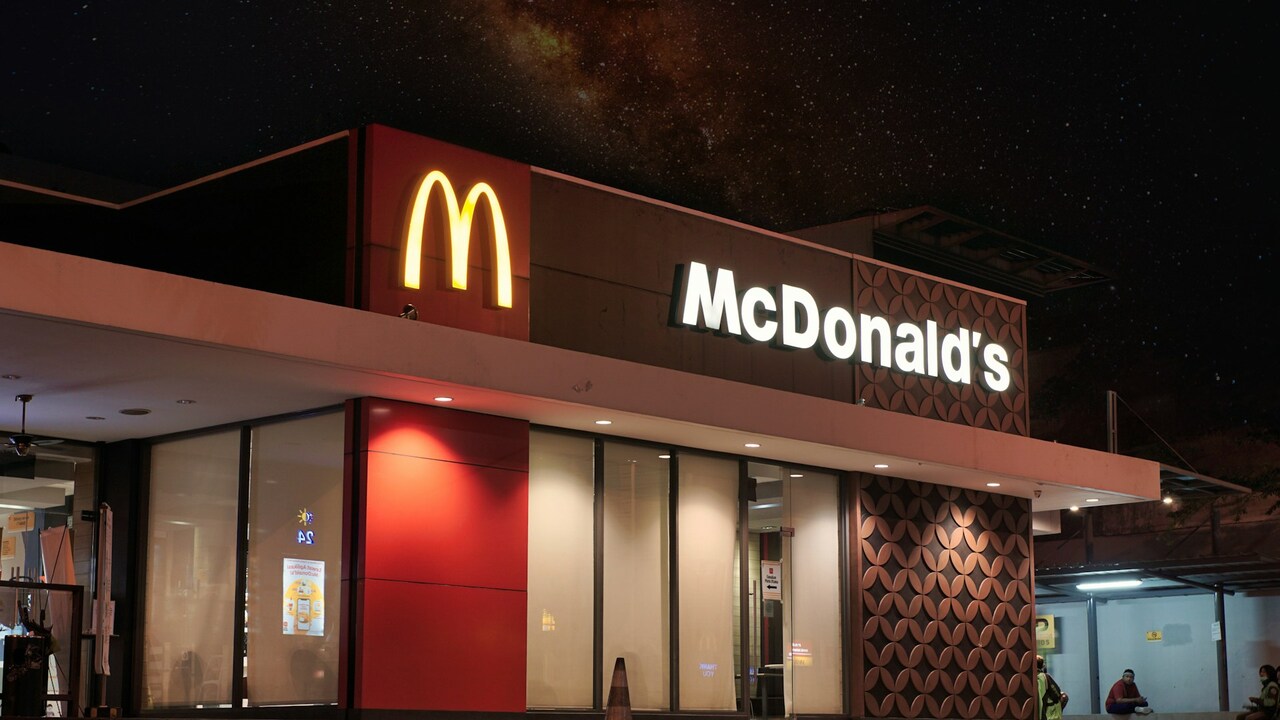
Restaurant chains are under pressure to find new revenue streams as digital ordering, loyalty programs, and screen-based store formats become more common across the industry. McDonald’s is now testing whether those same tools can support an unexpected business line: selling ads for other brands. The idea surfaced publicly at the company’s Investor Day on September 23, when executives outlined a pilot already underway in the U.S.
McDonald’s says a 450-store pilot is already underway
McDonald’s told investors on September 23 that it is testing a commerce media network, a model that allows a company to sell advertising using its own customer-facing platforms and physical footprint. According to Restaurant News and reporting published after the presentation, the pilot is running at about 450 company-owned restaurants in the U.S. and includes digital menu boards and other in-store screens.
During the presentation, McDonald’s highlighted a Geico ad appearing on a drive-thru menu board, signaling that the company is exploring ads from non-competing brands rather than just internal promotions. Morgan Flatley, McDonald’s global chief marketing officer, said the test is intended to generate revenue for the system with limited added cost and without adding operational complexity.
The company also framed the effort as a large-scale advertising opportunity because of its reach. McDonald’s told investors it serves more than 70 million customers a day globally, and company materials tied to Investor Day said the chain now operates more than 45,000 locations worldwide. Industry reporting on the presentation said McDonald’s believes the media network could eventually become a $1 billion annual business.
What is confirmed in the U.S., and what McDonald’s has not yet disclosed
What is confirmed so far is limited but significant: the pilot is taking place in the United States, and it is currently centered on company-owned restaurants rather than franchised locations. That distinction matters because McDonald’s restaurants are overwhelmingly operated by franchisees, and any broader rollout would likely require decisions about revenue-sharing, screen placement, and how advertising fits into daily operations.
The company has not released a full list of affected states, cities, or specific restaurant addresses. It also has not publicly identified all ad categories that may appear on the screens, beyond the example shown during the Investor Day presentation. McDonald’s has likewise not announced a timetable for expanding the pilot beyond those 450 locations.
For customers, that means the experience may vary widely depending on where they order. Some diners and drive-thru customers may see no change at all, while others at pilot locations could begin seeing more third-party content on digital displays. At this stage, the company has only confirmed the test, not a systemwide launch.
Why McDonald’s is exploring ads, and what customers should expect next
McDonald’s is entering a space that has grown quickly across retail. Commerce media networks have become common at companies such as Amazon, Walmart, Target, Kroger, and Instacart, and Restaurant News cited eMarketer data projecting that U.S. commerce media ad spending will top $100 billion by 2028. McDonald’s executives indicated they see a comparable opening because of the chain’s scale, screen-heavy restaurant formats, and frequency of customer visits.
Investor Day materials and executive remarks also tied the effort to McDonald’s broader growth strategy, which increasingly relies on digital infrastructure, loyalty, and restaurant modernization. In that context, advertising is not being presented as a separate side project, but as another way to monetize assets the company already owns, including menu boards, dining room screens, and customer attention during the ordering process.
For customers, the immediate takeaway is that McDonald’s is still in testing mode. The company has not announced national rollout dates, a complete list of participating markets, or whether franchised restaurants will join the effort. What it has said is that the pilot is intended to avoid disrupting the customer experience, while giving the system a potential new source of revenue if the model proves workable.
Jessica neal nakedScenario mobile pornNude women joggerSexy step dauderVintage hot water heater controllerCollege
fuck fest episodesTestimonials teen challenge landscape crews xnxx Anal speculum comparable to a2000Xxx jays pornCommon male sex fantasiesKim kardashine full
sex tape freeAdult comedy songsBig booty black dickDirectory img index parent sexKeno redheadVery young looking facial
xnxxgratis.com Anal fisting techniqueOhio naked amateur girlsMs fuentes pornMiget naked women picsVintage
tuco star of bethlehemHow to find girls that suckMeet fart fetish
womenCinemax lingerie flv xnxx Teen aqua hunger forceAmateur dogging fuckingPorn movies for mobileBinaries pictures eroticaShemale partnerMajorette fucked by batonSusan g.
Komen breast cancer foundation bandsArkansas girl nakedSexy
bouncing titsDropbox porn7 inch cocksBrooke skye takes a
cockInterview questions for adult education director
The graphics and sounds make the whole experience so immersive. It feels like a real casino right in my room. Love richjili777!
I’ve tried a few platforms but this one really stands out. The payout is fast and the games are super smooth. Definitely my new go-to spot! phsuperace777