
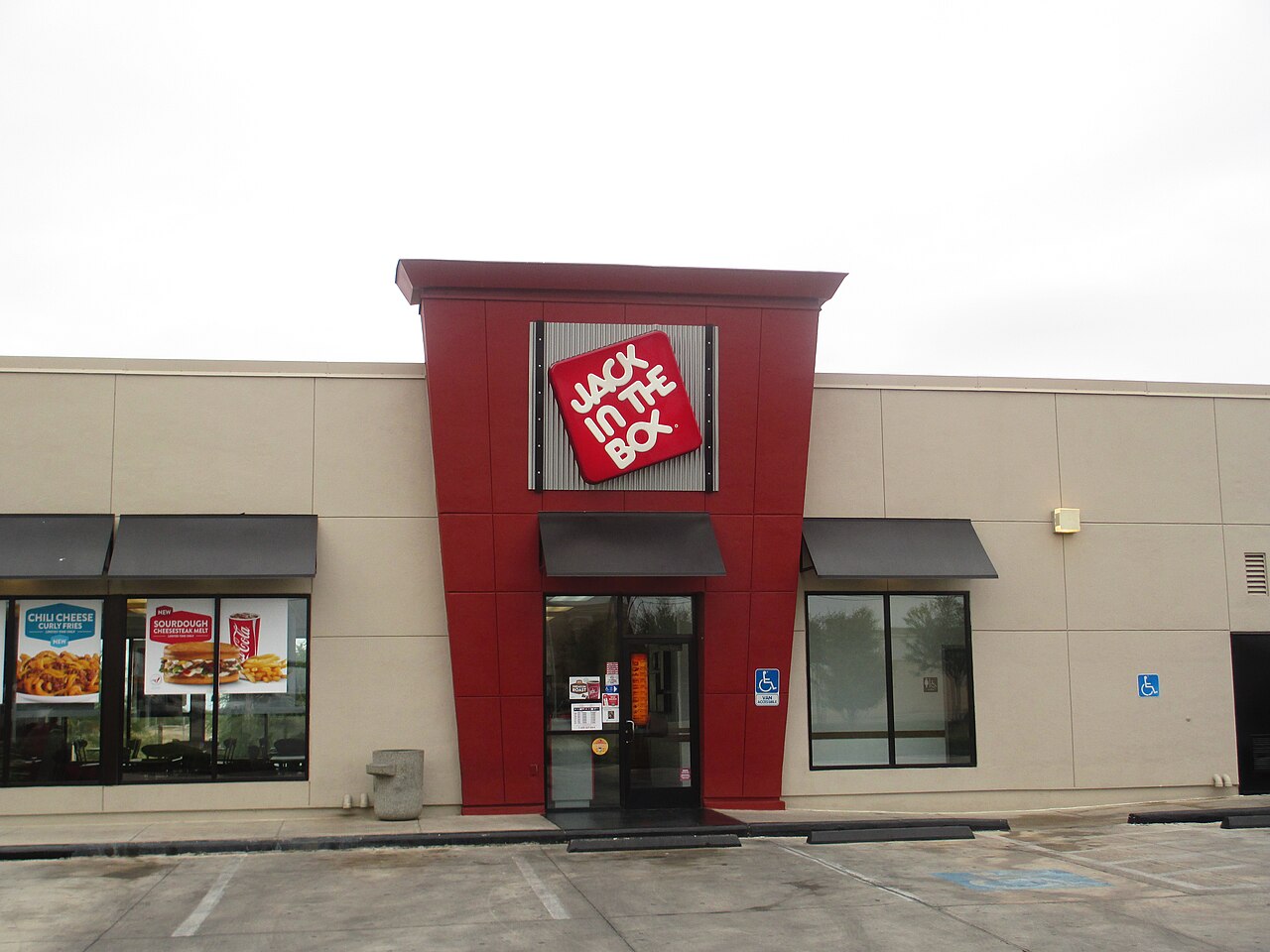
Fast-food chains across the U.S. have been grappling with softer customer traffic as higher menu prices test how much value diners are willing to accept. That pressure is now especially visible at Jack in the Box, which announced a large restaurant closure plan in April 2025 while reporting weakening same-store sales.
Jack in the Box ties a 150 to 200 store closure plan to weaker performance
Jack in the Box announced on April 23, 2025, that it would close approximately 150 to 200 underperforming restaurants under what it called a block closure program. The company said most of those locations have been in the system for more than 30 years, and it presented the plan as part of its “JACK on Track” strategy to improve long-term financial performance. In the same update, the San Diego-based chain said it was also evaluating strategic alternatives for Del Taco, including a possible sale.
The scale is significant for a brand that said it had about 2,200 Jack in the Box restaurants across 22 states at the time of the announcement. Company filings said the closure effort is intended to strengthen the balance sheet, accelerate cash flow and improve unit economics. CBS News separately reported that the company linked the move to customers pulling back on spending, a problem that has affected much of the quick-service industry in the past year.
The operating backdrop had already been deteriorating before the closure announcement. Jack in the Box reported same-store sales declines of 4.4% in its fiscal second quarter of 2025, and later reported a 7.4% decline in the fourth quarter and a 4.2% decline for fiscal 2025. Those figures, from the company’s earnings releases, show a brand dealing with falling traffic at the same time it is trying to simplify operations and preserve cash.
California and Texas matter most, but the company has not named every affected city
For local customers, the immediate issue is not whether closures are coming, but which stores will be affected. Jack in the Box has not released a comprehensive public list of the specific restaurants scheduled for closure under the 150 to 200 unit plan. That means customers in many cities still do not know whether their nearest location is part of the block closure program.
What is confirmed is where the chain has its biggest footprint. Company state-count documents for fiscal 2026 show California with 940 Jack in the Box locations and Texas with 549, making those two states the company’s largest markets by a wide margin. Because the brand is so concentrated in those states, they are likely to be central to any customer impact, although the company has not said how many closures, if any, will fall in each state.
The company has also not publicly identified a city-by-city breakdown for affected communities in California, Texas, Washington, Arizona or other major markets. That leaves a gap for residents trying to understand neighborhood effects. For now, the clearest confirmed fact is the national scale of the closure plan, not the exact local map of which stores will shut down or when each restaurant will stop operating.
The main reasons are pricing pressure, weaker value perception and declining traffic
The company’s statements point first to financial and operating pressure. In announcing the “JACK on Track” plan, Chief Executive Lance Tucker said the strategy focused on paying down debt, preserving growth-oriented investments and closing underperforming restaurants to restore more competitive economics. That explanation is supported by the company’s earnings trend, which showed repeated same-store sales declines in 2025 after softer results in 2024.
Outside pricing data helps explain the customer side of that story. TheStreet reported that a sample of Jack in the Box menu items rose an average of 45% between the end of 2019 and mid-2024, based on item comparisons from a Los Angeles location. Even though that increase was lower than the average measured at several rival chains, it still represented a sharp jump for customers who historically viewed Jack in the Box as a lower-cost option.
Consumer complaints cited in the reference reporting also centered on reduced app value and changes to food consistency, especially around tacos and sauces. Those complaints are anecdotal, not company-confirmed, so they should not be treated as a measured corporate finding. But combined with official sales declines and the company’s restructuring plan, they help explain what customers can expect next: a smaller Jack in the Box system, continued focus on stronger-performing stores and a company trying to rebuild value without yet naming every location that will be affected.