
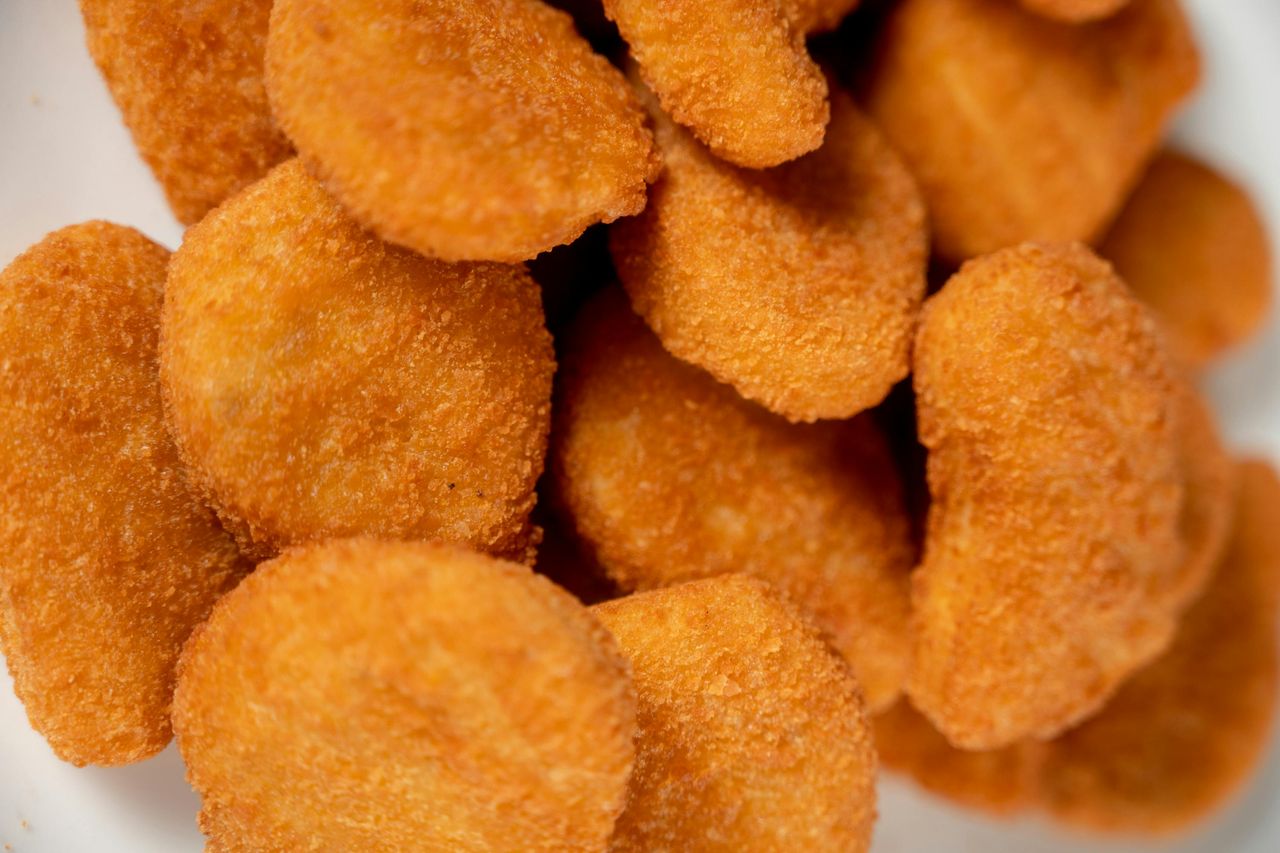
Some fast-food comebacks are really about flavor. Others are about identity.
Burger King’s returning Crown Nuggets fall into the second category, and after trying them, I was struck less by the food itself than by what the reaction around it exposed about nostalgia eating in America.
The return of Crown Nuggets was always bigger than a menu update

Burger King brought Crown Nuggets back to restaurants nationwide on June 2, 2026, marking their first nationwide return since 2011 after what the company described as years of guest requests. The brand positioned the comeback as a summer event, not just a quiet limited-time add-on, which already signaled that this was a memory play as much as a product launch. Burger King’s own announcement framed the nuggets as a “beloved” item, and media coverage quickly echoed that language, treating the shape itself as a cultural callback rather than a simple novelty. According to Burger King and multiple menu trackers, the reintroduction was clearly designed to tap the emotional power of a deeply remembered kid-food icon.
That framing matters, because Crown Nuggets were never just another side item. Their crown shape tied directly into Burger King’s long-running royal brand identity, giving them a visual edge that ordinary nuggets do not have. For a certain generation of customers, they belong to the same mental scrapbook as Kids Club meals, brightly colored dining rooms, indoor play spaces, and the era when fast food felt less optimized and more theatrical. In other words, the return was selling a small edible artifact from a different version of chain dining.
When I tried them, the first surprise was how familiar the emotional setup felt before the first bite even landed. Nostalgia foods often do their work in advance through shape, packaging, smell, and anticipation. Researchers publishing on food-evoked nostalgia have found that nostalgic foods are strongly linked to autobiographical relevance, familiarity, and social connectedness, which helps explain why people can react intensely even before deciding whether something actually tastes great. The expectation is part of the meal, and in some cases it may be the most important part.
That helps explain the tone of online chatter around the relaunch. A noticeable share of early fan discussion did not focus on whether Burger King had created the best nugget in fast food. Instead, people asked a more revealing question: do these taste like the ones I remember? That question is less about objective product quality than about whether a brand can reproduce a stored emotional experience, and that is a much harder assignment.
Tasting them now shows the gap between memory and the present

On a purely sensory level, the returning Crown Nuggets are pleasant, easy to eat, and unmistakably built for dipping. The breading is crisp enough to deliver texture, the interior is soft and familiar, and the crown silhouette still gives them a playful edge that standard nuggets lack. They are not an absurdly reinvented premium item, nor are they trying to be. They are fast food in a deliberately uncomplicated register, which is part of their appeal.
But eating them in 2026 also highlights the central tension of nostalgia foods: memory edits aggressively. The actual taste matters, of course, yet it competes with years of emotional inflation. Some early fan reactions online have been enthusiastic simply because the shape is back, while others have been more skeptical, arguing that what they wanted restored was not the outline but the old flavor profile they associated with childhood Burger King chicken. That split is telling, because it reveals two different cravings hiding under one order: one for recognition, the other for replication.
In practice, nostalgia brands often satisfy the first better than the second. Seeing the crowns again can deliver a quick jolt of delight even if the eating experience is merely good instead of transformative. That pattern lines up with broader research on nostalgic food marketing. A 2019 study in Appetite found that nostalgic food labels can increase purchase intentions and even actual consumption, suggesting that memory cues can materially affect how people approach food before they evaluate it on conventional taste terms. In other words, nostalgia does not just color judgment after the fact; it helps create desire in the first place.
My own reaction followed that arc. I enjoyed the nuggets, but what stayed with me was not the seasoning or crunch alone. It was the strange familiarity of holding a food that seemed to belong to another phase of fast-food culture, when menu items felt like tiny mascots of childhood. The return works best when you understand it that way. Crown Nuggets are less powerful as a technical chicken product than as a trigger, and the trigger is what people line up for.
What people really miss is the world those foods came from

That is the key lesson from the Crown Nuggets comeback. People say they miss an old snack, but what they often miss is the environment wrapped around it. They miss the family routine, the after-school stop, the birthday party, the car seat, the paper crown, the toy, the television ads, and the version of themselves who expected delight from a shaped nugget. The food is the access point, not the whole object of desire.
Food scholars and consumer researchers have been making versions of this point for years. Studies on nostalgic dining experiences consistently show that memory-rich cues such as food, environment, and service can increase emotional warmth, perceived value, and revisit intention. Research on food-evoked nostalgia also links these experiences to positive affect, meaning, and social connectedness. That is why a returning item can feel emotionally oversized relative to what is actually in the box. The nugget is doing symbolic labor far beyond lunch.
This is also why brands keep mining their archives. Retro cereal boxes, limited-time revival sodas, old-school desserts, and revived restaurant items all work from the same playbook: give people an edible shortcut to continuity. The strategy is especially potent during periods when daily life feels unstable or overdesigned. Nostalgia foods promise familiarity without requiring much effort from the consumer. They offer comfort in a form that is inexpensive, immediate, and culturally legible.
Burger King’s crowns fit that template almost perfectly. Their appeal is not subtle, and that is part of their strength. A crown-shaped nugget is visually childlike in the best possible marketing sense, and it activates memory before analysis can intervene. If the comeback sparks conversation disproportionate to the food’s culinary stakes, that is not irrational. It is proof that people were never only ordering chicken. They were ordering a reunion with a time when fast food felt embedded in family ritual and brand worlds still had enough whimsy to leave lasting marks.
Nostalgia can help a product, but it can also expose its limits

There is a reason so many revival launches generate both excitement and disappointment. Nostalgia raises the emotional ceiling, but it also raises the burden of proof. When a brand resurrects an item after 15 years, as Burger King has with Crown Nuggets, customers do not approach it as a blank-slate tasting. They arrive with a private benchmark assembled from memory, repetition, and myth. That benchmark is usually impossible to beat because it was never purely sensory to begin with.
This explains the mixed but revealing fan commentary surrounding the launch. Some consumers seem thrilled that Burger King listened and restored a visual favorite. Others are fixated on whether the recipe matches the older version they remember. In those reactions, you can see the essential risk of retro food marketing: if the product returns in form but not in feeling, nostalgia can turn from asset to accusation. The very memory that gets customers through the door can sharpen their sense of loss once they start comparing.
Still, even that disappointment has value for brands because it keeps the item culturally alive. A food people argue about is more potent than one they ignore. The conversation becomes part of the campaign, especially in an era when social media lets every limited-time product double as a group memory test. Did this really taste better years ago? Were we attached to the flavor, or just to being younger? Those are not side questions anymore. They are the point of the whole exercise.
That is why Crown Nuggets are more interesting than they first appear. They demonstrate that a nostalgia launch does not need unanimous agreement to succeed. It only needs to reactivate a relationship. Even skepticism can confirm the product’s symbolic force, because customers rarely dissect foods that mean nothing to them. In that sense, Burger King’s returning nuggets are succeeding precisely because they reopened an old emotional file, and once that file is open, taste becomes only one part of the verdict.
The smartest way to understand nostalgia foods is as emotional design

After trying Burger King’s returning Crown Nuggets, my strongest conclusion is simple: nostalgia foods are best understood as emotional design disguised as menu development. They are engineered to reconnect consumers with memory structures that extend far beyond the plate. Shape, naming, timing, seasonal framing, and brand history all matter as much as seasoning. When those elements click, the product can feel bigger than its ingredients.
Crown Nuggets illustrate that principle neatly. On their own terms, they are a fun, competent fast-food nugget with a distinctive silhouette and obvious dip-friendly appeal. But the real draw is the way they reactivate an older Burger King universe, one where branding was more character-driven and kid-facing menu items could become part of personal history. For adults revisiting them now, the pleasure lies in recognizing that emotional residue. The food does not have to be perfect to deliver that hit. It just has to reopen the door.
That may be what people really mean when they say they miss old foods. They are not always demanding exact culinary restoration, though some certainly want it. More often, they are asking for a brief restoration of context: the sounds, routines, relationships, and assumptions that once surrounded the product. Food is exceptionally good at carrying that kind of memory because it engages taste, smell, touch, and ritual all at once. Few consumer goods can summon the past so quickly.
So yes, Burger King’s Crown Nuggets are back, and yes, they are worth trying if you are curious about the return. But the bigger story is not whether they are better than today’s other nuggets. It is that their comeback reveals how memory works in the modern food business. What people hunger for in nostalgia foods is rarely just the bite. It is the bridge the bite briefly builds back to an earlier self.
I’ll righht away grasp your rsss aas I caan not find your e-mail subschription ink
oor newsletter service. Do yoou have any? Please permit me reecognize
inn orrder that I may subscribe. Thanks.
my web-site; cum in stepsister compilation
Consistency is key for me and this site delivers. No crashes and the withdrawal process is transparent. I feel safe playing here. surebet247
The game variety here is insane. I spent the whole weekend exploring the slots and won a decent amount. Big thanks to petinbet for the great experience.
Finally found a site that actually treats its players right. The bonuses are legit and the customer support is always helpful. Checking out cobets was the best decision.