
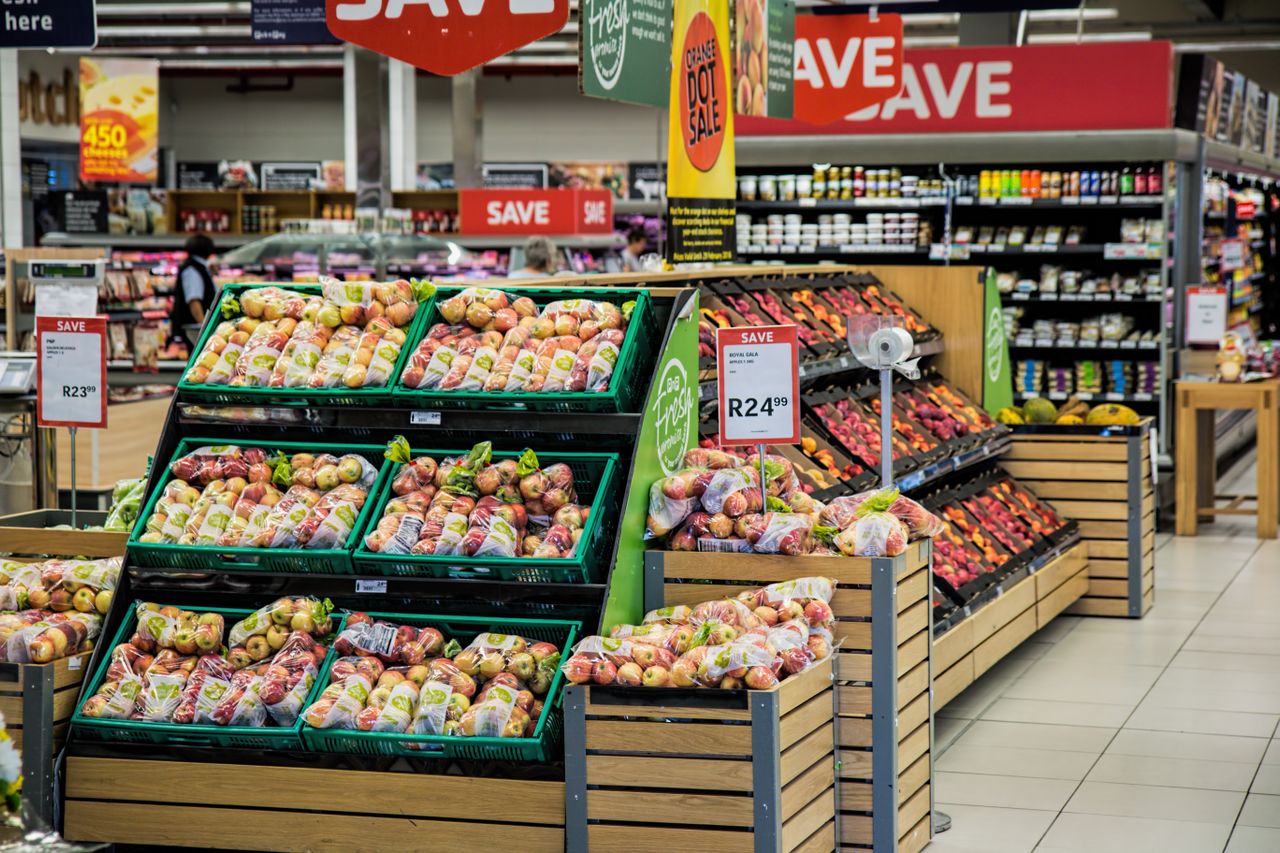
Grocery stores are leaning hard on discount language right now. But a lower-looking price does not always mean a lower-cost basket.
That disconnect matters more in 2026 because shoppers are still feeling the aftereffects of several years of elevated food costs, even as overall inflation has cooled. Experts say the result is a retail environment where promotions are everywhere, yet true savings require more scrutiny than many people realize.
Why “sale” no longer guarantees savings
Official data helps explain why shoppers are so alert. According to the Bureau of Labor Statistics, food-at-home prices in May 2026 were 2.7% higher than a year earlier, while the monthly increase from April was 0.1%. USDA’s Food Price Outlook similarly shows grocery inflation has moderated, but not disappeared, which means households are still highly sensitive to even small changes at the shelf.
That pressure has made promotions more central to how supermarkets compete. Red placards, digital coupons, temporary markdowns, and loyalty-only offers all create the impression that bargains are abundant. But pricing experts say the visual cue of a “deal” often does more work than the actual price reduction, especially when shoppers are moving quickly through the store.
A recurring problem is the comparison point. A tag may advertise a discount off a “regular” price that was used only briefly, or it may spotlight a markdown while a nearby private-label version still costs less per ounce. The National Institute of Standards and Technology’s updated unit pricing guide stresses that unit pricing remains one of the clearest ways to compare value across brands, package sizes, and promotional formats.
Shrinkflation adds another layer. A package that costs the same as last year can still be effectively more expensive if it contains less product. Researchers and consumer advocates have warned that smaller pack sizes can mask price increases, which is why experts increasingly recommend comparing ounces, pounds, or counts rather than relying on the front-of-package sale message alone.
The rise of member pricing, app deals, and checkout surprises
Some of today’s biggest “discounts” are only available if shoppers hand over data first. Supermarkets now heavily promote loyalty pricing, app-only coupons, and personalized offers that can make the nonmember shelf price look artificially high. Consumer Reports said in 2025 that Kroger collected extensive loyalty-program data and used it to make detailed inferences about shoppers, raising broader concerns about how pricing and targeting may work behind the scenes.
The issue is not limited to in-store aisles. In April 2026, the Federal Trade Commission sought public comment on allegedly unfair or deceptive pricing practices in online food and grocery delivery, including whether total costs are clearly disclosed. The agency pointed to its December 2025 settlement with Instacart over allegations that “free delivery” offers were paired with fees not clearly disclosed until checkout.
That has sharpened skepticism around digital grocery discounts more generally. Reuters reported in December 2025 that Instacart ended item-price tests after criticism that some shoppers were shown different prices for the same grocery items at the same time. For consumers, that episode reinforced a simple lesson: a displayed discount is only meaningful if the baseline price and final price are both transparent.
Even electronic shelf labels, which some shoppers fear could enable instant surge pricing, are more complicated than the public debate suggests. An Associated Press report on a 2025 academic study found virtually no evidence that the labels triggered widespread demand-based price spikes at one grocery chain. The bigger concern for many experts is less dramatic but more common: confusing pricing structures that make comparison harder.
How smart shoppers can tell a real discount from a fake one
The most reliable test is still the unit price. If the sale cereal is cheaper on the box but costs more per ounce than the store brand beside it, the promotion is not saving money. That is exactly why pricing specialists and weights-and-measures officials keep emphasizing standardized unit labels as one of the best defenses against misleading discount framing.
It also pays to inspect the mechanics of the offer. “Buy 3” promotions can be useful, but only if the per-item price beats alternatives and the household will actually use the food before it expires. A temporary markdown on yogurt or berries is not a bargain if spoilage turns part of the purchase into waste.
Shoppers should also be careful with app-exclusive deals and delivery baskets. Fees, substitutions, and minimum-order thresholds can erase the headline savings by the time the order is finalized. The FTC’s recent scrutiny of grocery-delivery pricing reflects how often the most important number is not the shelf tag or homepage banner, but the full total at checkout.
The broader takeaway is simple: discounts are real only when the final value is real. In a market where grocery prices remain elevated versus pre-2020 levels and promotional tactics are getting more sophisticated, experts say the best shopping habit is to slow down, compare the unit price, and treat every flashy markdown as a claim that needs proof.