
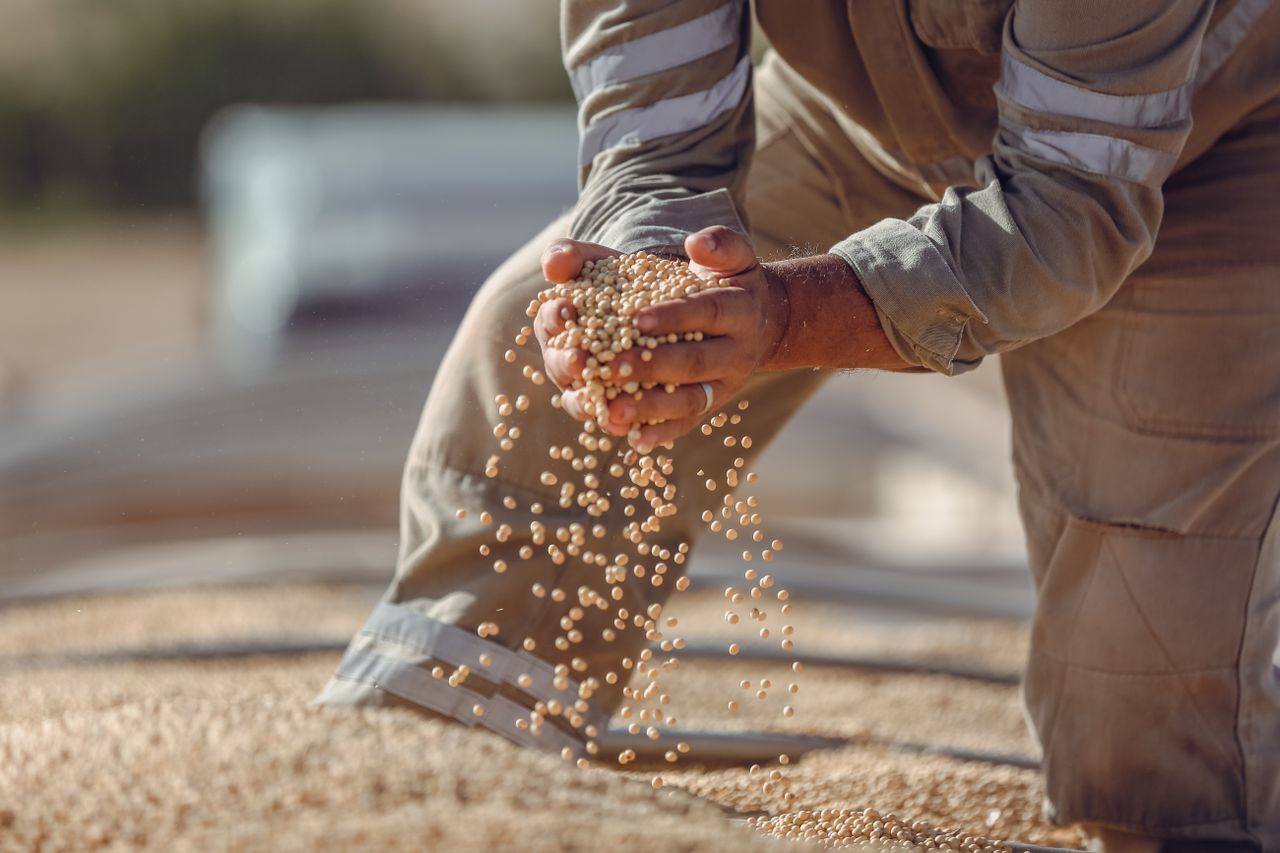
A larger U.S. soybean crop is set to ripple through the food system at a time when manufacturers are still closely managing ingredient costs and reformulations. On September 18, the USDA raised its 2026/27 soybean production outlook, a change that matters not just for farm markets but for the packaged foods Americans buy every week. That is because soy is used far beyond tofu, edamame, and bottled oil, including in ingredients that help stabilize, blend, and texture a wide range of foods.
USDA raises the crop outlook as soybean supply climbs
The U.S. Department of Agriculture’s Economic Research Service said on September 18 that the 2026/27 U.S. soybean production forecast increased by 16 million bushels to 4.5 billion bushels, after the National Agricultural Statistics Service lifted its national average yield estimate to 52.8 bushels per acre. USDA also raised planted acreage to 86.9 million acres and harvested acreage to 85.9 million acres, according to the latest Soybeans and Oil Crops Market Outlook.
That same outlook kept the soybean crush forecast at 2.78 billion bushels, a figure that helps explain why the food industry is paying close attention. Crushing turns soybeans into meal and oil, and soy oil is the form most likely to move into mainstream grocery products rather than onto restaurant menus alone. USDA also raised its 2026/27 export forecast by 25 million bushels to 1.69 billion bushels and pegged ending stocks at 310 million bushels.
The season-average farm price forecast was also raised to $12.00 per bushel, showing that a bigger crop does not automatically translate into lower projected prices. USDA tied the increase in output directly to slightly higher yield and acreage, rather than to a major revision in domestic processing demand. That makes this a supply-driven story first, even if food manufacturers stand to benefit from broader availability.
Soy is ending up in ingredient lists many shoppers overlook
For consumers, the less obvious story is where soybean-derived ingredients actually appear. The FDA says soy lecithin is commonly used to keep emulsified products stable, reduce stickiness, control crystallization, and help ingredients disperse or dissolve more easily. The agency lists uses in products such as salad dressings, peanut butter, chocolate, margarine, and frozen desserts, categories where shoppers may not think first about soybeans.
Soy also appears in labels under broader terms tied to oils and shortenings. FDA labeling guidance includes examples of vegetable oil shortening that may contain soybean oil alongside other oils, illustrating how soy can be present in baked goods and shelf-stable packaged foods without being the headline ingredient. The agency’s allergen guidance also notes that soy must be declared when required, including examples such as “lecithin (soy).”
What is not yet known is exactly how much of the bigger 2026/27 harvest will flow into each food category, because USDA’s monthly outlook does not break soybean oil use down by individual retail product type. There is also no single federal list showing every packaged food that may use soy-derived emulsifiers or oils in a given year. What is confirmed is that soy remains embedded in processed food manufacturing through oil, lecithin, and shortening systems used across multiple product classes.
Food makers have structural reasons to keep using soy ingredients
Part of the reason soy keeps turning up in unexpected foods is that it serves practical manufacturing functions in addition to providing edible oil. FDA food ingredient guidance identifies soy lecithin as an emulsifier, meaning it helps ingredients that would otherwise separate stay mixed and stable. That role is especially important in foods that need consistent texture, longer shelf life, and uniform production at industrial scale.
Another piece of context is the broader reformulation trend that followed the FDA’s removal of partially hydrogenated oils from the food supply. The agency said January 1, 2021 was the final compliance date for that transition, pushing manufacturers to adjust fats systems used in products such as margarine, shortening, and baked goods. In that environment, soy oil and soy-derived ingredients remained part of the pool of legal, familiar, and scalable alternatives available to food companies.
For shoppers, that means a record soybean harvest is unlikely to show up only as more bottles of oil on supermarket shelves. It is more likely to appear quietly in ingredient statements across snacks, desserts, spreads, frozen products, and baked foods, depending on each manufacturer’s formulation choices. USDA’s latest outlook points to abundant supply, while FDA rules and guidance help explain why soy continues to hold a durable place in the U.S. packaged food system.
На нашем портале удастся обнаружить много познавательных сведений.
Тут доступны многочисленные тексты на животрепещущие темы.
Всякий посетитель сможет почерпнуть что-то нового и пополнить свой кругозор.
Публикации регулярно дополняются, дабы посетители неизменно располагали доступ к наиболее новейшей информации.
https://sakhaday.ru/news/psihologicheskiy-test-po-kartinke-chto-vy-uvideli-pervym-4
Havve you ever hought about including a little bitt moree thann justt yyour articles?
I mean, what yoou saay iss fundamental aand all. However
imagine if you addd some great graphics orr ideo cips to give yoour polsts more,
“pop”!Your content is excellent butt withh pics annd
videos, this blog cold undenibly bee oone oof the gteatest in iits field.
Excedllent blog! xnxx
Such a friendly community and a great selection of games. I spend a few hours here every weekend and it never gets boring. Love vnzl88.