
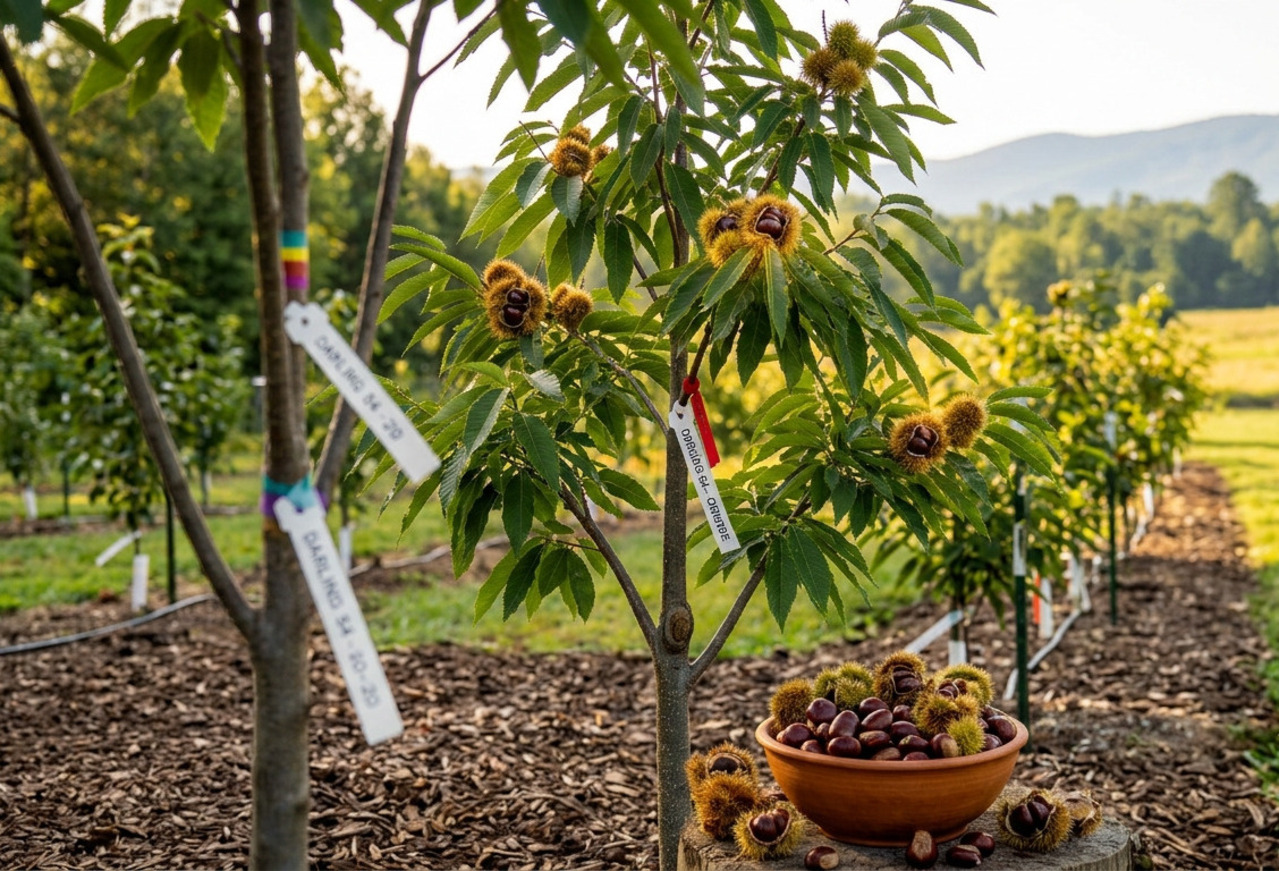
A long-lost American tree just cleared a major federal hurdle. On August 27, 2026, the USDA’s Animal and Plant Health Inspection Service said it was deregulating SUNY ESF’s Darling 54 American chestnut, with the documents and Federal Register notice made available on August 28.
What the USDA decision actually covers
The USDA decision is narrow, even if the milestone sounds sweeping. APHIS said Darling 54 is unlikely to pose a greater plant pest risk than the unmodified American chestnut, so the tree is no longer subject to that agency’s regulation of certain genetically engineered organisms.
That matters because the American chestnut was once a major tree across eastern forests before chestnut blight devastated the species. SUNY ESF developed Darling 54 using genetic engineering intended to enhance tolerance to the fungus Cryphonectria parasitica, the pathogen behind chestnut blight.
USDA said its determination was based on SUNY ESF’s petition materials, available scientific data, and public comments gathered during earlier review periods. The agency also published its determination of nonregulated status, a plant pest risk assessment, and responses to public comments tied to docket APHIS-2020-0030.
For shoppers and home cooks, the key point is what this does not say. The APHIS action addresses plant-pest risk under that agency’s authority. It is not a blanket government approval covering every possible issue tied to planting, restoration, or future food use.
Where the FDA fits, and why food claims need care
Because chestnuts are food, the FDA comes up quickly in any discussion of Darling 54. But SUNY ESF’s own regulatory page draws an important distinction: FDA review is focused on food safety for humans and animals, and the school says review is not required to distribute Darling trees.
SUNY ESF also says it submitted nutritional analyses showing that chestnuts with the OxO trait are not nutritionally different from nuts from other American chestnuts. That is useful context for readers interested in eventual food use, but it should not be described as a formal FDA approval.
This distinction matters because headlines can easily outrun the paperwork. USDA’s August 27 announcement was about APHIS finishing its plant-pest review, and the agency said the supporting documents and Federal Register notice would be available on August 28, 2026.
SUNY ESF has described Darling as the first transgenic forest tree considered for restoration use, but that claim should stay attributed to the school. It is part of the project’s significance, yet it is not the same as an independently established global first confirmed by regulators.
Why restoration questions and grocery expectations are still separate
The regulatory milestone does not end debate over whether Darling 54 should play a role in large-scale restoration. The American Chestnut Foundation has published separate concerns about Darling 54’s performance, including growth, survival, and breeding issues, and says those concerns led it to withdraw support from the Darling line.
Those objections are important context, but they are separate from USDA’s decision. APHIS ruled on plant-pest risk under its own authority. It did not settle the broader scientific and restoration debate about whether Darling 54 is the best path for rebuilding American chestnut populations in forests.
Commercial availability is also much further off than a food headline might suggest. SUNY ESF says USDA approval does not mean the trees are yet available to the public, while calling the decision immediately beneficial for researchers working on more realistic restoration scenarios.
So if you are picturing American chestnuts from Darling 54 showing up in grocery bins or holiday stuffing this season, that is not what this announcement means. For now, the green light is best understood as a federal regulatory step for research and restoration work, not a sign that a revived native chestnut crop is ready for the produce aisle.