
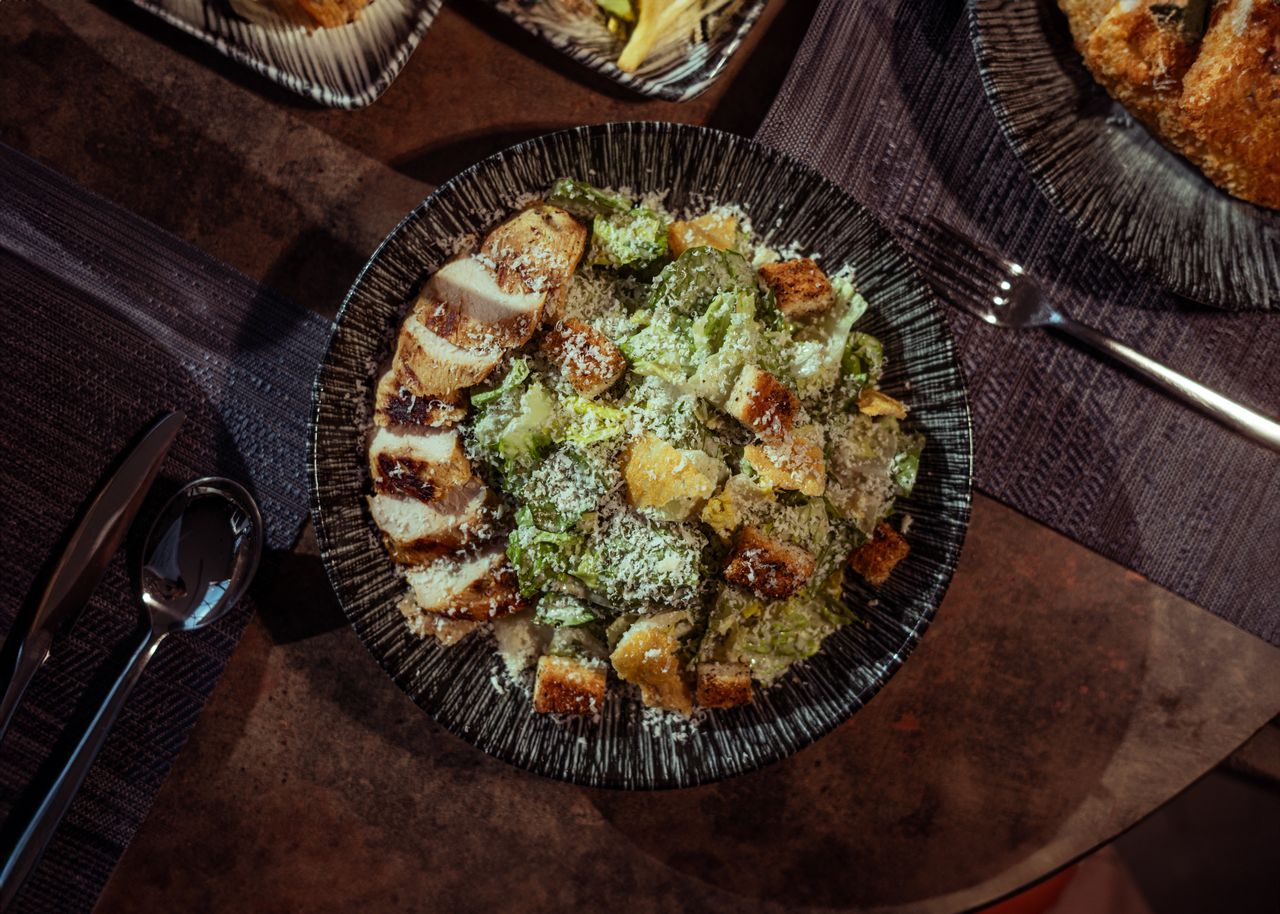
Some dishes never really disappear. They just wait for the culture to catch up again.
That is exactly what seems to be happening with the Caesar salad, which is showing up in new forms across restaurant menus, social feeds, and chain collaborations.
A century-old salad suddenly feels current again
The Caesar salad has history on its side. Its widely accepted origin traces back to Caesar Cardini’s restaurant in Tijuana in 1924, which meant the dish’s 100th anniversary arrived in July 2024. That anniversary helped restore attention to a salad that had long lived in the comfortable middle ground between steakhouse staple and lunch default.
But nostalgia alone does not explain the current surge. Restaurant coverage from Eater and trade reporting from Nation’s Restaurant News point to a broader appetite for salads and salad-adjacent lunch formats, especially ones that feel familiar while still delivering texture, richness, and a little theatrical flair. According to a recent Nation’s Restaurant News report, overall salad sales rose 11% year over year, with strong performance from spicy Caesars, crispy chicken wraps, and grain bowls, though that figure refers to salads overall rather than Caesar specifically.
That distinction matters because the Caesar’s momentum is less about one uniform recipe than about a format that adapts well. Romaine, Parmesan, croutons, anchovy depth, and creamy dressing create a structure chefs can bend without breaking. In a restaurant economy that rewards recognizable dishes with high repeat appeal, the Caesar is proving unusually resilient.
The five takes that explain the comeback
First is the original table-side ideal: crisp romaine, assertive dressing, shaved Parmesan, and enough garlic and lemon to keep the richness in check. Restaurants continue to return to that blueprint because it feels indulgent without becoming heavy, and classic enough to justify premium pricing when ingredients and execution are sharp.
Second is the chicken Caesar wrap, which has become a genuine force in Los Angeles. In October 2026, Eater reported that the wrap had evolved from a dated deli standby into a line-driving menu item and social-media magnet. The appeal is obvious: it turns a fork-and-plate salad into a portable, highly craveable lunch while preserving the salty-creamy crunch that defines the original.
Third is the chef-collaboration Caesar. Sweetgreen named cookbook author Molly Baz its first Chef in Residence on September 29, 2026, and introduced a limited-time menu built around her deli-counter sensibility, including Molly’s Pickle Caesar Sal and Molly’s Big Dill Caesar Wrap. The promotion ended on November 9, but it showed how a major fast-casual chain could use Caesar as a creative centerpiece rather than a safe fallback.
Why the format works from Malibu to fast casual
Fourth is the luxury Caesar wrap. Eater reported that Broad Street Oyster Company launched a lobster Caesar wrap at its Malibu location in May 2026, pairing an anchovy-forward Caesar with tender lobster in a tortilla. The restaurant’s TikTok video drew more than 130,000 likes, a useful reminder that Caesar now works as content as well as cuisine.
Fifth is the flavor-twist Caesar, where pickles, heat, extra protein, or seafood give the salad new personality without erasing its identity. This is where the dish is especially smart commercially. Operators do not need to teach guests what a Caesar is; they only need to explain the twist, which lowers the barrier to trial.
That combination of recognition and flexibility is why Caesar is having a moment. It can be classic, portable, premium, or playful, and each version still feels legible at first glance. Few salads move that comfortably between nostalgia, convenience, and spectacle, which is why this one keeps finding fresh life.