
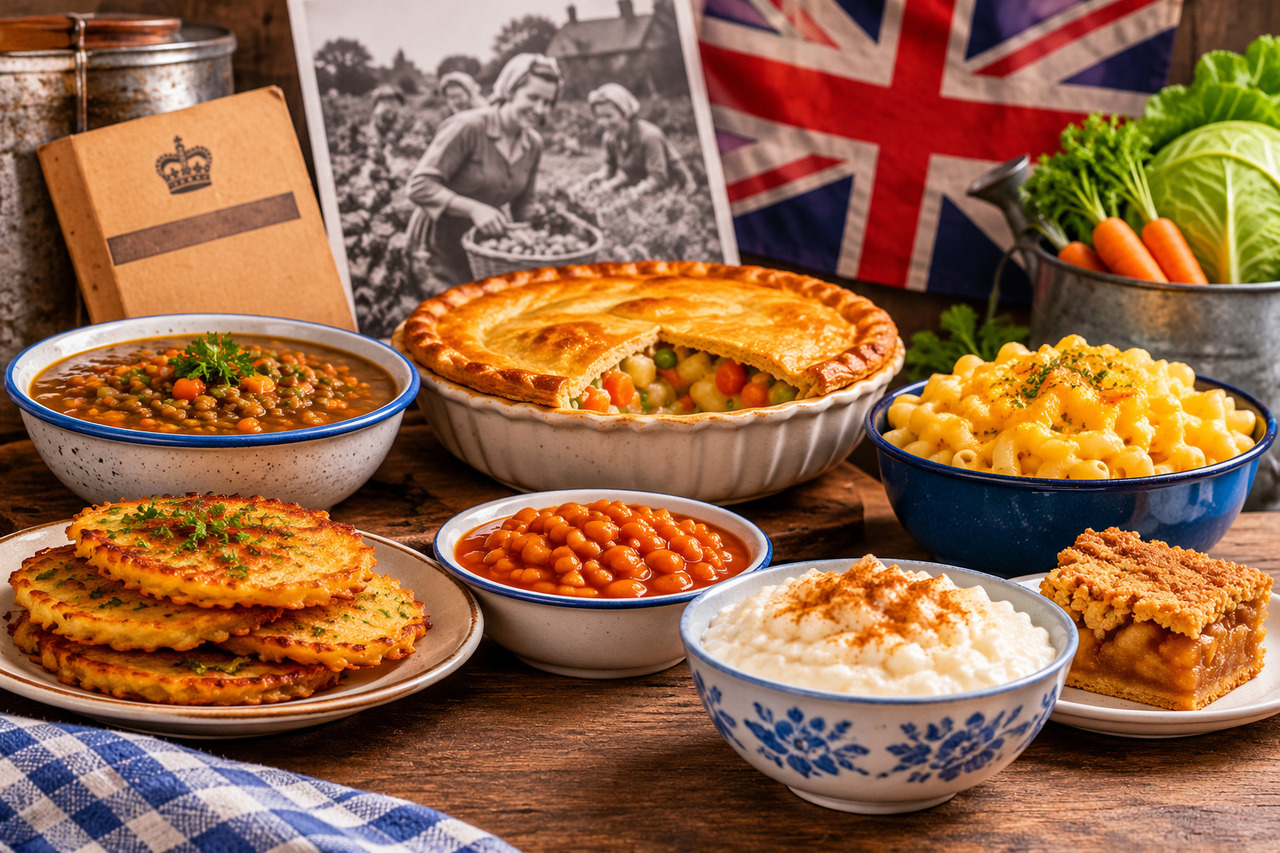
Hard times tend to produce plain food, but not always dull food. Wartime kitchens proved that ingenuity could be just as important as abundance.
Why wartime meatless cooking became a household skill
In both World War I and World War II, governments pushed civilians to conserve key foods so supplies could go to troops and allies. The U.S. home front embraced campaigns such as Meatless Mondays and Wheatless Wednesdays, while ration books and point systems made meat, fats, and sugar especially precious. The National Archives and the National Park Service both document how official pamphlets, menus, and demonstrations taught families to cook with less while wasting almost nothing.
That pressure changed how meals were built. Instead of centering a plate on meat, cooks relied on potatoes, beans, lentils, oats, cabbage, onions, carrots, and home-canned produce. During World War II, Victory Gardens became a serious food source rather than a hobby; the National Park Service notes that roughly 20 million gardens were producing about 40 percent of the vegetables eaten in the United States by the war’s end. In Britain, the Ministry of Food popularized similar thrift through recipes that celebrated seasonal vegetables.
The result was a practical canon of meatless dishes that solved several problems at once. They were filling, cheap, and adaptable to whatever was available that week. Just as important, they used techniques that still make culinary sense: bulk up a little dairy or fat with starch, add savoriness through browning and onions, and turn vegetables into the main event rather than a side.
Ten dishes that fed families when ration books ruled
Woolton pie may be the most famous wartime vegetable dish. Developed in Britain and named for food minister Lord Woolton, it turned root vegetables and a modest crust into a hearty meal. Potato and vegetable pie had close American cousins, too, and government meal plans regularly suggested similar bakes because they were filling and made good use of seasonal produce.
Lentil soup, split pea soup, and bean stews also carried enormous weight. Dried pulses stored well, cost less than meat, and delivered protein and fiber before anyone used those terms in everyday cooking. Potato pancakes and cabbage-and-noodle skillets did similar work, transforming cheap staples into crisp, comforting meals with strong flavor if the onions were cooked properly.
Then there were pantry classics and desserts built around absence. Macaroni and cheese surged in popularity in wartime America because it was affordable, shelf-stable, and easy to prepare, as the Roosevelt-era National Archives blog notes. Add to that rice pudding, baked beans without salt pork, vegetable hash, and mock apple pie made from crackers, and the full list reaches ten dishes that survived because they answered the same daily question: how do you make dinner feel complete without expensive ingredients?
Why these dishes still hold up in modern kitchens
The most obvious reason is cost. A pot of lentil soup, a tray of potato pie, or a pan of cabbage noodles still feeds several people for far less than most meat-based dinners. These meals also fit contemporary concerns surprisingly well, from budget cooking and reduced food waste to eating less meat without turning dinner into an ideological project.
They also reward technique over luxury. Browning onions deeply, using a crust to trap steam, balancing starch with acid, and finishing beans with herbs or cheese are not compromise moves; they are durable cooking principles. What wartime cooks learned under pressure now reads like modern kitchen wisdom, especially when grocery prices rise and households want more from pantry staples.
Most of all, these dishes endure because they offer emotional reliability. They are humble, but they do not feel punitive. A well-made vegetable pie, bean stew, or rice pudding tastes like care, thrift, and competence in one bowl. That is why wartime meatless cooking still resonates: it was never only about getting by, but about making enough feel like plenty.