
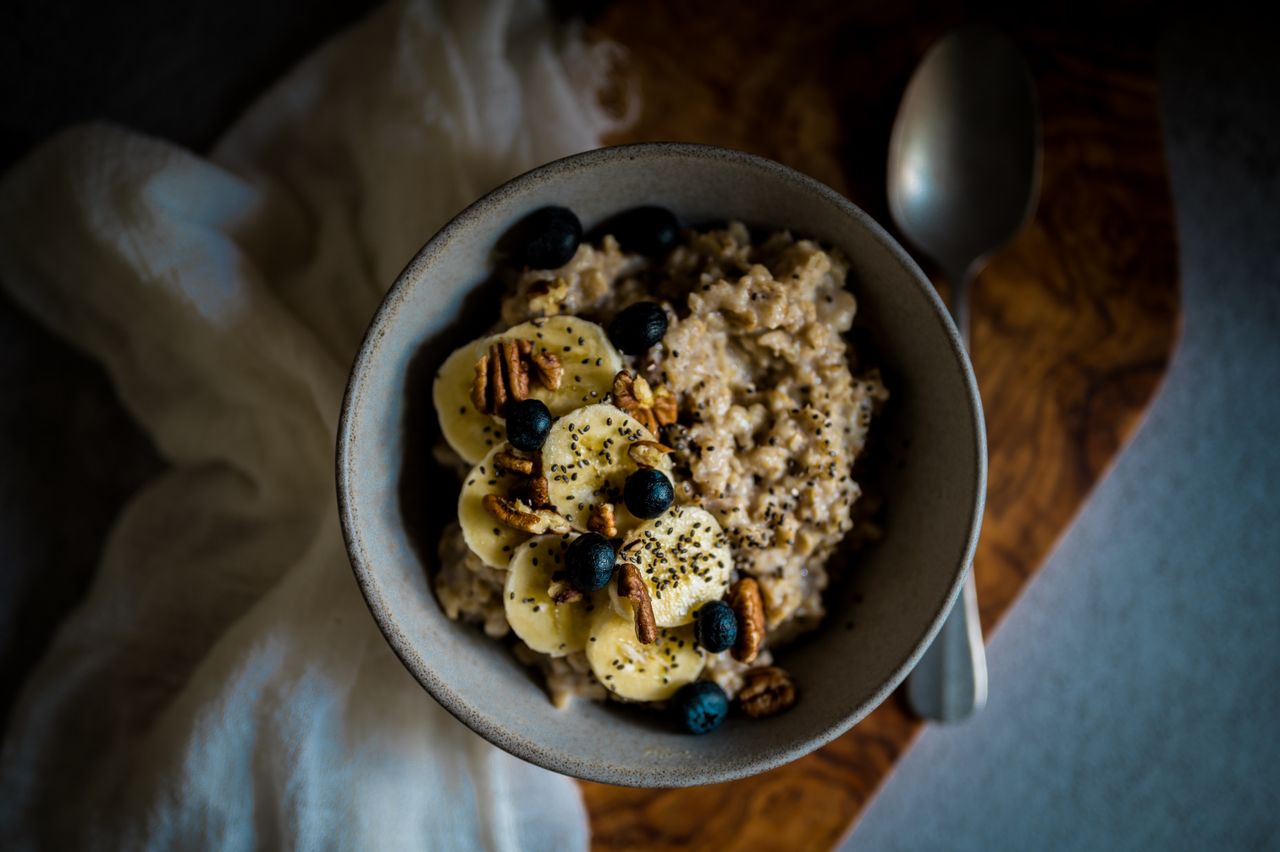
When dietitians compare oatmeal and eggs, the clearer everyday winner is usually oatmeal. The reason is simple: oatmeal brings fiber to breakfast, and eggs do not.
Why oatmeal gets the edge
Recent reporting from The Washington Post cited registered dietitian Elizabeth Klingbeil, an assistant professor at the University of Texas at Austin and a national spokesperson for the Academy of Nutrition and Dietetics, saying eggs are rich in protein but lack fiber, while oats provide fiber even though they have less protein. That distinction matters because fiber is a nutrient many Americans do not get enough of, and breakfast is an easy place to add it.
Harvard’s Nutrition Source also gives oats a strong case. Its guidance notes that oats contain beta-glucan, a soluble fiber tied to heart health, and points out that the Food and Drug Administration allows a health claim linking beta-glucan soluble fiber from whole grain oats with a reduced risk of coronary heart disease. In plain terms, oatmeal does more than fill the bowl, it adds something many breakfasts are missing.
The American Heart Association leans the same way in its breakfast and whole grain guidance. It recommends choosing fiber-rich whole grains and says instant oatmeal can be a quick option that helps keep people full. That does not make oatmeal automatically healthy in every form, since heavily sweetened packets can add extra sugar, but plain oats start with an advantage.
Where eggs still fit
Eggs are not a bad breakfast, and major health sources do not treat them that way. Harvard Health says eggs contain protein, vitamins, and other nutrients, and the American Heart Association says moderate egg intake can fit into a heart-healthy diet. For healthy adults, eggs can still be part of a balanced morning meal.
The catch is that eggs usually need help from other foods to do the same all-around job oatmeal can do on its own. Since eggs do not provide fiber, a more balanced plate often includes fruit, whole grain toast, beans, or vegetables. The Veterans Health Administration’s breakfast guidance takes that broader approach, recommending breakfasts that combine at least two of these elements: fiber, protein, and healthy fats.
That is why the real dietitian answer is not that eggs should disappear from the kitchen. It is that oatmeal better matches the qualities experts want in an everyday breakfast pattern, especially for people trying to improve fullness, whole grain intake, or heart-smart eating habits. Eggs work best when they are part of a bigger mix.
The best choice for home cooks
For home cooks, the most useful takeaway is not to think of oatmeal and eggs as enemies. Think of oatmeal as the stronger default, then build on it. Plain cooked oats topped with berries, nuts, seeds, or yogurt can add protein and healthy fats without losing the fiber advantage that made oatmeal the favorite in the first place.
If you prefer eggs, you can still make them work harder nutritionally. Pair them with fruit, sautéed vegetables, or a slice of whole grain toast, instead of building breakfast around eggs alone. That follows the same pattern experts and heart health groups recommend: combine protein with fiber-rich foods instead of choosing one nutrient and stopping there.
So if the question is which single food dietitians would more often pick, oatmeal has the edge. Not because eggs are off the table, but because fiber is still the missing piece in many American breakfasts, and oatmeal supplies it in a way eggs simply cannot.
Перевод эфира в доллары представляет собой быстрый и прозрачный способ продать эфир за доллары.
Этот формат обмена совершается в короткие сроки и по прозрачному курсу.
полный расход ETH и сумма долларов
Благодаря такой конвертации получается уверенно зачислить желаемую сумму в долларах и сохранить нервы.