
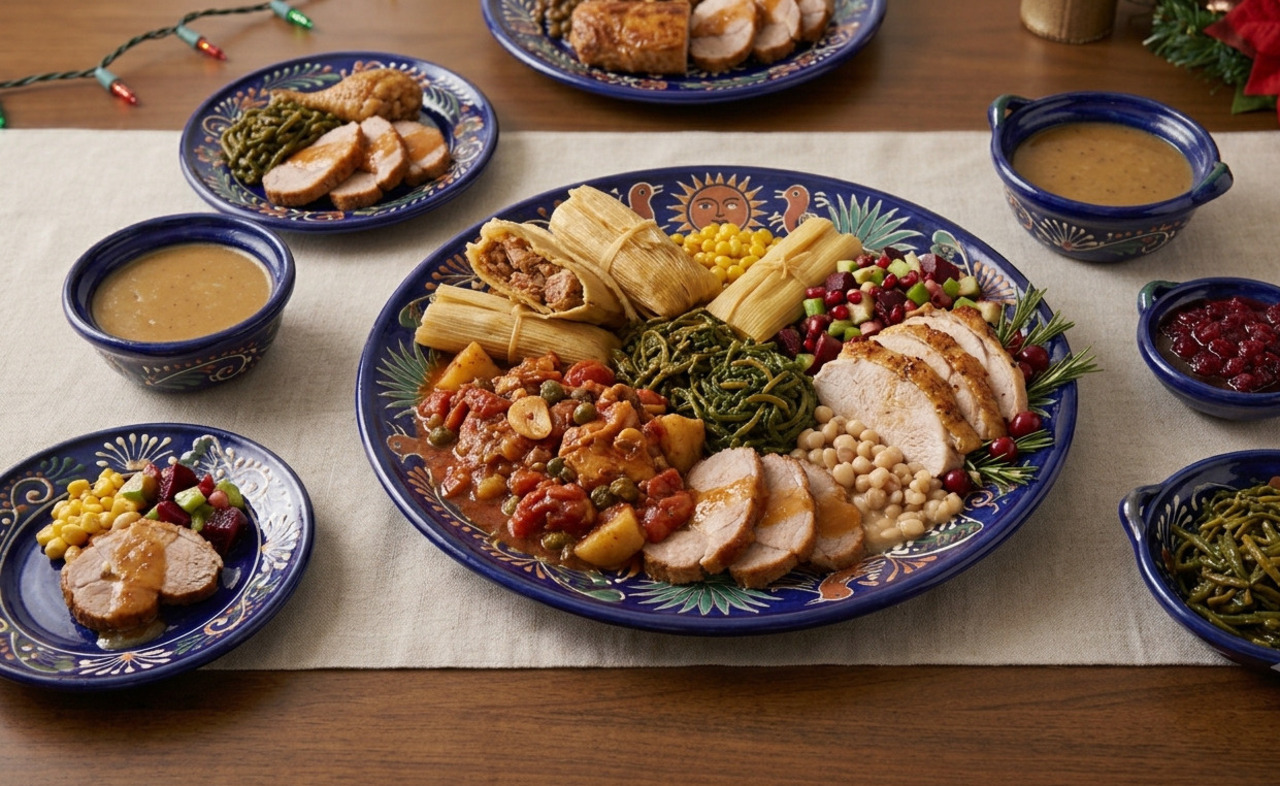
Holiday menus can fall into a rut fast. Mexican festive cooking offers a way out, with dishes that feel celebratory, communal, and deeply rooted in history. From Christmas Eve mains to sweets served during posadas and Three Kings season, these foods turn a holiday meal into an event.
The centerpieces that define a Mexican holiday table
Mexican holiday cooking does not revolve around a single national menu, and that is part of its power. UNAM notes that Christmas dinner in Mexico reflects diverse regional and family traditions rather than one fixed dish, while the Secretaría de Cultura’s gastronomic calendar highlights staples such as ponche and buñuelos during the season. That flexibility makes the table feel abundant rather than rigid, with different households building their celebrations around inherited favorites.
Among the most iconic are bacalao a la vizcaína, romeritos, tamales, pavo navideño, and pierna de cerdo. Historical materials from Mexican cultural institutions repeatedly place bacalao, romeritos, tamales, ponche, and buñuelos at the heart of December feasting, showing how strongly these foods are tied to Nochebuena. Bacalao brings a briny, slow-cooked richness from salted cod, tomatoes, olives, and capers, while romeritos deliver a distinctly central Mexican combination of leafy greens, mole, potatoes, and often dried shrimp patties.
Tamales deserve special attention because they are both everyday heritage food and ritual food. Mexico’s Agriculture Ministry says tamales are deeply tied to maize culture and notes the enduring custom of serving tamales with atole after Rosca de Reyes and on Candlemas. The Secretaría de Cultura has also described tamales as a food with more than 500 varieties across the country, which helps explain why they adapt so well to regional holiday tables.
Rounding out this core group are pozole, especially in regions where posadas call for hearty communal bowls, and lechón or roast pork, which appears in older cultural references to December cooking. Add lomo relleno and pollo relleno in families that prefer roasted meats, and the festive count quickly grows. These mains change the table because they prioritize sharing, long preparation, and dramatic presentation over convenience.
The drinks, sides, and salads that make the feast feel complete
The holiday table is not only about big proteins. It is the supporting cast that gives Mexican seasonal meals their signature rhythm, starting with ponche navideño, the steaming fruit punch served across posadas and Christmas gatherings. Government and cultural sources describe ponche as a December essential, typically made with fruits simmered alongside sugar cane and spices, while UNAM points to ingredients such as piloncillo, cinnamon, guava, apple, mandarin, tamarind, and hibiscus in contemporary versions.
Then comes atole, one of the oldest drinks on the table. The INPI and the Secretaría de Cultura both trace atole to Indigenous foodways and emphasize how inseparable the tamal/atole pairing has been since pre-Hispanic times. For holiday hosts, that matters because atole adds more than warmth; it adds continuity, whether served plain, chocolate-based, or flavored with seasonal fruit.
On the lighter side, ensalada de Nochebuena brings color and freshness to a menu heavy with braises and roasts. An INAH historical study identifies it as a long-established dish associated with both Christmas Eve and New Year’s meals in Mexico, and its ruby-red beets, crisp apple, citrus, and lettuce echo the country’s iconic poinsettia season. Alongside it, rice, mashed potatoes, or buttery bolillos may appear, but the salad is the real palate reset.
To reach the full fifteen, include spaghetti rojo, a common family side in many modern celebrations, plus chiles rellenos, mole with turkey or chicken, and recalentado, the next-day ritual of reheating leftovers that many families treat as its own feast. Not every household serves all of them, but together they show how Mexican holiday dining expands through layering rather than strict rules.
The sweets and seasonal traditions that leave the deepest impression
If the main meal establishes abundance, dessert seals the memory. Buñuelos are perhaps the most recognizable holiday sweet, and Mexico’s cultural calendar explicitly links them with posadas, noting that they should be thin and finished with piloncillo syrup. Their appeal is practical as well as emotional: crisp, fragrant, and theatrical, they are the kind of dessert that feels festive the moment they hit the table.
Another memorable finish is capirotada, the bread pudding-like dessert more often associated with Lent but still present in some family repertoires because it captures the Mexican genius for sweet-savory layering. Add arroz con leche for a softer, milkier contrast, or ate with cheese for a simple final course that does not compete with the richness of the meal. These desserts work because they extend hospitality without requiring a formal pastry program.
The broader point is that these 15 dishes matter less as a rigid checklist than as a blueprint for a more meaningful celebration. Bacalao, romeritos, tamales, pavo, pierna, pozole, lechón, lomo relleno, pollo relleno, ponche, atole, ensalada de Nochebuena, buñuelos, capirotada, and arroz con leche each contribute a different texture of festivity. Together, they can completely change a holiday table by making it warmer, more communal, and more rooted in tradition than the standard roast-and-sides formula ever could.