
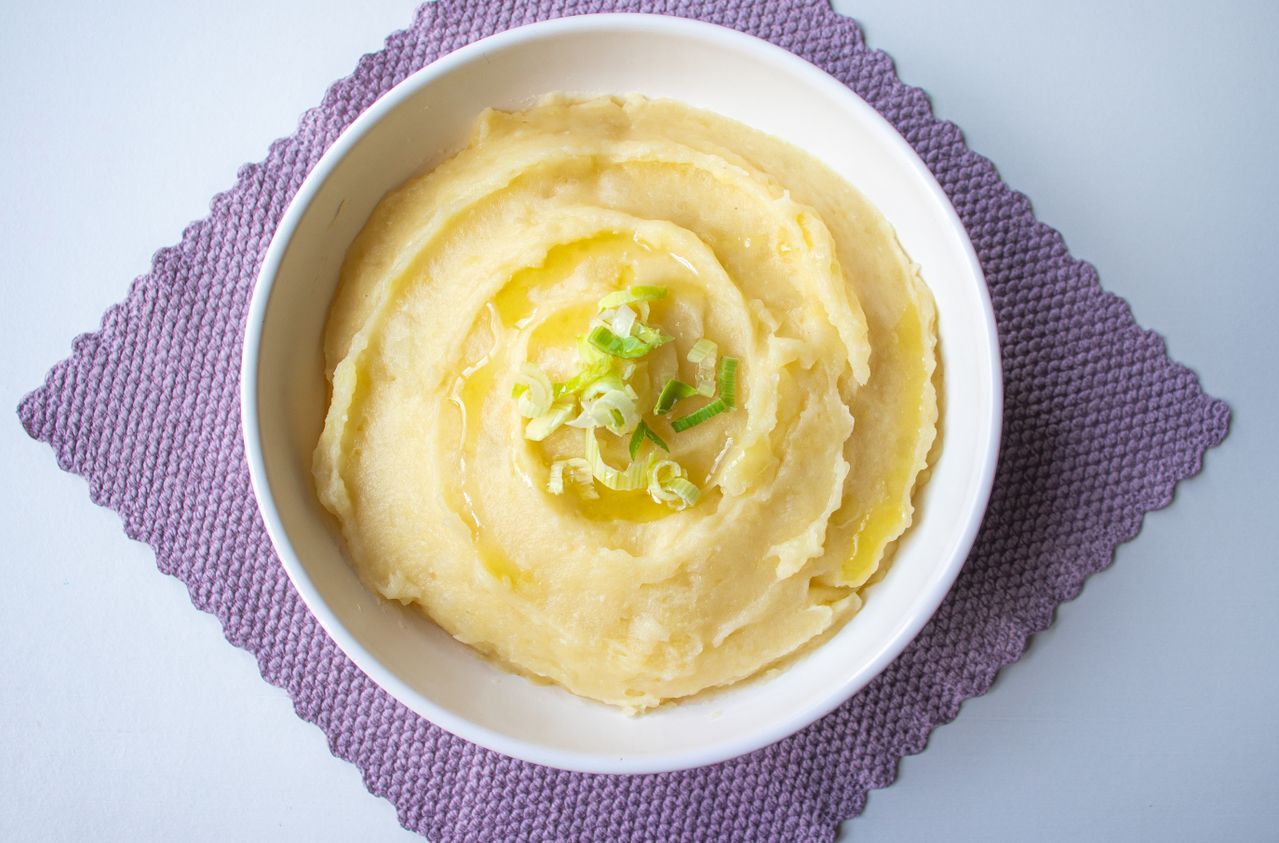
Mashed potatoes are simple, but they punish small mistakes. A cold splash of milk or a few extra turns of the masher can be the difference between velvety and gluey.
The overlooked move is not exotic or chefy. It is simply warming the butter and dairy before adding them, then folding them in with a light hand.
Why temperature matters more than most cooks realize
Hot potatoes absorb fat and liquid more willingly than cooling ones, which is why so many tested recipes call for warm milk, cream, or both. Epicurious and Food52 each recommend heating the dairy before mixing, not for drama, but because warm liquid blends in more easily and helps the potatoes stay hot from the first scoop to the table.
That matters because mashed potatoes change quickly as they lose heat. Warm dairy does not magically alter the chemistry in an instant, but it does keep the mash at a workable temperature, so you need less force to combine everything smoothly. Less force means less chance of pushing the texture toward sticky.
There is also a sequencing benefit. Epicurious has long advised adding butter before the milk or cream in more refined potato purée methods, a technique cooks value because the butterfat can coat the potato particles before more liquid goes in. In practice, that helps create a smoother, richer texture, especially when the potatoes are still steaming.
The result is not just creamier potatoes, but more control. Instead of chasing lumps with aggressive stirring after a cold pour, you get a mash that loosens gradually and evenly, which is exactly what “silky” is supposed to feel like.
The potato and tool choices that support a silky mash
Even the best temperature control cannot rescue the wrong potato or the wrong tool. Bon Appétit notes that russets are high in starch and turn especially light and fluffy, while Yukon Golds bring a naturally richer, creamier character. Both can make excellent mashed potatoes, but they reward slightly different goals.
If you want cloudlike mash, russets are a classic pick. If you prefer a denser, more buttery spoonful, Yukon Golds are an easy favorite. Bon Appétit has also pointed out that Yukon Golds absorb less water than many other varieties, which helps explain why they often deliver a creamy mash with less risk of turning waterlogged.
Tools matter just as much. Epicurious recommends a potato ricer or food mill because both break down the potatoes quickly and evenly without excessive agitation. That is crucial, since overworking mashed potatoes releases starch in a way that makes them gluey rather than smooth.
A hand masher can still work well if you stop early. What does not help is a blender or food processor. Serious mashed potato guidance across food publications is remarkably consistent on this point: the more violently you process the potatoes, the greater the chance you trade silkiness for paste.
How to put the technique into practice at home
Start by cooking the potatoes until fully tender, then draining them thoroughly. Several expert recipes also call for returning the drained potatoes to the warm pot for a minute or two, which helps excess moisture evaporate. Dry potatoes are better able to take on butter and dairy without turning soupy.
While the potatoes finish, warm the milk, cream, or half-and-half gently in a small saucepan. It does not need to boil. Food52 specifically suggests heating milk to just below a simmer, and Epicurious recipes repeatedly use warmed dairy or milk-butter mixtures before mixing them into the potatoes.
Next, add the butter first if you can, then the warm dairy in stages. That gradual addition lets you stop at the exact texture you want, whether that is fluffy, spoonable, or almost restaurant-style purée. The key is to stir just until combined, not until every last molecule looks whipped into submission.
If there is one rule to remember, it is this: silky mashed potatoes are built through restraint. Warm the dairy, add it thoughtfully, and stop mixing the moment the mash turns smooth. That one small move works best not because it is flashy, but because it keeps every other part of the process on your side.