
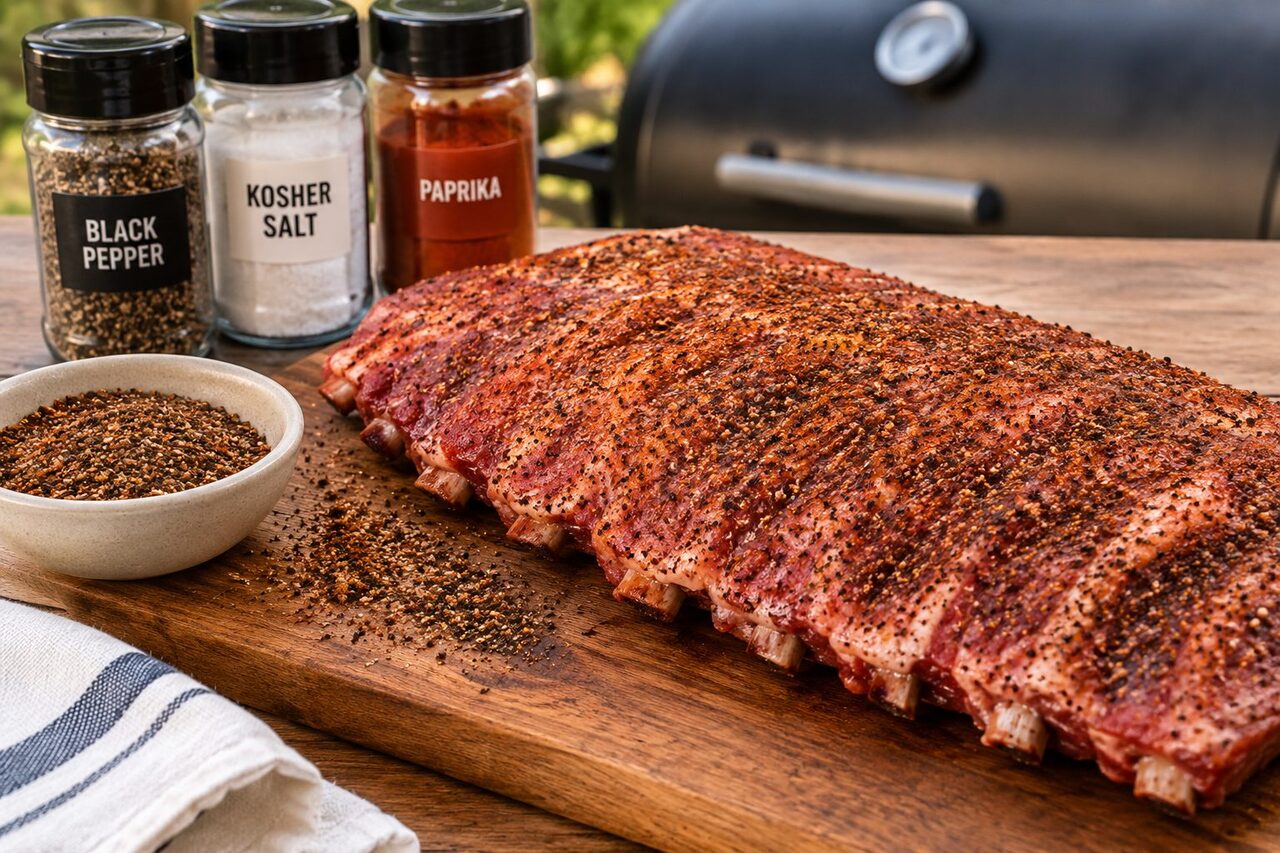
A simple rib rub is not a shortcut. For many pitmasters, it is the point.
Across a few well-known barbecue sources, the pattern is consistent: keep the seasoning focused, use just enough to support the meat, and avoid loading ribs with so many extras that the smoke and pork get buried. For home cooks, that approach can make prep less fussy and the finished rack more balanced.
What pitmasters mean by “simple” seasoning
At Black’s BBQ in Texas, fourth-generation pitmaster Barrett Black keeps pork spare ribs classic with salt, pepper, and a little red pepper for heat. According to the restaurant’s own rib guide, he skips binders and skips sugar, using what Black’s describes as a light hand so the seasoning stands up to the smoker without overpowering the pork. The same guide says he prefers table salt because its small crystal size dissolves quickly and helps deliver even flavor.
Aaron Franklin’s published barbecue tips land in a similar place, even if his formula is a little different. Franklin’s guidance says he likes kosher salt and 16-mesh black pepper in equal granule sizes, and for pork butt and ribs he adds a small amount of paprika for color. He may use a thin slather of mustard or hot sauce before the rub, but the advice is to make the meat tacky, not wet, because too much slather can make bark flake off during the cook.
That restraint shows up in older beginner guidance, too. In Bon Appétit’s barbecue primer, Pat Martin says ribs do not need a brine and warns that brining plus rub can push them too salty. His rib rub is still simple by barbecue standards, built from kosher salt, brown sugar, lemon pepper, black pepper, and chile flakes, which keeps the ingredient list short enough for a backyard cook to manage without overthinking it.
Why less seasoning can help the ribs cook better
A simpler seasoning mix does more than save time at the counter. It also changes how the surface of the ribs behaves in the smoker.
Franklin’s advice is especially useful here. His notes say sugary liquids are more prone to flare-ups and likely to burn, and he also cautions that excess slather can damage bark. That helps explain why many experienced cooks stay controlled with both wet binders and sweet ingredients at the start. If the exterior stays tacky instead of wet, smoke adheres better and the bark has a better chance to set cleanly.
Black’s takes that same idea in a stripped-down direction. With no binder and no sugar in the seasoning, the cook is less about building a candy-like crust and more about letting fat, smoke, and pepper work together over several hours. Their guide says the ribs cook at 275°F for about three to four hours, but are finished by tenderness rather than the clock, checked with a probe for almost no resistance.
There is not complete agreement on every prep detail. Tuffy Stone, for example, removes the membrane because he does not like its texture when cooked, while Black leaves it on and says it crisps during the cook. But both approaches still support the same broader lesson: seasoning does not have to be crowded or complicated to be deliberate.
How to apply the approach in a home kitchen
For home cooks, the most useful takeaway may be to simplify before you complicate. Start with the ribs themselves, then decide whether you want a Texas-leaning profile or something a bit sweeter.
If you want the leanest version of this method, follow the broad outline used by Black and Franklin: salt, black pepper, and a modest amount of paprika or red pepper if you want color or heat. Apply it evenly, but do not cake it on. If you want a touch more sweetness, Martin’s rub offers a middle ground without turning into a long list of spices.
It also helps to think of prep as separate from sauce. Black’s rib guide focuses on dry seasoning and tenderness, while Franklin’s general tips suggest restraint with slather and moisture management during the cook. In practice, that means you can keep the rub simple at the start and decide later whether the finished ribs need glaze or sauce.
For a lot of backyard cooks, that shift can change the whole process. Instead of chasing a crowded rub recipe, you can season with purpose, cook until tender, and let the pork carry more of the flavor. That is not less barbecue. It is a more direct version of it.