
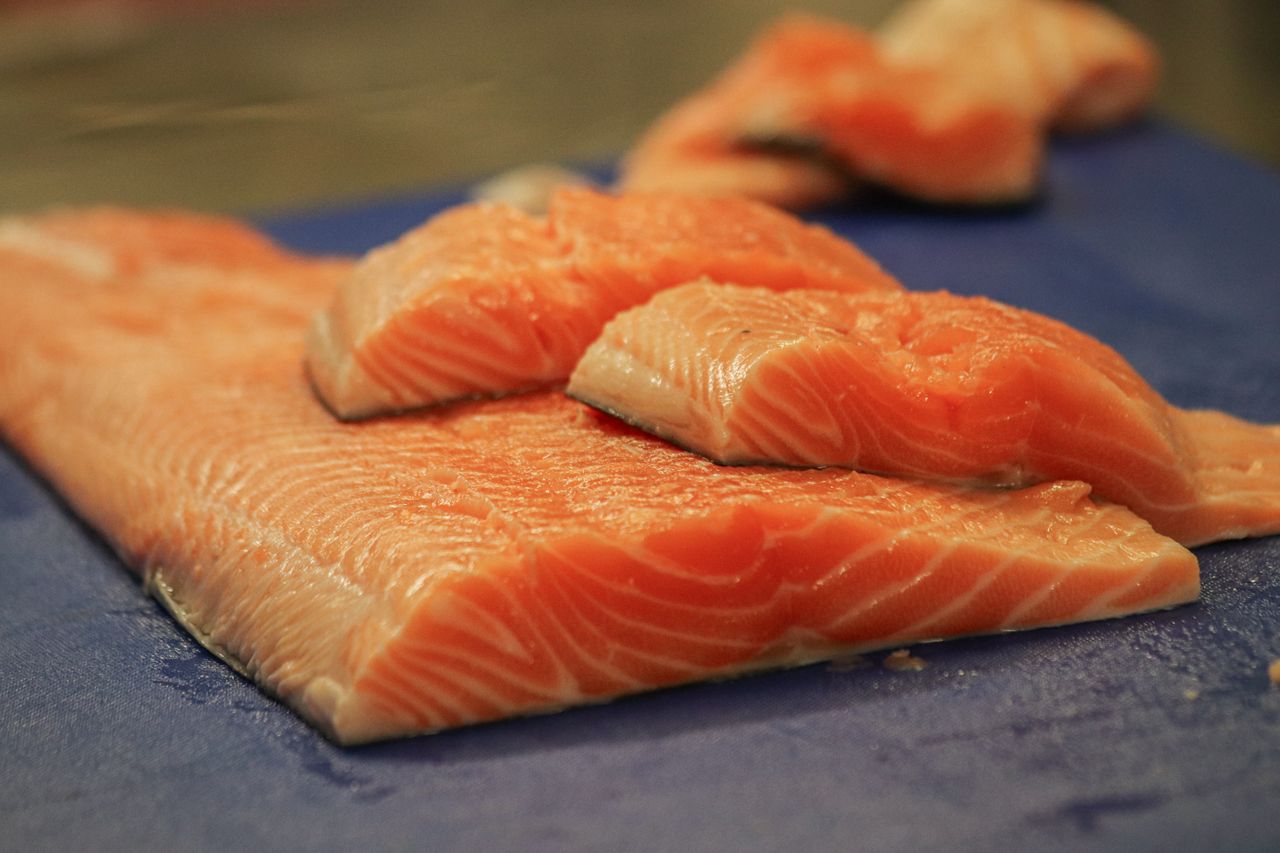
Farmed salmon remains one of the most widely sold seafood products in U.S. grocery stores, but the fish Americans buy today is not nutritionally identical to the fillets sold a decade or two ago. Recent research tracing feed and fillet composition shows the most notable change is a decline in long-chain omega-3 fatty acids, particularly EPA and DHA, as salmon feed uses less marine oil and more plant-based ingredients. That matters nationally because farmed Atlantic salmon dominates retail seafood cases, restaurant supply chains, and a large share of consumer omega-3 intake.
Recent research documents a measurable nutrient shift
A 2025 peer-reviewed study in Heliyon tracked nutrients and contaminants in farmed Atlantic salmon and salmon feed from 2006 through 2021 and found that vitamin D and long-chain omega-3 fatty acids followed the same downward pattern as marine oil use in feed. The researchers reported a rapid decline from 2006 to 2014, followed by a more stable period through 2021, tying the shift directly to lower inclusion of fish oil and fishmeal in aquaculture diets.
That finding aligns with a 2025 review in Nutrients, which stated that farmed Atlantic salmon previously contained about 2.80 grams of EPA plus DHA per 100 grams in 2005 but has declined gradually as terrestrial oils became more common in feed. The review reported more recent average levels near 1.16 grams per 100 grams for farmed Atlantic salmon, indicating that the fish still provides meaningful omega-3 content, but less than before.
Researchers have been explicit about which nutrient is fading most quietly from the fillet. EPA and DHA are the long-chain omega-3 fats most closely associated with seafood nutrition guidance, and several recent papers describe them as the nutrients most affected when fish oil is replaced with vegetable oils or other non-marine fats in commercial feed.
The change is showing up in the salmon sold across the U.S.
For U.S. shoppers, the confirmed takeaway is not that farmed salmon has lost its value, but that its nutrient profile is shifting. A 2024 paper in Frontiers in Marine Science said wider use of vegetable oils in aquafeeds has helped aquaculture expand without increasing pressure on marine resources at the same pace, while also negatively affecting the balance of essential fatty acids in the fish.
What is not yet known is a single nationwide omega-3 figure that applies to every salmon product in every supermarket seafood case. Researchers and industry groups have not released a comprehensive U.S. brand-by-brand breakdown covering all retailers, fresh versus frozen products, origin countries, or every feed formulation currently used in the market. Salmon sold in the United States can come from different producers and feed programs, which means omega-3 content can vary.
Even so, the broad direction is consistent across the published literature. Studies in recent years have continued to show that farmed salmon remains a good source of EPA and DHA, but that the concentration depends heavily on feed composition, especially the proportion of marine oils versus plant oils or newer alternatives.
Feed economics and sustainability goals explain why it is happening
The main driver, according to multiple studies, is the aquaculture sector’s long-running move away from heavy dependence on wild-caught fish oil and fishmeal. The 2025 Heliyon study said limited access to marine raw materials, along with variable prices and pressure on wild fish stocks, pushed the industry toward greater use of vegetable feed ingredients over the 2006-to-2021 period.
That explanation is echoed in recent academic and industry research. A 2024 study in Nature Food noted that salmon aquaculture is promoted for its omega-3 contribution but depends on feed systems that must balance seafood nutrition, production growth, and finite marine ingredients. Other recent studies have examined alternatives including algae-based oils and genetically modified camelina oil as ways to restore EPA and DHA levels without returning to older fish-oil-heavy formulas.
For consumers, that means farmed salmon is still a meaningful source of omega-3, but not automatically at the same level many nutrition tables or older assumptions may suggest. The practical expectation is more variation by producer and feed recipe, while researchers and feed developers work on replacements that can raise EPA and DHA levels again without reversing the industry’s broader sustainability shift.