
France’s wine industry is confronting another climate-driven shift as grape harvests move earlier across multiple regions. In Champagne, the change has become especially visible in 2026, when the trade group Comité Champagne published the earliest official harvest calendar on record for the sparkling-wine region. The timing matters well beyond France because Champagne remains one of the world’s highest-value wine categories and a major export product.
Champagne’s official 2026 harvest opened earlier than any prior recorded season
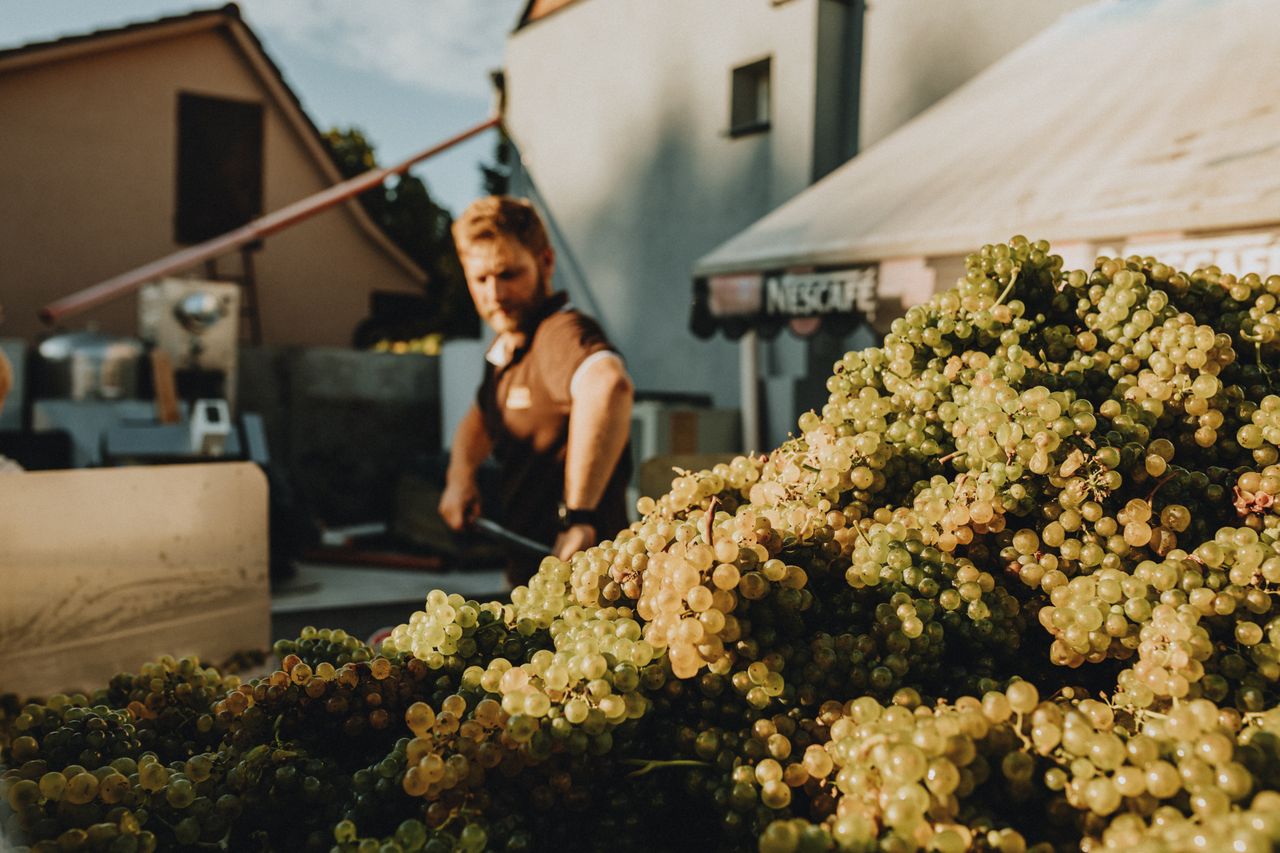
Comité Champagne published the 2026 harvest dates on August 12, 2026, setting opening days by commune and grape variety across the appellation, according to the organization’s official harvest notice. Reporting from the Associated Press said the official harvest opened between August 12 and August 17 this year, depending on the area and grape, making it the earliest harvest on record for Champagne. That is roughly a month earlier than what had once been common in the region, according to AP’s reporting from Hautvillers.
The early pace was even more pronounced in isolated cases. Reuters reporting cited growers in Montgueux, in the Aube department, as beginning as early as August 8, while one producer, Vincent Finot, received special authorization to start on August 6 after acidity levels in his grapes fell quickly. Those exceptions underscore how fast ripening accelerated before the official regional schedule fully opened.
The scale of what is at stake is substantial. According to Comité Champagne’s 2026 industry report, cited by AP, Champagne shipped 266.1 million bottles in 2025 and generated 5.7 billion euros in sales. AP also reported that the sector supports around 30,000 direct jobs and relies on roughly 100,000 seasonal workers during harvest, making the timing of the vendange an economic issue as well as an agricultural one.
The impact is centered in Champagne’s vineyard communes, with variation by village and grape
The confirmed impact is in the Champagne appellation itself, which spans parts of Marne, Aube, Aisne, Haute-Marne, and Seine-et-Marne. Comité Champagne’s published 2026 calendar set start dates commune by commune rather than imposing one single picking day across the entire region, reflecting uneven ripening conditions across vineyards. AP reported from Hautvillers in Marne, while Reuters highlighted Montgueux in Aube as one of the earliest-starting areas.
What is confirmed is that some growers were already harvesting in mid-August, a timetable that producers interviewed by AP described as historically unusual. Alexandre Gobillard of Gobillard & Fils in Hautvillers told AP that when he began working in Champagne three decades ago, mid-August was a vacation period rather than harvest time. In 2026, his estate was already fully engaged in picking by August 18.
What is not yet publicly detailed in one comprehensive English-language release is a single estate-by-estate tally of all affected villages or the final production losses for each commune. AP reported that weather conditions are expected to reduce yields, and David Chatillon, president of the Union of Champagne Houses, said spring frost alone wiped out 43% of the potential production before drought worsened the situation. A full final regional harvest outcome has not yet been released.
Growers and industry officials say climate change is compressing Champagne’s growing cycle
The immediate causes cited by growers were a late-March frost, four heat waves, and drought conditions that sped sugar accumulation and reduced acidity in the grapes, according to AP. Gobillard said temperatures in parts of Champagne reached 40 degrees Celsius, or 104 degrees Fahrenheit, in June. He told AP that water stress concentrated sugar in the fruit and accelerated the point at which grapes had to be picked to preserve balance.
Industry officials are tying those conditions to a longer-term climate trend rather than a one-off anomaly. David Chatillon told AP that climate change has been a focus for Champagne for 25 years, driving investment in research and adaptation, including later-ripening and more disease-resistant grape varieties. A 2026 Comité Champagne statement also said the industry is responding to climatic uncertainty with coordinated volume management, new plant material tools, and its Carbon Plan 3 strategy running from 2025 to 2035.
For consumers, the practical takeaway is not an immediate shortage on store shelves, but a signal that Champagne production is becoming more weather-sensitive and more dependent on rapid harvest decisions. The region still has organizational tools, reserve systems, and established export channels, but 2026 shows how quickly vineyard schedules can move when heat arrives early. As growers moved through the harvest window this month, producers told AP the central task was straightforward: pick fast enough to protect quality in a narrowing seasonal window.