
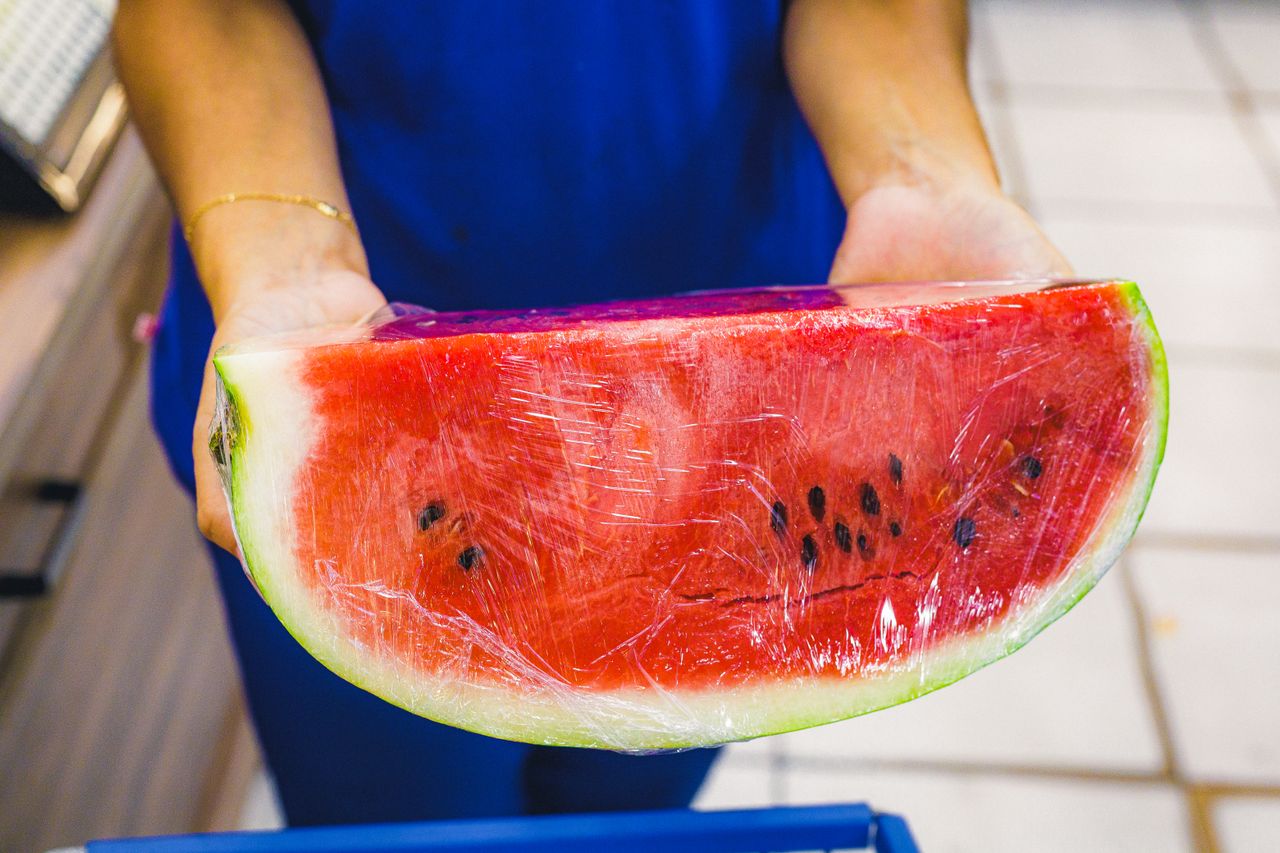
Plastic wrap has a reputation for saving food, but it can also ruin it. The problem is simple: many foods need airflow, not a tight seal.
That is especially true for produce that reacts badly to trapped moisture or naturally released gases. Knowing which foods to keep away from cling film can mean less waste, better texture, and longer-lasting groceries.
Why plastic wrap can backfire in the first place
Plastic wrap works best when the goal is preventing moisture loss from already cut or cooked foods. USDA and FDA guidance supports covering leftovers and many prepared foods in airtight packaging, especially once they are refrigerated. But that same airtight seal can become a problem for fresh produce that is still respiring, releasing moisture, or producing ethylene gas as it ripens.
Mushrooms are one of the clearest examples. Utah State and Utah State-style extension guidance notes that airtight plastic bags retain moisture and speed spoilage, while Utah State University specifically recommends a porous paper bag in the refrigerator. Wrapped too tightly, mushrooms often become slimy before they ever get cooked.
Bananas and avocados can also suffer when plastic traps ethylene around them. According to the University of Nebraska–Lincoln, storing bananas in a plastic bag can hold in both moisture and ethylene, pushing them toward faster ripening and spoilage. The same principle explains why whole avocados are usually better ripened loosely on the counter, often in a paper bag if speed is needed, rather than sealed in cling film.
The 10 foods that usually do better without cling film
Start with mushrooms, bananas, avocados, tomatoes, onions, potatoes, and garlic. These foods generally need either ventilation, separation from ethylene, or a dry environment. EPA guidance notes that produce such as potatoes, onions, and garlic is best stored in a cool, dry, dark, well-ventilated place, not sealed in plastic where moisture can build.
Onions are especially poor candidates for plastic wrap. University of Nevada, Reno Extension and USA Onions both advise against storing whole onions in plastic bags because reduced air circulation cuts storage life. Potatoes have a similar issue: Ask Extension guidance recommends ventilated containers, mesh bags, cardboard boxes, or paper bags, and specifically says to avoid plastic bags.
Round out the list with peppers, citrus, and bread. Peppers and citrus often keep better when stored loosely or in breathable bags rather than wrapped tightly against condensation. Bread is a texture issue more than a safety one: cling film can soften crusts and trap humidity, which is fine for sandwich bread but disappointing for crusty loaves that are better in paper, a bread box, or cut-side down on a board.
Smarter swaps that actually help food last longer
If you are replacing plastic wrap, the best alternative depends on the food. Paper bags are ideal for mushrooms and sometimes for ripening avocados. Mesh bags, baskets, or open bowls work better for onions, garlic, and some countertop produce because they allow steady airflow while limiting dampness.
For potatoes, choose a dark, ventilated container and keep them away from onions. Extension guidance repeatedly warns that onions and potatoes should not be stored together because moisture and gases can shorten shelf life for both. That one small storage change can prevent sprouting, softening, and rot.
Plastic still has a role, just not everywhere. FDA and USDA both emphasize covered containers and sealed storage for leftovers, cut produce, and foods that need protection from drying out or contamination. So the rule is not “never use plastic wrap.” It is “use it where airtight storage helps” and skip it where airflow, dryness, and separation are what freshness really depends on.