
Across the U.S., restaurants increasingly market experience as aggressively as food, with historic buildings and visually distinctive dining rooms becoming part of the business model. In Vermont, that pattern shows up in a different form: some of the state’s strangest places to eat are notable not for gimmick menus, but for the railcars, schoolhouses and roadside structures where the meals are served. The result is a cluster of restaurants where the setting is verified history, not manufactured spectacle.
Vermont’s most unusual restaurants are defined by the structures they occupy
Casey’s Caboose in Killington is among the clearest examples. The restaurant states that it opened in 1981 inside a 35-ton railroad snowplow car dating to about 1900, a piece of equipment that once cleared snow from New England rail lines before being sidelined after a derailment. That makes the building itself the central point of difference, with diners eating beside train windows and in an elevated observation area once used by a rail operator.
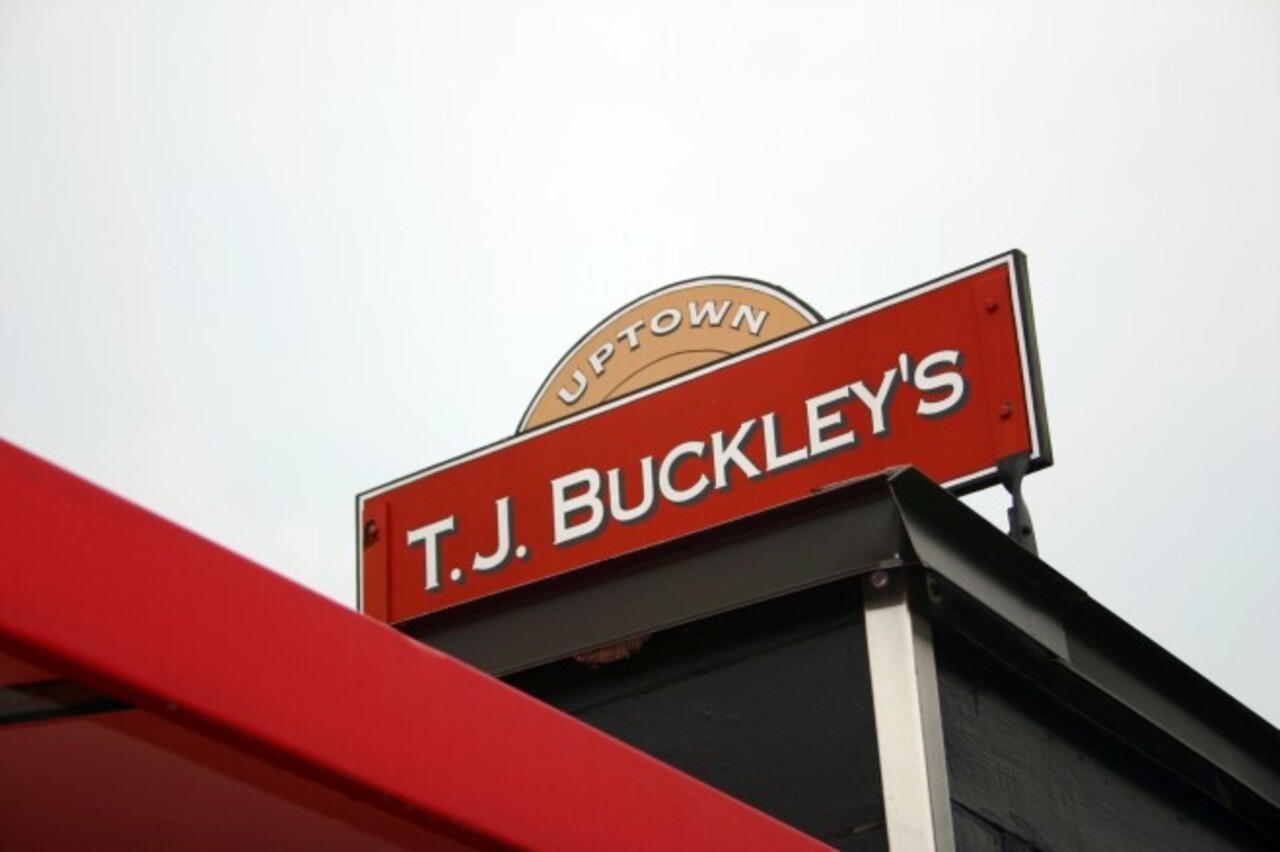
Brattleboro’s T.J. Buckley’s follows a different model but with the same emphasis on place. The restaurant says it operates inside a restored 1925 Worcester dining car, and its website identifies chef Michael Fuller’s open kitchen as part of the experience. The compact footprint is not decorative; it is the core operating reality of the restaurant, and it limits seating while turning food preparation into a visible part of dinner service.
Waitsfield’s Canteen Creemee Company shifts the focus from historic architecture to format and scale. The business promotes its Bad Larry vertical sundae, a tall creemee presentation that can be finished with cotton candy, while also serving fried chicken and other savory items from its Main Street location. In each case, the unusual feature is specific and verifiable: an original rail vehicle, a preserved diner car, or a dessert presentation the restaurant itself has built into its identity.
The strongest concentration of these destinations is spread across several Vermont towns
What is confirmed is that these restaurants are not clustered in one tourist corridor. Casey’s Caboose is in Killington, T.J. Buckley’s is in Brattleboro, Canteen Creemee Company is in Waitsfield, The Belfry is in Montgomery Center, and Blue Benn Diner is in Bennington, according to the businesses and local institutional references. That statewide spread matters because it shows Vermont’s unusual dining scene is tied to local building stock and town-scale identity rather than a single entertainment district.
The Belfry in Montgomery Center identifies itself as serving the town from 14 Amidon Road, and booking information carried by the restaurant and OpenTable describes it as an 1800s schoolhouse with the original blackboard still used for daily specials. Its location near Jay Peak has helped position it within the state’s ski-country dining economy, but the most distinctive element remains the reused school building. The restaurant’s oddity is architectural and historical, not menu-driven.
In Bennington, Blue Benn Diner remains one of the best-known examples of a place where the physical structure defines the meal. Bennington College refers to it as a 1945 Silk City diner, while Vermont Public reported that the blue-and-cream aluminum eatery was built in New Jersey in 1948 and brought to Bennington, where it still sits. What is not publicly settled in one single source is a universal dating convention for the diner’s manufacture, but multiple reputable references agree it is an authentic mid-20th-century diner car that has long anchored the same site.
The broader context is Vermont’s reuse of historic spaces as working restaurants
The reason these restaurants stand out is partly economic and partly cultural. Across hospitality, operators often use distinctive real estate to differentiate themselves in a crowded market, but in Vermont that strategy frequently overlaps with preservation and adaptive reuse. Official business descriptions for Casey’s Caboose, T.J. Buckley’s and The Belfry all emphasize the age or original purpose of their structures, showing that the buildings are not secondary branding details; they are central to how the restaurants present themselves.
That context also helps explain why the menus are not the main story. Canteen Creemee Company can promote a towering sundae and fried chicken in the same breath because the business fits within a broader Vermont pattern of pairing local food culture with offbeat presentation. The restaurant calls attention to the Bad Larry on its own site, while Food Network, quoted there, highlighted one of its maple-topped creations as a standout. The novelty is real, but it is grounded in a regional product category, the Vermont creemee, rather than an unrelated stunt.
For customers, the practical takeaway is straightforward: in Vermont, some of the state’s most unusual restaurant experiences come from where the meal happens as much as what is on the plate. Seating capacity can be limited in restored diner cars and rail equipment, and the experience may be shaped by preserved layouts that were not originally designed as modern dining rooms. As these businesses continue operating, the verified pattern is that Vermont’s strangest places to eat are often hiding in plain sight inside historic structures that were built for entirely different jobs.