
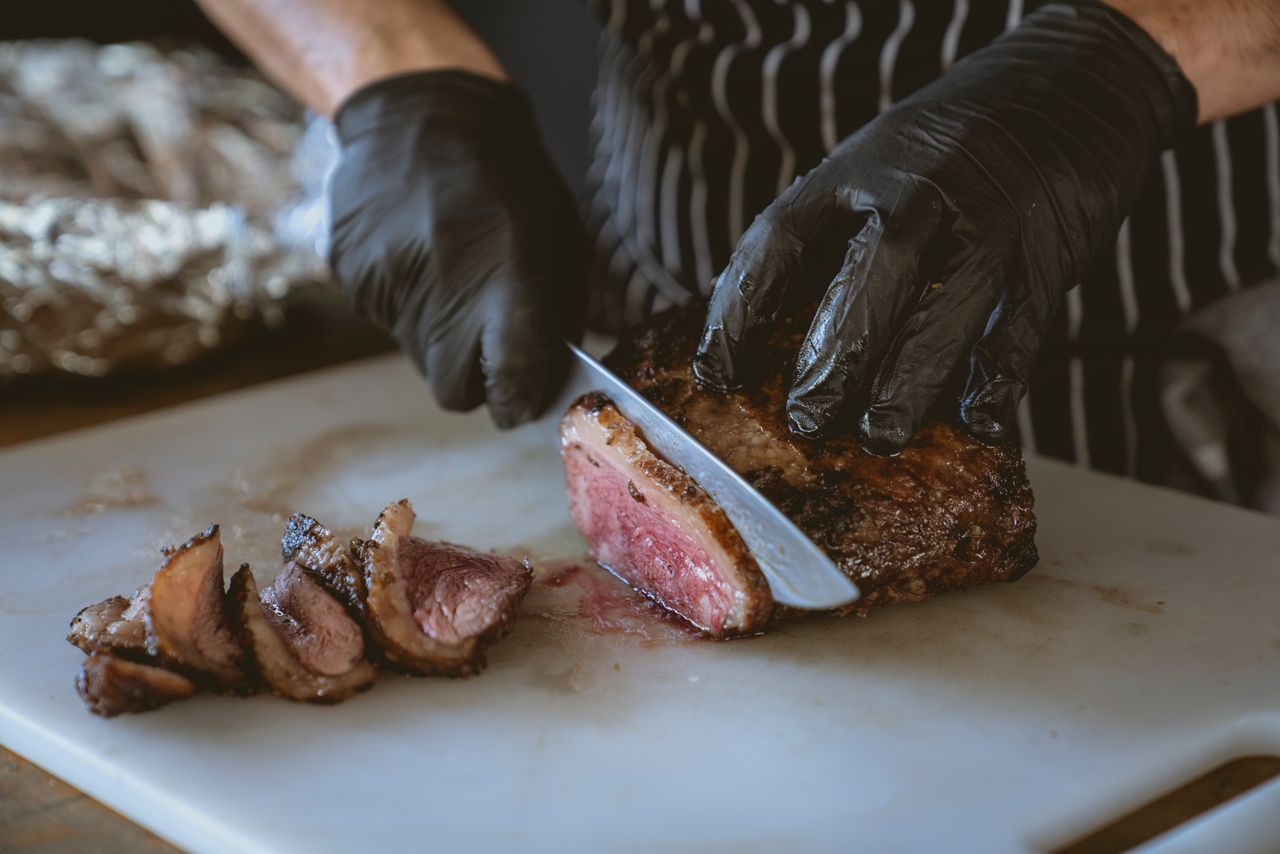
You do not need to cancel the cookout. You just need to stop treating beef as the only way to make it feel complete. This summer, the smartest grills are the ones that use variety to beat both sticker shock and old assumptions.
Beef is costing more, but the cookout menu does not have to follow it
Beef has become the most expensive part of the backyard barbecue equation, and the numbers explain why. USDA’s Food Price Outlook said beef and veal prices in May 2026 were 12.9% higher than a year earlier, while pork was up a much milder 2.6%. Reuters also reported that the average retail price for lean and extra-lean ground beef hit a record $8.62 per pound in May, a sharp jump driven by historically tight cattle supplies. According to Reuters, U.S. ranchers are working with the smallest cattle supply in 75 years, which helps explain why burgers now feel like a premium item rather than the default.
That gap matters because beef has long shaped how Americans imagine a cookout. Burgers and steaks still carry emotional weight, but price pressure is changing real shopping behavior. Axios reported this grilling season that many consumers are trading down to chicken, pork, and turkey, while industry watchers say value-focused shoppers are also moving toward marinated cuts, grill-ready kits, and less expensive proteins that still feel festive.
The key insight is that cutting back on beef does not require eliminating it. A cookout can still feel familiar if beef becomes an accent rather than the anchor. Think one platter of smash burgers for the table, surrounded by grilled chicken thighs, pork skewers, and charred vegetable sides. That approach protects the flavor people expect while keeping the total bill from being dictated by the priciest protein in the cart.
Flavor does not belong to beef alone, and the grill proves it fast
Chicken and pork work especially well on a grill because they reward seasoning, smoke, and quick cooking. Texas A&M AgriLife economists said this year that chicken may offer the best value of the grilling season, while pork remains a more affordable option than beef. That is not just about savings; it is about versatility. Chicken thighs stay juicy over high heat, pork tenderloin takes marinades beautifully, and sausages can bring spice, fat, and snap without requiring steakhouse spending.
The easiest way to replace some beef is to build menus around bold treatment rather than prestige cuts. A yogurt-spice marinade on chicken, a soy-garlic glaze on pork, or a chili-lime finish on corn and mushrooms creates the kind of layered flavor people remember. In practice, guests respond to caramelization, salt, acid, and texture more than they respond to the species of protein on the grate.
Plant-based choices also fit better into the cookout than skeptics often assume, though price and taste still matter. The Good Food Institute says U.S. plant-based meat and seafood retail sales fell 10% in 2025, and it notes that consumers still judge these products primarily on taste and price. But the same research shows black bean burgers grew 6% in 2025, a reminder that simple, recognizable cookout foods can outperform imitation when they taste good on their own terms.
A better cookout strategy is mix-and-match, not all-or-nothing
The most practical cookout menu now is a mixed one. Instead of eight identical beef burgers, think four beef patties, four bean or mushroom burgers, a tray of chicken thighs, and one low-cost pork option such as skewers or sausages. That spread lowers the average cost per person, gives guests real choice, and reduces the pressure to impress with a mountain of expensive ground beef. It also reflects how people increasingly eat: flexible, casual, and less tied to a single centerpiece.
There is also a health case for moving beef out of the starring role. Harvard nutrition researchers have reported that replacing red meat with plant proteins such as beans, legumes, and nuts can improve cardiovascular risk factors, and other Harvard research has linked higher red meat intake with greater type 2 diabetes risk. A cookout built around mixed proteins and stronger vegetable sides is not a compromise meal; it is often the more modern one.
If you do pivot to more chicken and pork, safe cooking still matters. USDA food safety guidance says poultry should reach 165°F, while pork chops, roasts, and steaks are safe at 145°F with a rest period. In other words, the cheaper cookout is not the lesser cookout. It is the one that understands flavor comes from technique, contrast, and confidence, not just from beef.
Принцип безопасного участия — это комплекс мер, направленный на обеспечение баланса в отношении финансовыми расходами и предотвращение вреда.
https://tltrock.ru/material/2026-06-01-sergey-lazarev-ispolnil-zavetnuyu-mechtu-pensionerki-blogera.html
Правила осознанной игры — это регламент, направленный на обеспечение контроля над собственными действиями и исключение рисков.
https://brunet-ka.ru/style/2026-06-02-istoriya-sozdaniya-onlayn-kazino-sweet-ot-idei-do-mezhdunarodnogo-brenda.html
Правила осознанной игры — это регламент, ориентированный на обеспечение контроля над финансовыми расходами и предотвращение потенциальных проблем.
https://sorrybabushka.ru/interesting/290-volgogradskaya-oblast-snyala-trevogu-o-vozmozhnom-padenii-bespilotnika.html
Правила осознанной игры — это набор правил, ориентированный на укрепление баланса по отношению к игровым процессом и снижение негативных последствий.
https://b3.hypebeasts.ru/u4doTOcculEO/
На данном веб-сайте легко обнаружить много ценной сведений.
https://wolgograd.ru/column/3134-chetyre-plausible-prichiny-kadrovykh-perestanovok-v-ukrainskom-pravitelstve/
A generic medication is a drug that has the same active substance as the original product.
It is produced to be equivalent the brand medication in strength, safety, and efficacy.
After the intellectual property rights on the brand-name product runs out, other pharmaceutical firms can produce and distribute generic versions at a more affordable rate.
is cenforce safe
A generic drug is a drug that contains the same active substance as the brand-name drug.
This type of product is produced to match the original medication in dosage form, safety, and efficacy.
Once the intellectual property rights on the original drug ends, other pharmaceutical firms can develop and market generic copies at a more affordable rate.
sildenafil 100mg price at walmart without insurance