
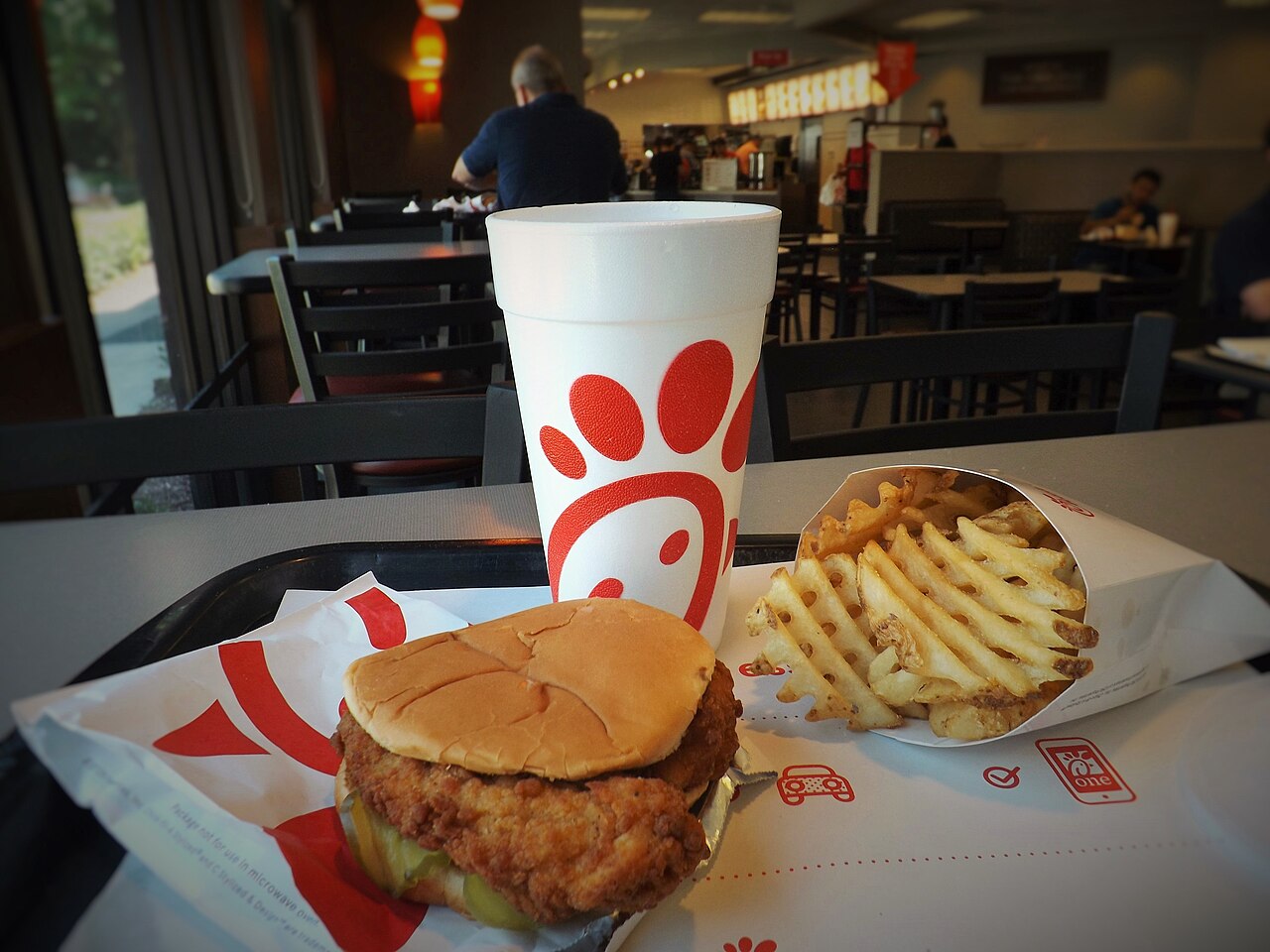
Fast-food chains increasingly market grilled proteins, salads, and fruit sides as demand for lighter meals grows across the U.S. At Chick-fil-A, that healthier image is supported by parts of the menu, but the company’s published nutrition data also shows several items that rank among its heaviest choices. Looking at those numbers, three menu items stand out for calories, saturated fat, sodium, or sugar.
Chick-fil-A’s nutrition data highlights three menu items with especially high totals
Chick-fil-A lists detailed nutrition information for its core menu, and the figures cited in recent reporting identify three items as notable outliers for customers watching daily limits. According to the company’s published nutrition data, the Sausage, Egg & Cheese Biscuit contains 620 calories, 42 grams of fat, and 1,510 milligrams of sodium. That sodium total alone represents a substantial share of the daily limit commonly referenced in federal dietary guidance.
A second item flagged by the nutrition breakdown is the Cookies & Cream Milkshake. Per Chick-fil-A’s nutrition information cited in the reporting, the dessert contains 630 calories, 25 grams of fat, and 84 grams of sugar. For consumers who may view a milkshake as an add-on rather than a meal component, those totals can significantly change the overall nutritional profile of an order.
The third item is the Cobb Salad when paired with Avocado Lime Ranch Dressing. Chick-fil-A’s nutrition data puts that combination at about 850 calories, 60 grams of fat, and more than 2,000 milligrams of sodium, according to the source material. While salads are often grouped with lighter menu options, this combination ranks among the most calorie-dense entrée choices on the chain’s menu.
What is confirmed nationally, and what is not broken out by state or city
What is confirmed is that these figures come from Chick-fil-A’s own nutrition information rather than an outside estimate. The data points cited in the source material reflect standard menu items and a specific salad-and-dressing combination, which matters because dressings, toppings, and sides can materially change the final numbers. In the case of the Cobb Salad, the dressing is the difference between a salad category item and one of the more sodium-heavy meals discussed in the report.
What is not publicly broken out in the source material is any state-by-state or city-level variation in recipe, availability, or portion that would change these nutrition totals. Chick-fil-A has not released a location-specific list showing whether all restaurants carry identical versions of these items at all times, though national chains typically publish standard nutrition for systemwide menus. No local market in the provided source material is identified as uniquely affected.
That means the practical takeaway is broad rather than regional. Customers in any state reviewing the chain’s standard nutrition information would encounter the same general warning signs: a breakfast sandwich high in sodium and fat, a dessert high in sugar and calories, and a salad combination that can exceed what some diners expect from a menu item marketed within a healthier category.
Why these items matter for customers comparing fast-food meals
The larger context is that Chick-fil-A’s brand positioning has long benefited from menu items such as grilled chicken, fruit cups, and lighter salad options. That reputation is not contradicted by the nutrition data, but it is incomplete. The source material notes that some offerings are better understood as occasional indulgences because they carry high totals in calories, saturated fat, sodium, or sugar despite appearing alongside lighter choices on the same menu.
The milkshake illustrates how beverages and desserts can reshape a meal’s nutrition profile quickly. The breakfast biscuit shows how processed meat, cheese, and a biscuit base can push sodium and fat upward in a single item. The salad example shows a different pattern: ingredients associated with protein and produce can still produce a high-calorie, high-sodium meal when fried chicken, bacon, cheese, eggs, and a rich dressing are combined.
For customers, the implication is straightforward. Chick-fil-A offers both lighter and heavier options, and the difference often comes down to preparation method, toppings, and dressings. Based on the company’s published nutrition data, grilled entrées, fruit sides, and lighter dressings remain among the clearest ways to keep calories, sodium, fat, and sugar lower when ordering from the chain.