
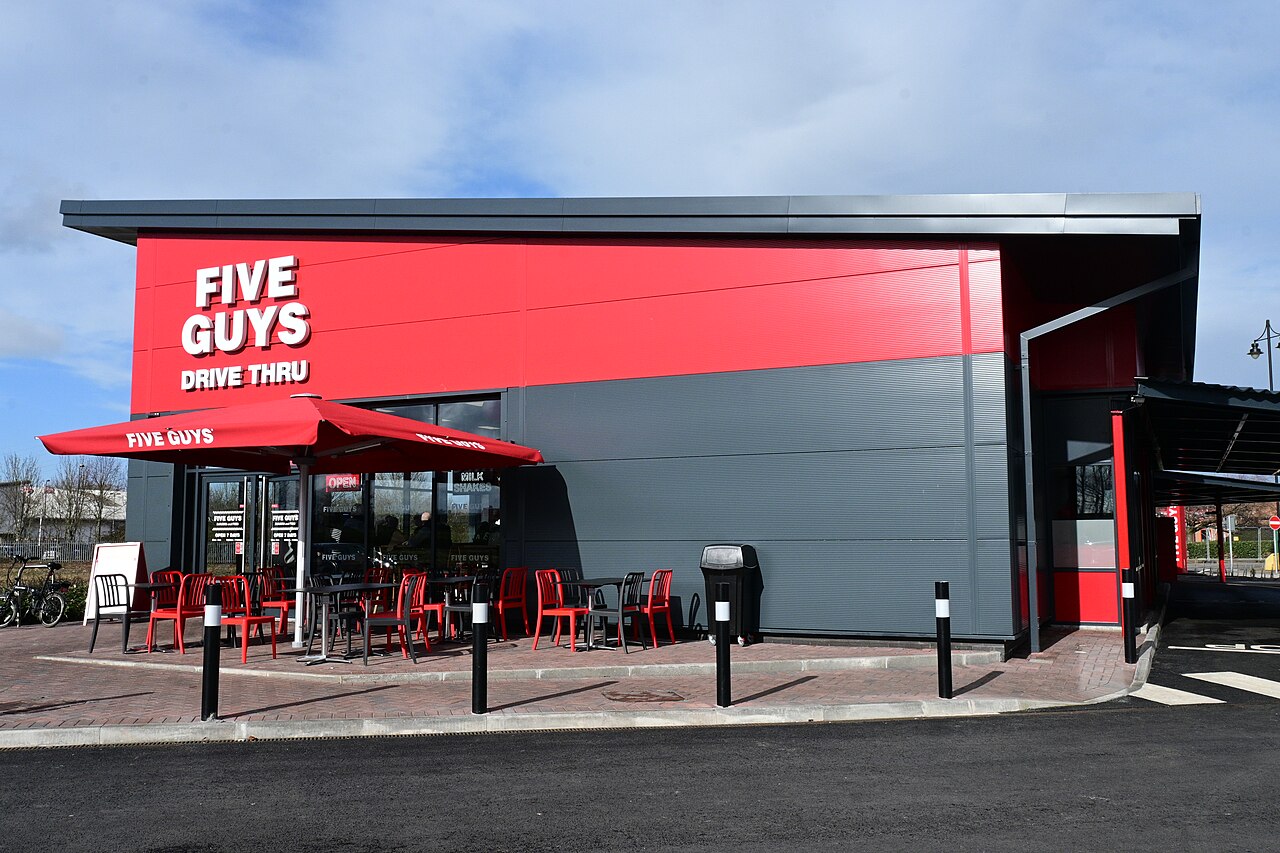
Fast-food prices have remained under pressure nationwide as chains continue passing through higher food, labor, and operating costs. That broader trend came into sharper focus on July 13, 2026, when a viral post about a single Five Guys meal turned one receipt into a national pricing story. The debate is not about a menu launch or store closure, but about how much diners now pay for a burger, fries, and a drink at one of the country’s best-known fast-casual chains.
A viral receipt turned one order into a national price story
The immediate event was a social-media post highlighted by The Coconut Mama and republished on NewsBreak on July 13, 2026. The post showed a Five Guys receipt totaling $24.10 after tax for one meal: a bacon cheeseburger priced at $12.49, a regular soda at $2.89, and a small fry at $5.19. According to that report, the post drew more than 12,000 responses, turning an ordinary lunch purchase into a widely shared example of rising restaurant prices.
The discussion gained traction because the receipt broke down the order line by line rather than relying on a rough estimate. The customer wrote that they expected to spend about $12 to $15 per person and said the final total crossed a line for them, according to The Coconut Mama’s report. That reaction was notable because Five Guys has long positioned itself above traditional quick-service burger chains on price and ingredients.
Official Five Guys materials also support the idea that pricing can climb quickly because many locations do not rely on a standard national combo structure. The company’s FAQ says the chain offers a Classic Combo in some cases and also lets customers build meals by adding fries and a drink to an item, but it does not present one universal bundled price across all stores. That structure leaves customers facing totals that can vary significantly by market, item choice, and tax rate.
The impact is national, but exact local pricing still varies by store
What is confirmed is that the $24.10 meal shown in the viral receipt reflects a real customer total reported in a recent widely circulated post. What is not confirmed is where that specific receipt originated, because the report did not identify the city or state tied to the order. Five Guys also has not released a national explanation tied to that specific post, and the company has not published a comprehensive public list showing meal-by-meal price differences across every U.S. restaurant.
That matters because Five Guys pricing is set in a way that can differ meaningfully by location. The company’s online ordering system shows store-specific menus, and those prices can change from one market to another. In practical terms, a diner in one city may see a lower subtotal for a similar order than a diner in another city, even when the items are the same.
Independent menu trackers and customer posts suggest the viral total is not an outlier in higher-priced markets. Recent menu summaries based on official ordering pages have placed burgers roughly in the $9 to $14 range, fries around $5 to $8, and drinks near $3, which is consistent with a total approaching or exceeding $20 before tax for a full meal. That does not establish one national average cash-register price, but it does show why a receipt above $24 resonated with diners comparing Five Guys to lower-priced fast-food competitors.
Inflation, labor costs, and Five Guys’ format help explain the total
The broader explanation is tied to cost pressures that have affected the entire restaurant sector. The Coconut Mama report said many commenters pointed to inflation, ingredient costs, and labor expenses as reasons higher menu prices are showing up across fast food and fast casual alike. Those factors have been widely cited across the industry, even as chains make different decisions about how much of those costs to pass on to customers.
Five Guys’ own operating model also helps explain why its prices often sit above legacy fast-food brands. The company says its menu is built around fresh ingredients, hand-formed burgers, hand-cut fries, and extensive customization. Five Guys has also emphasized in its public materials that its offerings are made to order rather than centered on a deeply discounted national value-menu strategy.
For customers, the practical takeaway is straightforward: a Five Guys meal can now land in the $20-plus range, and in some markets it can move past $24 once tax is added. Because the company uses store-level pricing and does not rely on one universal combo price at every location, diners should expect totals to vary by restaurant and order. As of mid-July 2026, the company’s official menu and ordering systems still present Five Guys as a premium fast-casual burger chain rather than a value-priced fast-food option.
Столкнулся с вопросом при выборе силового кабеля для подключения оборудования: по нагрузке примерно понятно, но есть сомнения по сечению, материалу жил, типу изоляции и запасу по мощности. Нужно, чтобы кабель не грелся, выдерживал стабильную нагрузку и нормально работал без просадок и повреждения изоляции. Вариантов много: медный, алюминиевый, с разным количеством жил, разным сечением и разной оболочкой, но по описанию не всегда ясно, что подойдет под конкретную задачу. Кто сталкивался: как правильно выбрать силовой кабель по нагрузке и на какие параметры смотреть в первую очередь? Как правильно рсчитать нагрузку на кабель силовой вбшвнг