
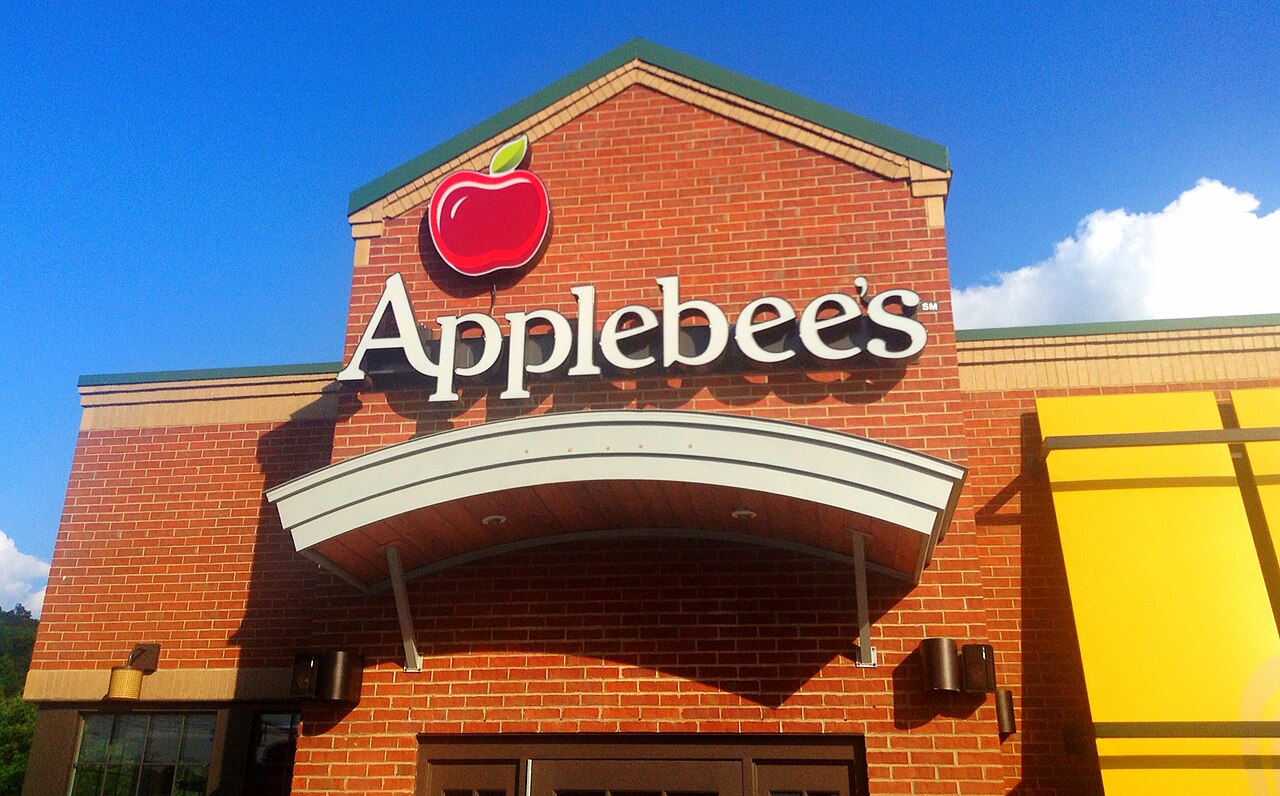
Some restaurant breakups happen slowly. Applebee’s appears to be living through one of them now.
For many diners, the issue is no longer one bad meal or one disappointing visit. It is the feeling that a once-reliable casual dining chain has become harder to justify.
The value equation feels weaker than it used to
Applebee’s has spent the past two years trying to stabilize traffic with promotions, menu tweaks, and sharper value messaging. That effort reflects a real business problem: Dine Brands reported Applebee’s domestic comparable same-restaurant sales fell 4.7% in the fourth quarter of 2024, and company filings have repeatedly tied weaker sales to lower traffic rather than just smaller checks. In fiscal 2025, the brand improved, but fourth-quarter same-restaurant sales still slipped 0.4%, again largely because traffic remained under pressure. According to the company, guest experience and everyday value are still central priorities because they have to be.
That matters because casual dining customers are more price sensitive than many chains hoped. Restaurant Dive reported that Dine Brands executives described guests as extremely sensitive to price increases, a familiar problem across the industry as eating out feels less affordable. When customers believe they are paying more without getting a meaningfully better meal, service level, or atmosphere, loyalty fades quickly. Applebee’s is hardly alone in this, but it may be more exposed because its brand was built on approachable affordability.
The challenge is even clearer when rivals define value more convincingly. Industry coverage has pointed out that Applebee’s has struggled to match the buzz and traffic momentum that some competing casual dining chains have generated with simpler, more compelling offers. Once customers start comparing a night at Applebee’s with cheaper fast-casual options or sharper casual-dining promotions elsewhere, the chain can lose on both price and excitement.
Customers also notice operational inconsistency
Price alone does not explain why some guests say they are done. A bigger issue is inconsistency across locations, which is a common hazard in large franchise systems and especially visible at aging restaurant brands. S&P Global Ratings noted that Applebee’s restaurant base is notably seasoned, with an average age of nearly 24 years. Older boxes can still perform well, but only if reinvestment keeps the dining room, kitchen, and service standards from feeling tired.
Dine Brands itself has acknowledged the need to improve fundamentals. The company has emphasized guest experience, remodels, and marketing support, while trade coverage says Applebee’s planned to prioritize remodels in 2025 as part of its effort to refresh the brand. That is a sign management understands the problem, but it also underscores why some customers have drifted away already: diners experience the brand one location at a time, not through corporate strategy slides.
Store closures add to that perception. Nation’s Restaurant News reported in March 2024 that Applebee’s expected 25 to 35 closures that year, describing the moves as a way for franchisees to exit unprofitable locations. By the end of 2024, Restaurant Dive said the chain’s store count had fallen to about 1,501 from 1,578 in 2021. Even when closures are financially rational, they can reinforce a customer narrative that a brand is shrinking rather than improving.
Applebee’s is now fighting for relevance, not just recovery
The deeper risk for Applebee’s is that consumer habits have changed faster than the brand has. Today’s diners expect clearer value, better digital convenience, fresher restaurant environments, and more distinct food identity. Applebee’s still has scale, off-premise business, and brand awareness, but scale by itself does not create affection. In the fourth quarter of 2025, off-premise still represented 23.0% of sales mix, showing the chain remains relevant for takeout and delivery even as in-restaurant traffic stays challenged.
Management is trying multiple fixes. Applebee’s has leaned on menu innovation, promotions like the revived Dollarita, and longer-term development ideas including dual-branded Applebee’s-IHOP locations, which debuted domestically in Texas in February 2025. Those moves suggest a company searching for new traffic engines rather than relying on nostalgia alone.
Still, winning back walk-away customers is harder than stopping defections in the first place. Once diners decide a chain feels overpriced, uneven, or past its prime, they do not need a dramatic reason to leave; they just need better alternatives. That is the real warning in Applebee’s recent numbers. The brand has not disappeared, but for a growing share of customers, it no longer feels like the obvious neighborhood choice it once was.
This writeup provided a clear perspective on the topic while browsing online and I look forward to reading more from you
Ответственная игра — это стратегия к игровым развлечениям, базирующийся на самоограничении и понимании рисков.
Она включает осознанное ограничение времени и бюджета на процесс.
Любой игрок должен заранее определять пределы потерь и неукоснительно их придерживаться.
https://pilot-club.ru/info/2026-07-03-psikhologiya-vybora-slot-raketki-v-1win/