
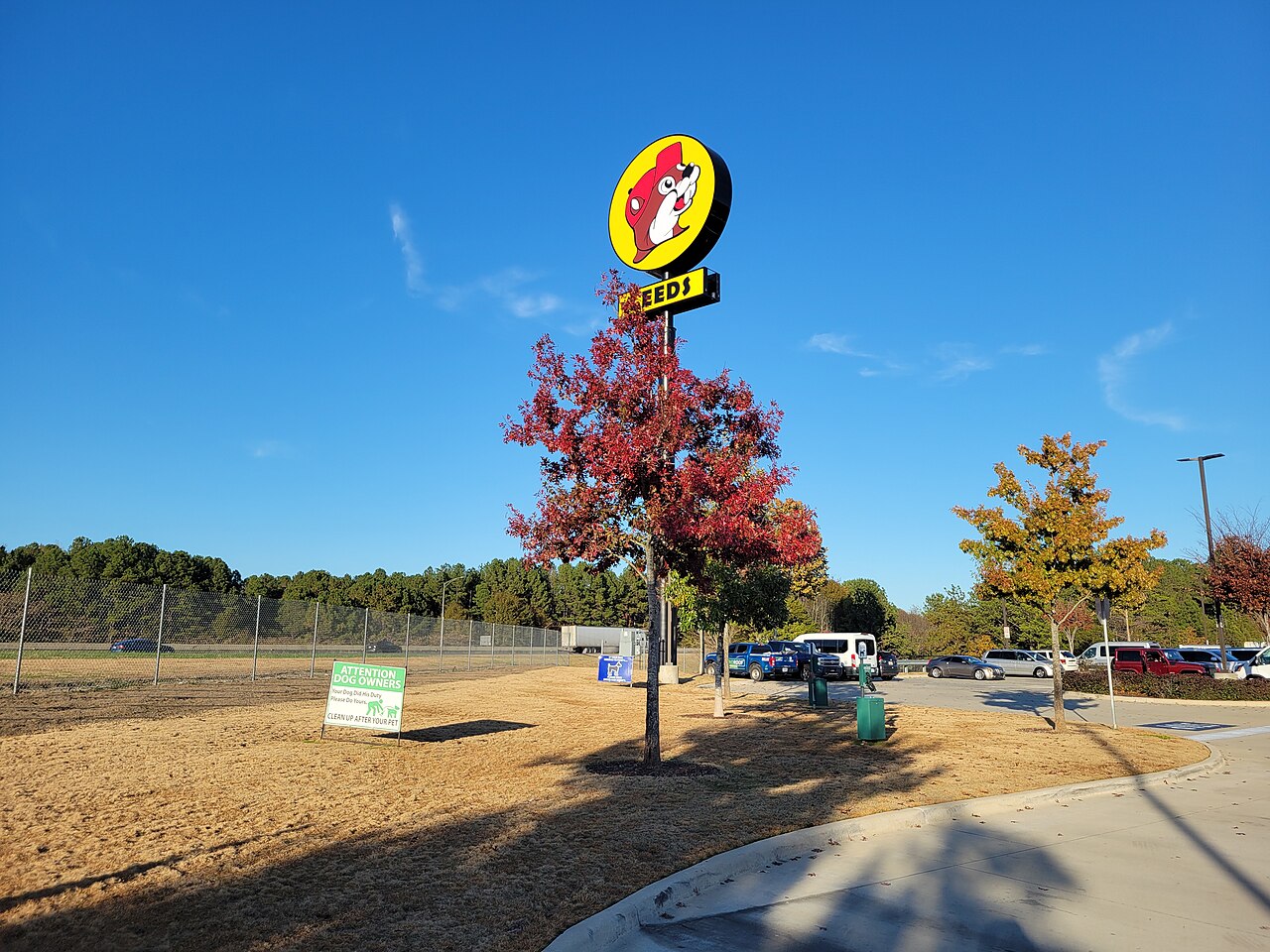
Buc-ee’s has continued its national expansion in 2025 and 2026, including a new Arizona opening that pushed the Texas chain farther west. In Hawaii, though, there is still no confirmed Buc-ee’s project, and the barriers are more structural than promotional.
Buc-ee’s is growing, but Hawaii is not on the announced map
Buc-ee’s has added new stores and future projects across several states, but Hawaii is not among the locations the company has publicly announced. Recent company and city announcements tied to Buc-ee’s openings and groundbreakings have focused on places such as Goodyear, Arizona, San Marcos, Texas, and Mebane, North Carolina, not Honolulu or any other Hawaii market.
That matters because Buc-ee’s current expansion pattern still follows the same core formula: large roadside travel centers positioned along major mainland highways. The City of Goodyear said Buc-ee’s officially opened its first Arizona location in late June 2026 at Interstate 10 and Bullard Avenue, marking the chain’s westernmost operating site so far. Company expansion releases have also continued to highlight highway-adjacent projects in states on the mainland.
The scale of those projects helps explain why Hawaii is a difficult fit. In North Carolina, a 2026 project announcement said the planned Mebane Buc-ee’s would span 74,000 square feet and include 120 fueling positions. A format that large depends on heavy vehicle throughput, large parcels and access patterns built around long-distance highway travel.
For Hawaii, none of that has been confirmed. Buc-ee’s has not announced a Hawaii store, identified a development partner there, or released an opening timeline. As of July 13, 2026, any discussion of a Hawaii location remains speculative rather than a documented company plan.
Oahu would be the most realistic option, but major site hurdles remain
If Buc-ee’s ever entered Hawaii, Oahu would likely be the clearest starting point because it has the state’s largest population, its busiest road network and the main visitor gateway through Daniel K. Inouye International Airport. Federal and state transportation documents show Hawaii’s Interstate routes are all on Oahu, including H-1, H-2, H-3 and H-201.
Those roads are real Interstates, but they do not function like mainland cross-country corridors. Federal Highway Administration history documents note that Hawaii’s Interstate system exists entirely within the state, and Hawaii transportation materials show the network is concentrated on Oahu. That means a Hawaii Buc-ee’s would rely much more on local drivers, military households and tourists than on the steady multi-state road-trip traffic that supports many mainland locations.
Even on Oahu, the land requirement would be significant. A Buc-ee’s built to the chain’s newer large-format model would need enough room not only for a store of roughly 74,000 square feet, but also for dozens upon dozens of fuel positions, internal traffic circulation and large parking fields. In dense urban Honolulu, that is difficult. In West Oahu areas such as Kapolei or Ewa, it may be more physically plausible, but no site has been publicly identified.
Just as important, the company has not released a list of potential Hawaii parcels, and no state or city agency has announced a Buc-ee’s permit application. Until a filing, land deal or public hearing surfaces, the local impact is best understood as hypothetical rather than pending.
Shipping costs, energy policy and the chain’s model are the main barriers
The biggest obstacles are logistical and economic. Hawaii depends heavily on ocean freight for consumer goods and fuel, and federal analyses from the U.S. Government Accountability Office note that noncontiguous U.S. jurisdictions such as Hawaii rely on maritime transportation for vital goods from the mainland. For a retailer built around high-volume packaged food, branded merchandise, equipment and fuel operations, that raises costs before a single transaction happens.
Shipping rules add another layer. Debate over the Jones Act has long centered on whether it increases transportation costs to Hawaii, and federal and congressional materials regularly describe concerns that the law contributes to higher shipping expenses for the islands. Even without assigning a precise cost to a hypothetical Buc-ee’s store, the practical issue is clear: stocking a giant mainland-style travel center in Hawaii would be more expensive and more operationally complex than supplying one in Arizona, Texas or Florida.
Energy policy also shapes the picture. Hawaii’s Public Utilities Commission states that Hawaii law requires 100% of net electricity generation to come from renewable sources by December 31, 2045. A large new gas-focused roadside destination would face closer scrutiny in a state that is simultaneously pushing clean transportation and broader decarbonization goals.
For residents, that means a Hawaii Buc-ee’s is still a long-shot concept, not an active development story. What is confirmed today is narrower: Buc-ee’s is expanding, Oahu is the only plausible island entry point, and Hawaii’s land, shipping and policy realities would likely require the company to alter the model it uses elsewhere.
Nice blog right here! Additionally your website a lot up very fast!
What host are you the use of? Can I am getting your affiliate
hyperlink for your host? I want my web site loaded up as
fast as yours lol