
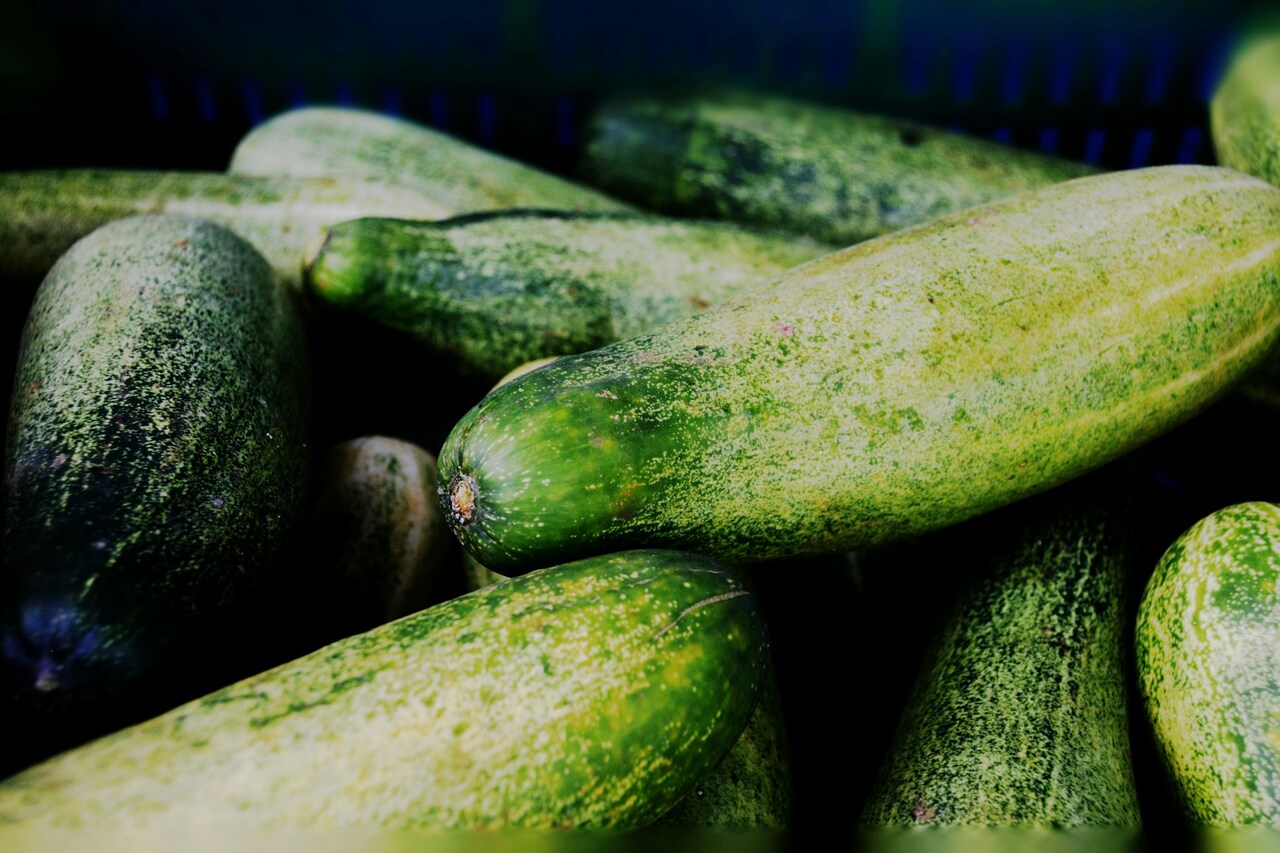
Cucumbers often seem sturdy, but they spoil faster than many shoppers realize. Once texture, color, or surface moisture changes in the wrong way, the safest move is often to throw them out. Recent food safety alerts have made that advice even more important.
Soft, slimy, or moldy cucumbers are no longer worth saving
The clearest sign a cucumber should be discarded immediately is a soft, wet, or slimy texture. Fresh cucumbers should feel firm and taut, not squishy at the ends or greasy on the surface. USDA food safety guidance says mold on soft produce can spread below the surface, which means simply trimming off the bad area is not considered a safe fix.
Visible mold is another hard stop. White fuzz, dark spots that are sinking in, or cottony growth are all signs decay has advanced past freshness and into spoilage. Extension guidance also warns that bruises, dark lesions, and water-soaked patches are signs cucumbers are breaking down internally, even when only part of the skin looks affected.
Shriveling and wrinkling are slightly different, but still important. A dehydrated cucumber is not necessarily dangerous in the same way a slimy one is, yet experts note that severe shriveling often comes with texture loss and quality decline that make the vegetable poor for eating. If wrinkling is paired with softness, leakage, or an off odor, it is no longer a judgment call.
Another warning sign is yellowing that goes beyond a minor change in shade. Cucumbers are best when evenly green and firm. According to extension advice, yellowing, withering, and soft spots all point to age and deterioration, and once those changes are combined, the cucumber should be tossed.
Why spoiled cucumbers can become a food safety problem
A bad cucumber is not just unappetizing. Cucumbers are usually eaten raw, so there is no cooking step to kill harmful microbes before they reach your plate. FDA sampling materials have noted that cucumbers are considered a ready-to-eat produce item, which raises the stakes when spoilage or contamination is present.
That matters even more because cucumbers have been tied to multiple Salmonella outbreaks in recent years. The FDA said its cucumber surveillance work continued after repeated outbreak links between 2012 and 2025. In May 2025, the CDC warned consumers about a multistate Salmonella outbreak connected to whole cucumbers, and specifically advised people to throw cucumbers away if they could not tell where they came from.
The CDC alert involved 26 reported illnesses across 15 states, with 9 hospitalizations. The affected cucumbers were grown by Bedner Growers and distributed by Fresh Start Produce Sales between April 29, 2025, and May 19, 2025. The FDA also posted a recall page covering additional cucumber-containing products tied to that investigation.
Spoilage does not automatically mean Salmonella, but the overlap between decaying produce and poor handling is enough for experts to take a hard line. If a cucumber looks actively broken down, there is little benefit in trying to rescue it for a salad, sandwich, or snack tray.
What to keep, what to toss, and how to store cucumbers better
A cucumber that is still firm, evenly colored, and free of slime or mold is usually fine after a rinse under running water. Foodsafety guidance has long advised washing produce before eating, cutting, or peeling it, because knives can drag dirt and bacteria from the skin into the flesh. Washing cannot reverse spoilage, but it does reduce surface contamination on sound produce.
If the cucumber is only mildly less crisp but otherwise dry, green, and odor-free, it may still be usable in cooked dishes or quick pickles. But once there is any sliminess, leaking, soft collapse, or visible fungal growth, it should go straight into the trash. Fresh-cut produce standards are especially strict on this point, describing slimy or oily-feeling pieces as signs the product is beyond acceptable condition.
Storage helps extend quality but does not give cucumbers endless life. Oklahoma State guidance says cucumbers generally keep about 10 to 14 days when held around 50°F, while Missouri Extension recommends choosing firm cucumbers without yellowing, shriveling, bruises, or dark spots to begin with. In a home kitchen, the best strategy is simple: buy firm cucumbers, refrigerate promptly, and use them before texture starts to change.
When in doubt, trust your eyes and hands. A cucumber should be crisp, clean-smelling, and solid. If it is soft, slimy, moldy, badly spotted, or impossible to identify during a recall, experts agree the answer is immediate: throw it away.